
Understanding the legal requirements
For Americans relocating to France, obtaining car insurance involves navigating unfamiliar administrative terrain. While US citizens can drive on their American licenses and avoid switching to the opposite side of the road, securing French insurance coverage requires extra documentation, patience and often specialized assistance.
Beth Palaske, who moved from the United States to Pyrénées-Orientales in 2025, discovered this firsthand. Armed with her US license and searching for French insurance to purchase a new car, she visited multiple insurance offices in person without success.
"It was really hard to get anybody to actually talk to me," Palaske recalled. Local offices demanded her tax identification number, which she hadn't yet received, and showed little interest in taking on an American client. She ultimately turned to Fab French Insurance, a broker specializing in English-speaking expats in France, and completed the signup process within days.
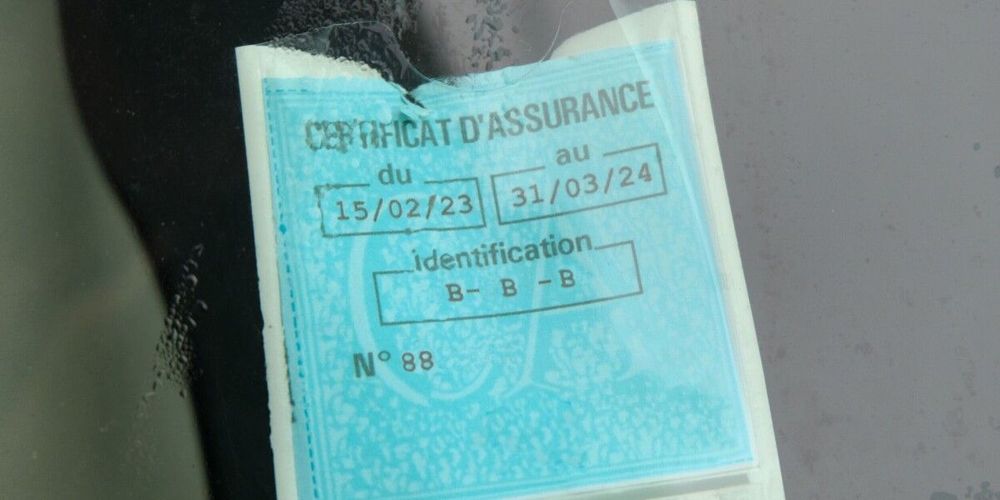
Driving without insurance in France constitutes a criminal offense, and foreign nationals face identical rules and penalties as French citizens. Third-party liability coverage (assurance responsabilité civile) represents the minimum legal requirement under French law.
Americans can legally drive in France on a US driver's license for exactly one year from establishing "normal residence"—defined as living habitually for at least 185 days per year in France. After this one-year period, a French license becomes mandatory, and insurance companies may cancel policies if the license isn't converted.
The license exchange process depends on which US state issued the original license. As of 2026, 18 US states maintain active reciprocal driver's license exchange agreements with France: Arkansas, Colorado, Connecticut, Delaware, Florida, Illinois, Iowa, Maryland, Massachusetts, Michigan, New Hampshire, Ohio, Oklahoma, Pennsylvania, South Carolina, Texas, Virginia and Wisconsin. Drivers from these states can simply exchange their licenses, while those from non-reciprocal states must pass the full French driving exam.
Since May 12, 2026, exchanging a foreign driver's license requires paying a €40 administrative fee (timbre fiscal), whereas the exchange was previously free. The exchange process typically takes 6 to 12 months depending on local prefecture workload, though applications must be submitted within the first year of establishing French residency.
Americans from non-reciprocal states who must take the full French exam face costs between €1,200 and €2,000 through a driving school, or €700 to €1,000 as independent candidates.
Assembling the documentation
Angélique Moore, an insurance agent with BH Assurances—one of the largest bilingual Allianz agencies in France—emphasized that Americans need to work with someone who takes time reviewing their documents and can negotiate recognition of their driving experience.
"An American arriving in France has a particular kind of profile: proof of no-claim that needs translating, a driving history that isn't automatically recognised, a residency status that will change over time," Moore explained.
Drivers with non-EU licenses can purchase French cars and obtain French insurance. However, those who have been French tax residents for more than one year must present a French driver's license. The documents required for Allianz France include a valid driver's license, an insurance claims history report (or copy of current insurance policy or insurer certificate), a passport copy and a valid residence permit copy.
Palaske noted that her insurer examined all claims, not just explicit motor vehicle accidents. A claim filed after her dog damaged her car's roof lining meant she technically had only two years without a claim, despite having no accidents on record. She also emphasized the importance of maintaining US insurance, as French companies ask about current coverage status.
Documents must be translated, though official translations aren't required at Allianz France, according to Moore. Palaske confirmed she didn't need to provide official translations or apostilled documents for the insurance process.
Concerns about US driving history recognition can be addressed through alternative documentation if a complete driving record isn't available: a copy of a previous insurance policy, a certificate proving prior insurance coverage or an employer letter confirming access to a company car.
Relevant vehicle details should also be collected. While Allianz France doesn't require the car's registration document (carte grise) initially, it serves as a helpful addition. For vehicles worth more than €100,000, an anti-fraud check via a simple declaration form is required.
Vehicle buyers in France must register their new car and obtain a carte grise within one month of purchase through the online ANTS system. This process can no longer be completed at prefecture or sub-prefecture offices.
Moore said insurance can be established in as little as 24 hours through BH Assurances.
Rich Kagan, who moved to France in 2024, found the insurance process relatively straightforward. "Honestly, I felt like the car buying experience was more challenging than getting insurance because I shopped rates," he said. Prioritizing an English-speaking insurer, he chose MMA and completed the approximately 30-minute process with his vehicle identification number.
Understanding French insurance pricing
Three types of auto insurance exist in France, Moore explained. Third-party liability covers only damage to others. Third-party fire and theft adds coverage for fire and theft. Comprehensive coverage includes all prior protections plus damage to your own car regardless of fault.
Car insurance premiums in France are expected to rise by 4 to 6 percent in 2026, with the national average premium reaching €751 per year according to Assurland.com data. This increase stems from rising vehicle repair complexity and frequent extreme weather events. In 2025, premiums averaged €1,124 for fully comprehensive policies and €636 for third-party policies according to comparison site Lesfurets.com.
France uses a bonus-malus coefficient system that adjusts premiums based on driving record. Each year without an at-fault claim earns a 5 percent reduction, while causing an accident increases the coefficient by 25 percent. After 13 consecutive claim-free years, drivers achieve the maximum 50 percent discount on their base premium.
"Your nationality will never affect your premium," Moore stressed.
However, American drivers should avoid common errors. Not seeking an insurance company oriented toward expats, failing to request proof of insurance history and waiting until obtaining the carte grise before insuring the car can all waste time. Paying third parties to obtain documents you can easily acquire yourself by calling relevant offices wastes money.
When obtaining a French driver's license, insurance policy and premium won't change, though companies must be updated about the document change.
France has approximately 90 companies providing car insurance, making it one of Europe's largest motor insurance markets. The Autorité de Contrôle Prudentiel et de Résolution (ACPR), an arm of the Banque de France, regulates the French insurance market.
Moore advised Americans to work with an agency that maintains a genuine relationship with them and can better assist when filing claims becomes necessary.
"Online, you become a policy number in an automated system," she said. "Working with an agency is a real comfort, especially when you're still finding your way through French administrative processes."
Beyond insurance, both Palaske and Kagan highlighted a surprising difference for Americans: the car purchasing process. In France, paying the substantial vehicle price before signing a contract is common. The car may only arrive months later once administrative processes are completed.
Still, Palaske said collecting the car once ready proved quick and easy. "That part went really smoothly," she said. "Just getting the insurance and getting your driver's licence is a process."