Rise in 'ruse burglary' scams across France: what are they?
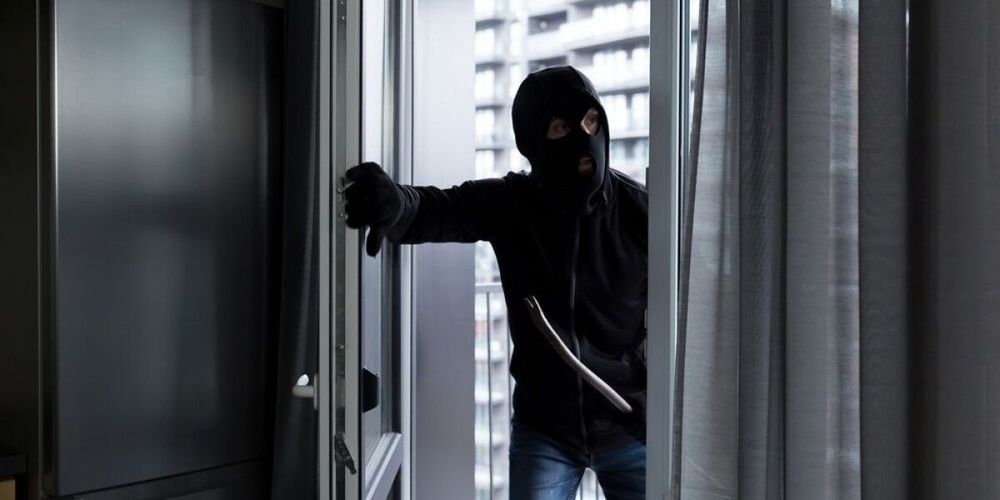
Authorities across France are warning residents to remain vigilant following a sharp increase in sophisticated 'ruse burglary' scams, where criminals use elaborate deception tactics to gain entry to homes and steal valuables.
These scams, also known as distraction burglaries, involve criminals using falsehood, tricks or distraction to access properties. The warnings come amid a broader surge in burglaries nationwide, with Interior Ministry figures showing a 7.7% increase in residential break-ins in July 2026 compared to the same month in 2025.
Guy, a 79-year-old resident, lost his lifelong passion when burglars made off with an antique coin collection worth €110,000.
I saw that everything had been stolen from the places where I hid my coins. It's a lifelong passion of mine. It's terrible.
The scams particularly target elderly and vulnerable people living alone, who are often carefully selected after criminals stake out neighbourhoods in advance. With property crimes in France showing only an 18% clearance rate in 2023, prevention has become critical for homeowners.
Multi-layered deception tactics
Ruse burglaries have evolved far beyond simple door-knocking schemes. In the most sophisticated versions, multiple fraudsters work together in coordinated operations designed to confuse victims.
One common tactic involves a scammer posing as a plumber or utility worker, claiming they have been called to address a problem with the property. Shortly afterwards, accomplices arrive pretending to be police officers, warning the resident about a burglar who has been posing as a worker to rob people.
In the ensuing confusion, the scammers work together to disorient the victim and occupy them in certain rooms while unwatched accomplices search the home for valuables. The presence of apparent police officers reassures the victim, who may only discover items missing much later.
Other variants include criminals posing as helpful neighbours assisting elderly people home, then working with fake delivery drivers to create distractions. This method proves particularly effective in apartment blocks, where elderly residents may take several minutes to reach the main entrance and return, providing ample time for accomplices to pilfer unlocked homes.
Some scammers simply pose as police officers investigating burglaries in the area, asking to check homes for signs of attempted entry while actually identifying where valuables are kept.
Geographic concentration and entry methods
Burglary risk varies significantly by region. Half of all burglaries in France occur in just three areas: Île-de-France accounts for 26.3% of incidents, Auvergne-Rhône-Alpes for 15.8%, and Provence-Alpes-Côte d'Azur for 10.5%.
Police data reveals that approximately 70% of burglars in France enter properties through front doors rather than windows, underscoring why door-based ruse tactics prove so effective. French gendarmerie report that criminals increasingly use technology such as Google Maps to identify targets and monitor social media to determine when homeowners are away on holiday.
Two burglars were recently arrested in northern France after seven thefts and one attempted theft while posing as police officers. They used a method of keeping victims occupied in one room while the other searched for valuables.
The victims are often elderly, as it is easier to target people who are, unfortunately, vulnerable. It is a nationwide phenomenon, and one that is on the rise. In any case, we are seeing a high number of incidents.
said Colonel Sébastien Constant, an officer in Yvelines.
Underreported problem
The Interior Ministry acknowledges that recorded burglary figures do not capture the full extent of offences committed, as many victims do not file complaints. This suggests the actual scale of ruse burglaries may be considerably larger than official statistics indicate.
In 2023, France recorded 216,400 burglaries according to police and gendarmerie statistics, representing a 3% increase from 2022, part of a continuing upward trend.
Protection advice
Police recommend several precautions to protect against ruse burglaries. Residents should refrain from answering the door when not expecting visitors and use door chain locks when speaking to unexpected callers.
Anyone claiming to be an official should be asked to show official identification. Legitimate officers or workers will never be frustrated at this request or refuse to comply. Workers should not need to enter homes unless an appointment has already been made, and residents can refuse entry.
Crucially, homeowners should call the organisation the person claims to represent to verify directly that the visit is legitimate. This simple step can prevent many scams.
France's official police programme 'Tranquillité Vacances' allows residents to request police patrols to check on their homes while away on holiday, providing an additional layer of security during vulnerable periods.