Art after rupture
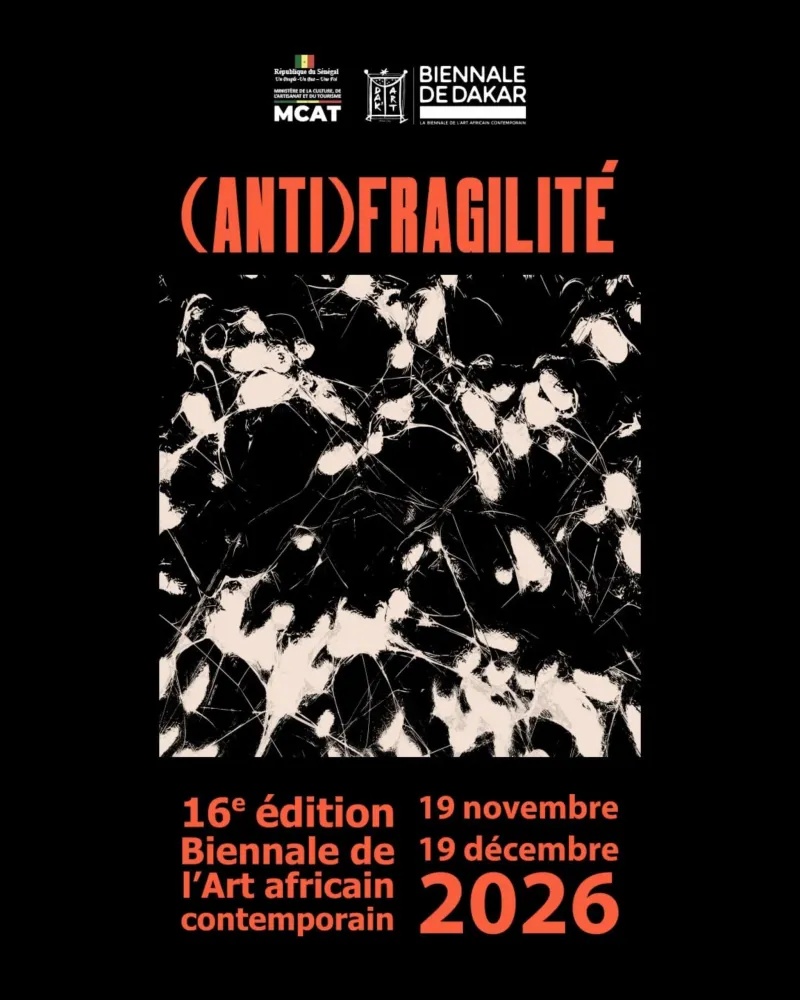
The former Palace of Justice at Cap Manuel is the setting for the official international exhibition's 54 artists. Under the title "(Anti)fragility – Arts of Repair and Strategies of Counterblow," their work considers artistic responses to rupture and precarious conditions, including medicinal-plant knowledge, healing through art and learning outside institutions.
The theme draws on Nassim Nicholas Taleb's 2012 book "Antifragile," according to the organizer's concept note. Signed by Montazami on April 15, 2026, the note describes an approach that turns fragility into strength by valuing community and social ties.
Five chapters, described as "lignes de fuite," or lines of flight, organize the exhibition: "Reverdir l'ancien palais de justice," "Les arts du marronnage," "Être et créer entre soin et réparation," "Partager les savoirs" and "Relier les continents." The organizer released these titles without accompanying descriptions.
Among the exhibition's concerns are escape and refuge within the arts of marronage, or resistance, and exchanges between Africa and its diasporas. Guadeloupe is represented in the official selection by Clémence Lollia Hilaire.
Montazami, a Franco-Iranian art historian, curator and publisher, directs Zamân Books & Curating. From 2014 to 2019, he worked on Tate Modern's Middle East and North Africa collections. The Comité d'orientation selected him through an international call for curatorial projects that closed March 1, 2026; his appointment was announced April 15.
Grand Prize goes to Beau Disundi Nzazi
Beau Disundi Nzazi of the Democratic Republic of the Congo received the Léopold Sédar Senghor Grand Prize from Senegalese President Bassirou Diomaye Faye at the November 19 opening ceremony. The award carries 20 million CFA francs.
Nzazi's "(Anti)Fragility" depicts a mountain landscape in bright colors. The Senegalese Press Agency (APS) reported that the jury honored his exploration of the connections among history, economics and the movement of goods.
Born in Kinshasa in 1993, Nzazi works between the Democratic Republic of the Congo and Brussels. His education includes interior architecture at Kinshasa's Académie des Beaux-Arts, studies at the École supérieure d'art in Dunkirk and a master's degree at ENSAV La Cambre in Brussels. Salt cod often appears in his installations, sculptures and assemblages as a symbol of trade, colonial legacies and cultural absorption.
The international jury awarded the Ministry of Culture, Crafts and Tourism Revelation Prize, worth 10 million CFA francs, to Ethiopian multidisciplinary designer Miriam Hillawi Abraham. Nú Barreto, an artist from Guinea-Bissau, received the WAEMU (UEMOA) Prize and 8 million CFA francs.
Vanessa Amoah Opoku (Ghana/Germany) and Joy Weinberger won the 5 million CFA franc ECOWAS Integration Prize as a duo. The Mayor of Dakar's Prize, also worth 5 million CFA francs, went posthumously to Papisto Boy, the self-taught Senegalese muralist.
The Democratic Republic of the Congo is also this edition's guest country of honor. Steve Bandoma curated its pavilion, and Congolese star Fally Ipupa performed at the opening.
In his opening remarks, Faye urged the creation of a common market for African art in partnership with the African Union. He said Senegal's 2050 development plan views culture as a source of sovereignty, value and employment for young people. "You do not stop a people from breathing because times are hard. It is precisely at such moments that a nation most needs its artists," he said.
Design, tributes and the independent OFF program
Alongside the international exhibition, the former courthouse hosts 22 designers in "Pan-Af Housing Units." Elsewhere, in Dakar-Plateau, Ndèye Rokhaya Guèye has curated "The Wisdom of Trial" at the National Art Gallery, an exhibition devoted to Abdoulaye Niokhor Bob, known as Ngoor.
Outside the official selection, the biennale honors Moroccan artist and teacher Faouzi Laatiris as "Grand Témoin," or principal witness. Senegalese artist Serigne Mbaye Camara has been given a "carte blanche," or free hand.
The independent OFF program is expected to encompass more than 400 events throughout Senegal and in the diaspora, according to APS. Private promoters organize and finance those events; the biennale neither selects nor funds them.
The previous edition and visitor hours
The 2024 biennale, directed by Salimata Diop under the theme "The Wake," ran from November 7 to December 7. Its international exhibition featured 58 artists, with Cabo Verde and the United States as guests of honor. Martinican artist Agnès Brézéphin won that edition's Léopold Sédar Senghor Grand Prize. Senegal's culture minister said it attracted more than 780,000 visitors.
For the 2026 edition, the former Palace of Justice and the National Art Gallery are open daily from 10 a.m. to 7 p.m. through December 19.