From household tables to corporate gifts
The importer's selection currently spans six champagnes and three crémants, sparkling wines made outside France's Champagne region. Bottles range in price from 49 Australian dollars for Estelle and Thomas Brut Crémant Alsace to 185 Australian dollars for Champagne Vaucelle Cuvée des Ambassadeurs.
Dunbar, a qualified Champagne Master, told InDaily that the business aims to make French wines part of Australian home life. She described its guiding idea as "wines with souls and stories worth sharing".
Corporate customers also account for regular sales, including businesses buying gifts for employees. Dunbar said a bottle accompanied by a handwritten card could carry more personal meaning than a generic hamper ordered online.
Choosing producers and telling their stories
One of the labels in the portfolio, Champagne Vaucelle, made its debut in 2025 under winemaker Thomas Cheurlin. It is served at the residences of France's president and prime minister, as well as those of French ambassadors worldwide.
FranceVisiting.com identifies Vaucelle as Maison Thomas Cheurlin's premium brand. The house is based in Celles-sur-Ource, in the Côte des Bar in southern Champagne, where the family has a winemaking history spanning more than 10 generations. Despite the label's recent launch, its grapes come from vines nearly 350 years old.
Vaucelle offers six champagnes. Its flagship Cuvée des Ambassadeurs combines 80% Pinot Noir with 20% Chardonnay and undergoes 72 months of aging, according to FranceVisiting.com.
For Dunbar, representing a producer means understanding the family, community, soil and place behind the wine. She said building personal relationships with winemakers is an important part of working in France and explaining their products to customers.
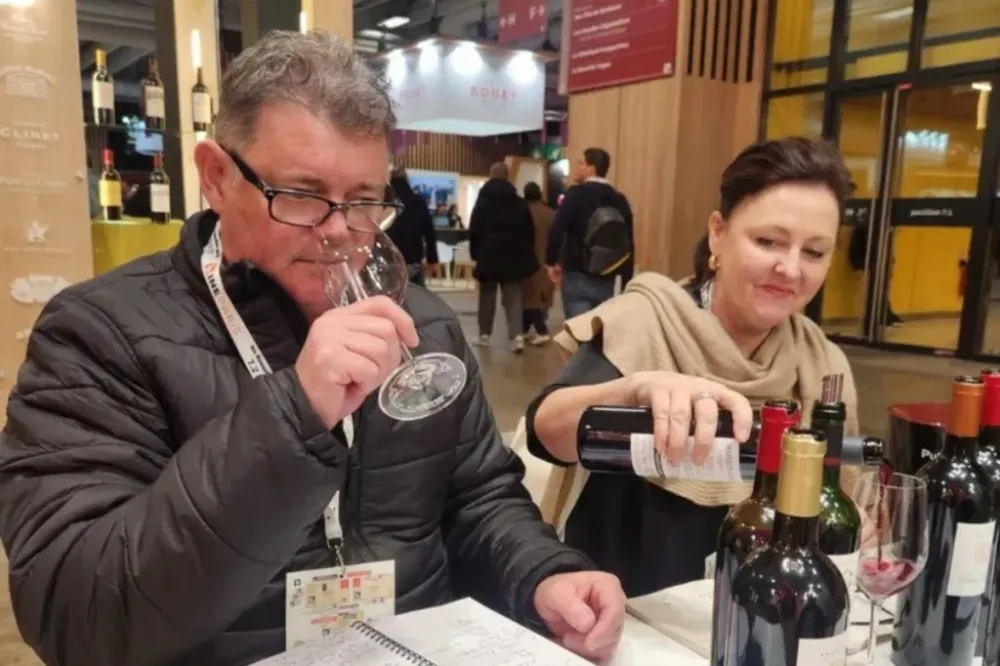
Her search takes her to the annual Wine Paris convention and to Champagne at least twice a year, where she meets winemakers and grape growers. She also draws on the Comité Champagne's knowledge, while visiting individual châteaux and family houses to discover wines firsthand.
With 4,200 champagne brands created in 2026, the business has a broad field to consider. Dunbar said she generally chooses high-quality wines that remain approachable rather than overly complex. She also emphasized the labor behind each bottle, saying nearly 45 sets of hands are involved between growing the grapes and pouring the wine at home.
Making Champagne knowledge accessible
Dunbar became the first person born and raised in South Australia to earn the Wine Scholar Guild's Champagne Master qualification. Her 15 months of study covered Champagne's history, winemaking, geography and geology, with classes held in the middle of the night and an intensive exam that only 50% of students pass.
She also brings a long events career to the business. According to her personal website, she has worked in the industry for more than 30 years, including 22 years as founder and CEO of Big Fish Events Group. She says she has delivered more than 1,100 events worldwide, among them a Royal Reception for Queen Elizabeth II.
A recent luncheon and tasting at the Oval Hotel for International Champagne Day gave her an opportunity to share her wine knowledge.
"My objective as a master is really to help people find a language that they can start to enjoy and learn a little bit more about champagne, the region, but also champagne, the wine," she said.
An early harvest and climate pressures
Dunbar identified climate change as a challenge for the business, citing changes to the growing season, grape ripeness and alcohol content, alongside damage from severe storms. Growers are adapting their vineyard practices, she said, and this year's harvest period came 18 days earlier than usual.
The Comité Champagne separately described 2026 as the region's earliest harvest on record. In its September 9, 2026, release, it said the traditional harvest ban was lifted on August 12, although picking had begun in the first vineyards as early as August 6. Harvesting was widespread from August 17, about 14 days ahead of 2025.
Founded in 1941, the Comité Champagne is the industry's interprofessional body, representing more than 20,000 winegrowers and 350 Champagne houses. It also sets harvest dates.
Spring frost destroyed about 30% of the 2026 grape crop, according to the committee, while heat and drought cut yields further. Reuters reported that producers used reserves stored in tanks to make up for part of the shortfall.
French authorities also granted an exceptional, temporary allowance for the 2026 vintage to reach up to 15% alcohol, rather than the usual ceiling of 13%. BBC News reported that the measure was a historic first. The Comité Champagne said it affected only a very small number of wines, some of which reached approximately 13.1% to 13.2%.
Some French houses are investing beyond Champagne as the climate changes. Reuters reported that Taittinger and Pommery have both invested in southern England, where chalky soils and more moderate temperatures resemble conditions in Champagne several decades ago.
The effects of the 2026 season will not appear immediately on store shelves. BBC News reported that wines from the vintage are unlikely to go on sale until 2028 because champagne requires at least 15 months of aging before release.