Museums that explain the war
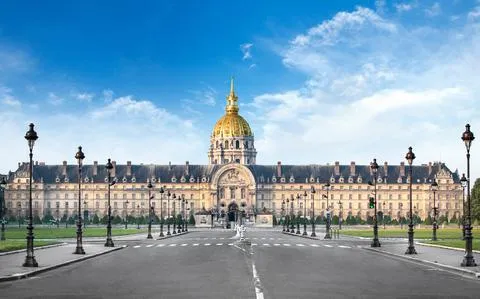
Two museums offer different starting points for exploring that history. In Paris, the Musée de l'Armée Invalides places the conflict within the broader military history of France and Europe, devoting a full department to its Two World Wars exhibit.
In Meaux, the Museum of the Great War focuses on World War I through a collection of nearly 70,000 objects. Described by Stripes Europe as Europe's largest museum dedicated to the conflict, it opened on November 11, 2011, at the site of the First Battle of the Marne. According to the museum, its 3,000 square meters of exhibition space draw on historian Jean-Pierre Verney's collection, which was subsequently expanded with more than 15,000 additional items.
The Castle of Blérancourt Franco-American Museum explores the relationship that war helped forge between the two countries. The building itself became part of that history in 1917, when the American Committee for Devastated France established its headquarters there. Under Anne Morgan's leadership, the committee assisted local civilians affected by the fighting.
The bombardment of Paris
Paris faced threats from the beginning of World War I, and the defense of the capital and surrounding territory took on particular importance during the Aisne-Marne Offensive. The Église Saint-Gervais is one place to remember the war's civilian toll: German shelling struck the church in March 1918, killing 110 people and injuring others, according to Stripes Europe.
The attack took place during a Good Friday service on March 29, 1918. A shell brought the roof down onto the congregation in what Wikipedia's Paris Gun entry identifies as the bombardment's deadliest single incident. The weapon was a German long-range siege gun, also called the Paris-Geschütz, that fired on the city from roughly 120 kilometers (75 miles) away and was in service from March through August 1918.
Wikipedia puts the total number of shells fired during the Paris Gun campaign at between 320 and 367, with a maximum firing rate of about 20 a day. Across the campaign, 250 people were killed and 620 wounded, and property sustained considerable damage.
For remembrance beyond the city center, Suresnes American Cemetery stands high on the slopes of Mont Valerie, overlooking Paris. Originally established for World War I, the American Battle Monuments Commission (ABMC) site now includes graves and memorials honoring service members from both world wars.
Belleau Wood and the 1918 offensives
At Belleau Wood, the ABMC's Marine Monument, commonly called "Iron Mike," honors the Marines who took the area from enemy forces in June 1918. Stripes Europe identifies the 4th, 5th and 6th Marine Brigades among those commemorated.
The ABMC records 8,100 casualties in the U.S. 2nd Division during that month's fighting. The battle concluded on June 26, 1918; four days later, the commanding general of the French 6th Army formally gave Belleau Wood the name "Wood of the Marine Brigade."
The nearby history is also marked by the ABMC's Aisne-Marne American Cemetery. More than 2,200 service members are buried there, many having died during the summer of 1918, while a memorial wall bears witness to more than 1,000 missing service members.
The Château-Thierry American Monument, another ABMC site, honors the Aisne-Marne and Oise-Aisne offensives and overlooks the Marne River valley. Its other names are the American Aisne-Marne Memorial and Le Monument américain à cote 204.
Other stops recall specific battles and their losses. Vizery had a major role in the Battle of Soisson in the summer of 1918; some French service members are buried in its Vierzy Communal Cemetery. The Mémorial de la Ferme de la Croix Rouge marks the fighting at Croix Rouge, or Red Cross, Farm, where the 42nd Division, known as "The Rainbow Division," defeated German forces in July 1918.
At the ABMC's Oise-Aisne American Cemetery, the number of service members buried exceeds 6,000. Many died in the area's fighting in 1918.
Remembering American aviators
La Fontaine Roosevelt honors 1st Lt. Quentin Roosevelt, who died in a plane crash after defending the area against German forces in July 1918. The ABMC records his death as occurring in aerial combat near Chamery on July 14, 1918. The youngest son of former President Theodore Roosevelt, he served in the 1st Pursuit Group's 95th Aero Squadron and received the French Croix de Guerre posthumously.
Roosevelt's remains were reburied at Normandy American Cemetery in 1955. He is the only World War I service member buried there.
The Lafayette Escadrille Memorial Cemetery, also administered by the ABMC, offers another place to remember the air war. It honors the birthplace of American combat aviation and the beginnings of the French-American relationship during World War I.