
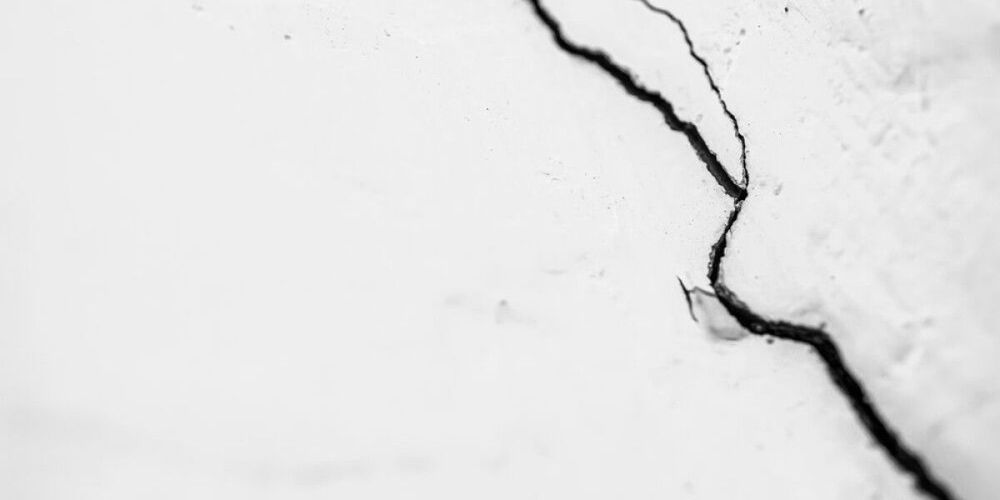
France expands state aid scheme for homes at risk of drought-related cracking
Homeowners in France facing wall cracks caused by drought conditions now have broader access to state grants under an expanded prevention scheme, following rule changes that came into force in May 2026.
The fonds de prévention argile (clay prevention fund), launched as a trial in October 2025 across 11 departments, offers financial support to property owners in high-risk zones for retrait-gonflement des argiles (RGA) — the swelling and shrinking of clay-rich soils that occurs during alternating periods of drought and heavy rain.
Between 2018 and 2022, around 240,000 damage claims due to clay shrinkage and swelling were reported across France, representing 58% of all such claims recorded since 1989. The annual cost has escalated dramatically, rising from €375 million on average during 1995-2015 to approximately €1.5 billion per year during 2018-2022. RGA now accounts for 42% of all damages compensated under France's catastrophe naturelle insurance scheme.
The 11 departments participating in the trial programme are Allier, Alpes-de-Haute-Provence, Dordogne, Gers, Indre, Lot-et-Garonne, Meurthe-et-Moselle, Nord, Puy-de-Dôme, Tarn and Tarn-et-Garonne. This remains the only official aid programme specifically targeting RGA damage, as other renovation schemes such as MaPrimeRénov' do not cover this type of work.
Expanded eligibility criteria
An order dated April 23, 2026, introduced significant changes to the scheme's eligibility requirements. Properties can now have up to three storeys, including basements and attics, compared to the previous two-storey limit. Homeowners can apply for vulnerability assessment grants even if cracks have already appeared on their property. For preventive works funding, the maximum permitted crack width has increased from 1mm to 5mm.
The scheme had faced criticism after only 19 homeowners received payments during the initial months of 2026, prompting the government to relax the rules.
Homeowners can verify their eligibility using an online calculator on the official fonds de prévention argile website. The programme covers both professional vulnerability diagnoses and preventive works, subject to income conditions set annually by the Agence nationale de l'habitat (ANAH). Three income categories qualify: very modest, modest, and intermediate.
Properties must be at least 15 years old, serve as the owner's main residence, and be detached structures not connected to other buildings. Depending on household income, the scheme covers between 50% and 90% of costs, with maximum limits of €2,000 for assessments and €14,000 for preventative works. With the average cost of an RGA-related claim on an individual house reaching €16,500, early intervention can prove financially advantageous.
New risk map affects millions
A revised national risk map for RGA came into effect on July 1, 2026, replacing the 2020 version. Areas classified as moderate or high risk now cover 55% of French territory, up from 48% previously. The government estimates that 12.1 million existing houses, or 61.5% of all houses in France, are now located in exposure zones. Projections suggest this figure could reach 16.2 million homes by 2050.
The updated map applies to property sale agreements and deeds for building land, as well as individual house-building contracts, potentially altering geotechnical study requirements for buyers and builders. Under the ELAN law implemented in 2020, geotechnical studies are mandatory in areas with medium or high RGA risk: a G1 study before land sales and a G2 study before construction.
Insurance claim challenges
Most homes suffering RGA damage following drought require a catastrophe naturelle declaration in their commune to make insurance claims through this special process. According to a 2022 Cour des comptes report, 50% of communal requests for catastrophe naturelle recognition for drought damage were unsuccessful over a nine-year period.
French courts have increasingly ruled that homeowners must demonstrate they took preventive measures against drought damage for insurance claims to be accepted. Homeowners have 30 days after publication of the catastrophe naturelle declaration in the Journal Officiel to file claims with their insurers.
The financial pressures on the insurance system have led to increased costs for policyholders. Since January 1, 2025, the catastrophe naturelle surcharge on property policies rose from 12% to 20% for non-life policies and from 6% to 9% for motor insurance.
RGA affects potentially millions of homes across France, particularly in the south-west and centre, causing cracks in walls, foundations, and pipework that can sometimes result in serious structural damage.