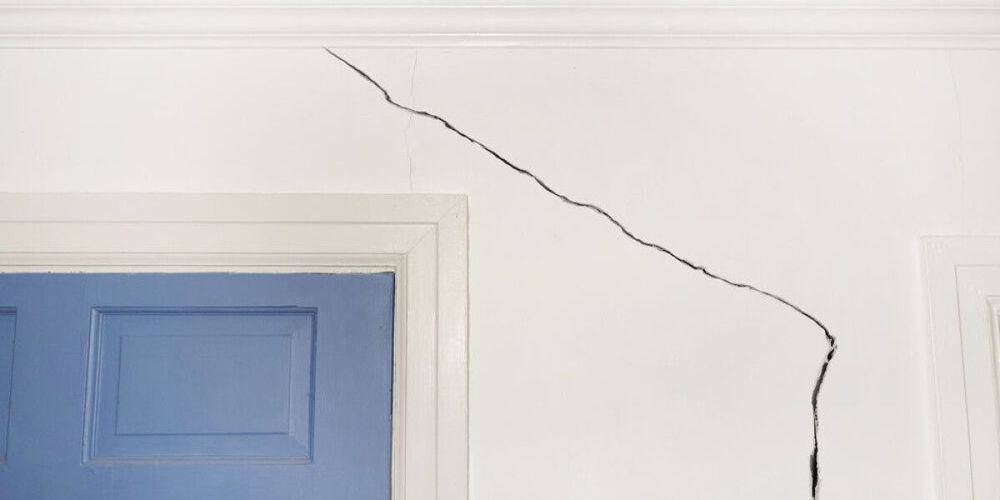
Clay shrinkage threatens 12 million French homes as climate crisis accelerates damage
France is confronting an escalating property crisis as clay soil damage threatens more than 12 million homes, with campaigners warning that increasingly severe weather patterns are driving a sharp rise in structural failures across the country.
Dominique Goldsztejn, vice-president of the Association Urgence Maisons Fissurées (AUMF), said the return of rainfall this autumn and winter following prolonged drought will reveal or worsen many cases. "We fear a very significant increase in the number of cracked homes in the coming months," she told The Connexion.
A newly published national map shows 55% of France is now exposed to moderate or high risk from retrait-gonflement des argiles (RGA), the shrinking and swelling of clay soils. This represents a significant expansion from 48% under the previous 2020 assessment. The government estimates 12.1 million homes, or 61.5% of the national housing stock, now sit in exposed areas, compared with 10.4 million identified four years ago.
Accelerating crisis overwhelms compensation system
The problem has intensified dramatically in recent years. Between 2018 and 2022, approximately 240,000 clay shrinkage damage claims were filed, representing 58% of all RGA-related claims since records began in 1989. The 2022 drought alone generated between €2.9 billion and €3.5 billion in insured losses, making it the most expensive single year on record.
Annual costs have soared from approximately €400 million per year during 1989-2015 to approximately €1.5 billion per year between 2018 and 2022, nearly quadrupling over the period. Insurance industry projections estimate RGA will cause €43 billion in cumulative costs between 2020 and 2050, three times the €14 billion observed between 1989 and 2019.
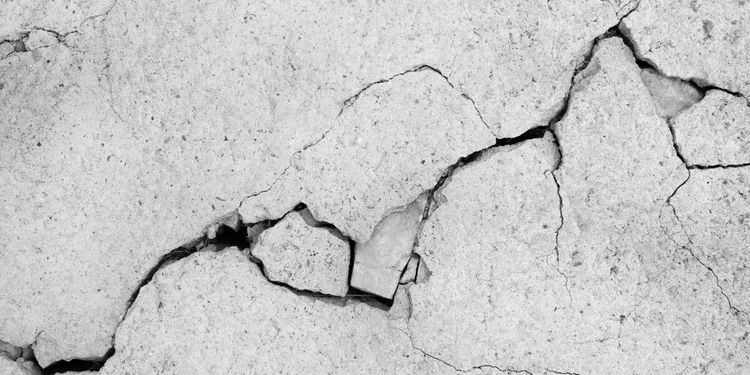
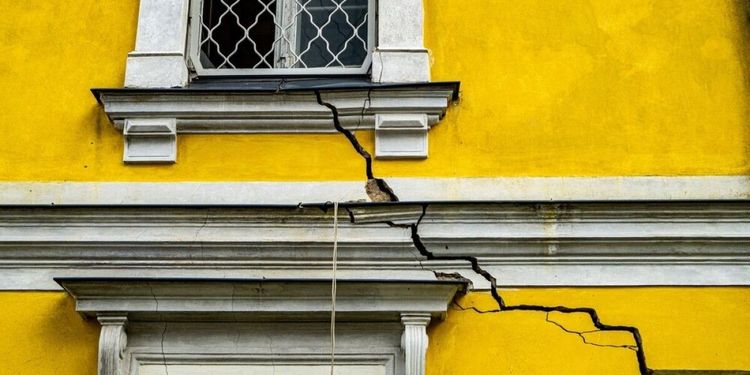
The phenomenon occurs when clay-rich soils contract during drought and expand when wet again. Repeated cycles stress foundations and walls, leading to cracks, subsidence, and problems with doors and windows. "The clay in our soils is like a sponge," Ms Goldsztejn explained. "It contracts during droughts and then swells when it becomes saturated with water."
Clay distribution varies within the ground, causing different sections to expand and contract at different rates, placing additional stress on foundations. Once damage begins, each subsequent drought cycle can worsen the situation unless the underlying problem is addressed.
Homeowners face multiple compensation barriers
Property owners seeking compensation under the catastrophe naturelle system face two significant hurdles. First, their commune must be officially recognised as having suffered a natural disaster. Following this summer's prolonged drought, mayors in several Dordogne towns asked residents to report new or worsening cracks for potential recognition.
In Bouniagues, south of Bergerac, 25 claims had been filed by early September from just over 500 residents. However, recognition depends partly on meteorological criteria calculated over geographical areas rather than the number of damaged properties. Of 1,941 applications relating to 2023 and 2024 droughts, only 107 were successful, according to AUMF figures.
Even when a commune gains recognition, insurers can reject individual claims if their experts conclude RGA was not the main cause. Homeowners may then need to fund their own expert assessment and potentially a geotechnical study before taking the matter to court, a process that can take years. The excess payment for clay shrinkage claims stands at €1,520, compared with €380 for other natural disaster claims under the same scheme.
The catastrophe naturelle regime was created in 1982, though drought damage was only added to the list of covered perils in 1989. The Caisse Centrale de Réassurance, a public-sector reinsurer, covers 90% of France's natural disasters insurance market, meaning the French state is ultimately exposed to most RGA costs.
A recent Cour de cassation ruling has added further uncertainty. The court quashed a lower ruling that awarded a Gard homeowner €40,000 after 2016 drought damage, saying judges must first verify that "usual measures" had been taken to prevent such damage. The case has been sent to a different appeal court for reconsideration. No clear national definition of "usual measures" currently exists.
Prevention scheme remains limited
The government has expanded a €30 million scheme intended to help homeowners prevent RGA damage. The fonds de prévention argile, launched in 2025 as a trial covering 11 departments, provides financial support for professional assessments and preventive work on eligible main residences.
Depending on household income, between 50% and 90% of eligible costs can be covered. Maximum assistance stands at €2,000 for vulnerability assessments and €14,000 for preventive work. From May, eligibility was widened to include houses of up to three storeys and properties where cracks have already appeared, with the maximum permitted crack width increased from 1mm to 5mm.
However, the scheme remains restricted to the 11 trial departments, and only 19 homeowners had received payments during its first six months. Research into prevention continues, including insurance industry-supported trials of methods such as injecting water into the ground around houses during dry periods.
For homeowners, practical preventive measures include maintaining gutters and drainage systems, managing vegetation and avoiding deep-rooted plants and large trees close to buildings. Houses built with concrete blocks since the 1970s face particular vulnerability, as nationwide standards at that time allowed smaller and shallower foundations than currently required to protect against clay subsidence.
New building regulations take effect
The updated clay exposure map, enacted by decree on 9 January 2026, applies under Article 68 of the Élan Act from 1 July 2026, requiring geotechnical studies for new construction in affected zones. This aims to prevent future damage by ensuring appropriate foundation design in high-risk areas.
The problem extends beyond France. Clay shrinkage affects multiple countries including the United Kingdom, United States, Australia and South Africa, with the UK experiencing costs exceeding £400 million annually, demonstrating this is a global climate change impact.
Calls for systemic reform
The AUMF argues the existing system cannot cope with the scale of the crisis. The association is calling for a national RGA compensation fund to assess damage on a house-by-house basis rather than through commune recognition. Under the proposal, independent technical assessments would establish the extent of RGA damage, with the fund covering ground and foundations while insurers continue to cover building damage.
The association estimates that contributions from home insurance, property transactions, construction materials, registration duties and building permits could raise €1.5 to €1.7 billion annually. This would address existing damage while investing in prevention.
"RGA has become a systemic risk," Ms Goldsztejn said. "We need to treat existing homes, prevent new damage and stop building houses vulnerable to the problem."
Homeowner experiences
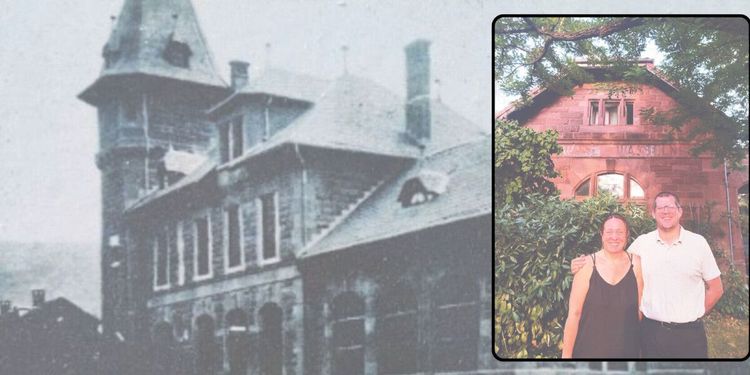
James Fonseca bought his property in north-east Gers in 2002, unaware the department was among the areas most severely affected. After the 2003 heatwave caused significant movement in walls, his commune was declared a disaster area. However, his insurer's expert said each crack would be treated separately and subject to an excess, making a claim uneconomic. He paid for steel braces to reinforce one wall, but further movement occurred during winter 2025-26.
His mayor advised him about a pilot scheme offering up to €15,000 towards expert assessments and repairs, depending on income, but he received no response to calls and emails. "Given the scale of the problem and the cost of stabilising buildings, I believe the continuation of current weather patterns will have serious consequences for homeowners in the department," he said.
Keith Allen from Aude had better fortune. After fine cracks appeared in August 2022, his commune was recognised as having suffered a natural disaster following the very dry summer. His insurer eventually agreed to pay nearly €150,000 for remedial work after experts surveyed the damage and tested drains and subsoil. The work included injecting resin beneath load-bearing walls, installing concrete areas around three sides of the house to prevent rainwater reaching foundations, and inserting metal staples to monitor further movement. "It has been a lengthy process, but the eventual settlement has allowed the necessary structural work to be carried out," he said.
Lindsay Phillips, who has lived in an 18th-century property in Lorgues, Var, since 1994, noticed a large crack about three years ago. After Lorgues was declared a natural disaster zone, inspections found rock beneath one corner but more than 10 metres of clay beneath another side. "My house has no foundations of any kind," she said. Her insurer has agreed to remedial works due to begin this autumn.
Tony Benstead in Dordogne contacted his insurer after his commune declared a catastrophe naturelle. An expert assessed a crack visible on both sides of a thick stone wall, said "c'est normal" and left. "I was surprised that the assessment was so brief," he said. "I have no idea how bad cracks have to be before they can be repaired."
Charlotte Sitterly, who moved to Pas-de-Calais nine months ago, has already noticed cracks in her property. "I have not paid for an official diagnostic yet, as the cost seems too high," she said. The worst cracks appear where the 126-year-old original building joins newer sections. "I can see daylight through some. It is hard to tell if they are getting worse. But the weather has been extreme this year, and I am sure that has not helped."