Help trace Amiens family to return lost First World War postcards
An Australian woman is appealing for help locating descendants of a couple from Amiens in the Somme department so she can return a collection of First World War postcards that her great-grandfather took from an abandoned home more than a century ago.
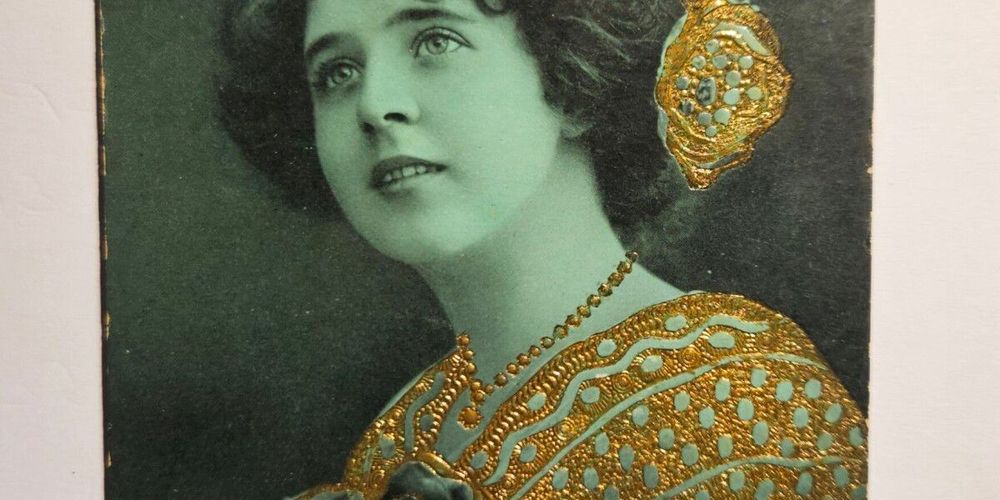
Nicki Rogers inherited the postcards, which were among items collected by Australian soldiers as they moved through northern France during the conflict. The collection includes twelve cards exchanged between Juliette Herbault and Victor Herbault, whom she believes lived in the Amiens area.
Ms Rogers' great-grandfather was among the more than 295,000 Australians who served on the Western Front between March 1916 and November 1918. During this period, 46,000 Australian service members lost their lives and over 130,000 were wounded.
The Battle of Amiens
Australian forces played a significant role in the Battle of Amiens, fought between August 8 and 11, 1918. All five divisions of the Australian Imperial Force participated in this decisive Allied victory under Lieutenant General John Monash, advancing 13 kilometres on the first day. The battle marked the beginning of the Hundred Days Offensive that ultimately led to the Armistice on November 11, 1918. German General Erich Ludendorff later described August 8, 1918 as "the black day of the German army."
"My great-grandfather fought in France during World War One. As the soldiers moved through towns, they collected postcards from abandoned homes," Ms Rogers told The Connexion.
The city of Amiens had been captured by German forces on August 31, 1914, but French troops recaptured it on September 28, 1914. For most of the war, the city remained just behind Allied front lines, making civilian displacement common as military operations intensified in the region.
Details from the postcards
Using details from the cards and their handwritten messages, Ms Rogers believes Victor was born between approximately 1892 and 1897 and lived at 16 Rue du Marais in Renancourt, a neighborhood in southwest Amiens that was historically an ancient village maintaining a rural character. Juliette appears to have been a similar age and signed several cards: "Your wife, Juliette Herbault."
During the First World War, postcards became the most popular mode of communication, with between three and four million letters and postcards sent daily from behind the lines to the front, and 1.8 to 2 million traveling in the opposite direction.
Despite searching genealogy websites and military records, Ms Rogers has been unable to identify the family. Some cards reference other family members, including Marie and Lucienne, and Victor's parents.
One postcard reads:
Cher Victor,
Je pense toujours à toi, bien le bonjour à ta mère et ton père pour moi, et Marie et à Lucienne.
Ta chérie qui t'aime,
Juliette.
The message translates to: "Dear Victor, I am always thinking of you. Please give my best to your mum and dad, and to Marie and Lucienne. Your sweetheart who loves you, Juliette."
A love story seeking closure
"It has been both insightful and fascinating to have them translated using AI and to read first hand what ordinary people were writing about during this time of conflict," Ms Rogers said.
"It is a beautiful yet heartbreaking love story, and I feel it is not my story to keep here in Australia. I am reaching out to anyone that may be able to assist me in finding the family so I can send the cards to their rightful home."
The Battle of Amiens resulted in Allied forces capturing 29,144 prisoners, 338 guns, and liberating 116 towns and villages, though the advance came at a cost of 21,243 Allied casualties. The military operations caused significant disruption to civilian life throughout the region.
Of the 44,000 Australians who died on the Western Front during the First World War, approximately 17,000 have no known grave and are commemorated at the Australian National Memorial at Villers-Bretonneux, underscoring the ongoing importance of identifying and honoring individuals from this period.
Readers with information about the Herbault family can contact Ms Rogers at nickirogers3@gmail.com.