Bond pressure extends beyond France
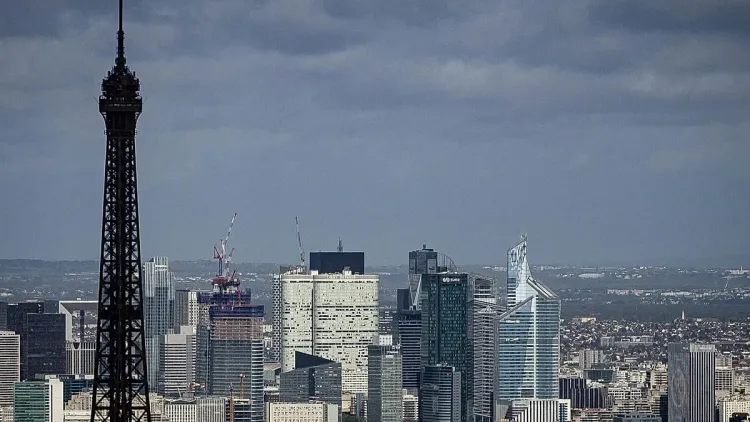
The French 10-year yield exceeded 5% during trading on October 21, 2026, and reached roughly 5.10% the next day, according to Admirals' OAT-Bund analysis. On October 23, the gap between French and German 10-year yields opened at 176 basis points. That was the widest spread since 2011, when it reached about 191 basis points.
Kolbe interprets the opposing moves in French and German yields as the start of capital flight within the eurozone, with investors favoring Germany's perceived safety. He attributes growing market unease to France's fiscal problems, street unrest, economic policies and political resistance to reform.
Signs of pressure also appeared in Belgium. Its 10-year yield spread over German Bunds exceeded 104 basis points on October 22, the widest since 2013. Admirals identifies that move as evidence that stress associated with France is reaching other euro-area borrowers.
Foreign investors' exposure is another factor. TradingNews puts non-residents' share of French government bond holdings at about 57.5%, a figure Admirals flags as coming from a single source. That ownership helps explain why foreign selling can affect both French bonds and the euro.
France faces rising debt and a difficult budget
France's public debt stands at a record of about $4 trillion, equivalent to 119% of GDP, Fortune reports. The ratio is the highest since the immediate aftermath of World War II, and Moody's forecasts an increase to 122% in 2027.
Moody's left France's sovereign rating at Aa3 on October 23, 2026, retaining a negative outlook. Fitch and S&P Global assign an A+ rating, one notch lower, according to Fortune.
The government's draft budget for 2027 proposes approximately €54 billion in savings and seeks to bring the deficit to 5.0% of GDP, according to Admirals. At the same time, state interest costs are set to increase from €64.8 billion in 2026 to €74.2 billion in 2027.
Moody's expects the budget to pass, potentially by decree, but forecasts a deficit of about 5.2% of GDP rather than the government's target. Its assessment reflects expectations of weaker growth than the government projects and political obstacles to carrying out spending cuts.
For 2026, the French government now anticipates a deficit of 5.4% of GDP, Kolbe writes. He puts government spending at 57.2% of GDP and the tax-and-levy burden at 43.6%. French inflation was 3.1% in September.
Weak activity in both economies
The French activity figures cited by Kolbe show weakness across construction and industry. The construction Purchasing Managers' Index stood at 39.8 points, while the preliminary manufacturing PMI for October fell back into contraction at 49.3. Third-quarter industrial output declined 1.9% from the preceding quarter.
Germany's economy also stalled in the third quarter, following a brief recovery during the first half, according to the Bundesbank assessment cited in his commentary. Public-sector deficits totaled €98.8 billion in the first half under Chancellor Friedrich Merz and Finance Minister Lars Klingbeil.
Kolbe also reports monthly losses of 10,000 to 15,000 German industrial jobs, chemical-industry capacity utilization of 73%, and industrial production more than 15% below its pre-lockdown level.
He uses the two countries' performance to argue that government borrowing cannot generate growth and that public consumption displaces private economic activity. Those are the commentary's policy conclusions, rather than findings established by the market figures alone.
ECB intervention is not assured
Kolbe expects the European Central Bank will probably be called on to intervene unless the deterioration in French bonds reverses soon. Admirals, however, identifies several constraints on a response.
The ECB's deposit rate has been 2.50% since September 2026. Euro-area inflation reached 3.8% that month, including an 18.9% increase in energy prices, limiting the central bank's scope to ease pressure on French bonds.
France has also been subject to the EU's excessive deficit procedure since July 2024. ECB board members disagree over whether the increase in yields reflects economic fundamentals, according to Admirals, leaving uncertain whether the bank would use its Transmission Protection Instrument.
A shared economic approach, diverging political interests
Kolbe sees Berlin and Paris moving apart over Ukraine and joint defense policy, with defense cooperation likely on hold for now. He does not expect a Marine Le Pen presidency to repair that divide: she has said Germany should take on a larger portion of the EU budget, a demand he expects would find little support in Berlin given France's budget difficulties.
Despite those differences, he argues that both governments remain committed to welfare-state spending and economic intervention. His proposed alternative is a shift toward market-oriented policies, coupled with a candid assessment of the economic problems.
As an example, Kolbe points to Argentina, where he says 50,000 public-administration jobs were eliminated, the budget was brought into primary surplus and the economy recovered.