Eligibility and application requirements
A decree published in the Official Journal on November 20, 2026, established the grants for businesses affected by damage and looting. Restaurants are explicitly covered, alongside retail stores, bakeries, patisseries and bars.
According to Riviera Radio, applicants must have fewer than 50 employees and annual revenue below 10 million euros. Sole proprietors can apply, as can associations subject to corporate income tax.
Businesses must document a revenue loss of at least 25%. For those hit on October 17 or 18, the decline must have occurred in October. Those affected from October 19 through November 19 may use either October or November, Riviera Radio reported. The comparison uses 2025 revenue figures, or September 2026 revenue for businesses without a completed financial year in 2025.
Applicants also need evidence that they submitted an insurance claim and filed a police complaint. They have six weeks to apply through the government's Démarche numérique platform. Commissions led by regional prefects will assess applications with assistance from public finance services and regional labor and economy offices.
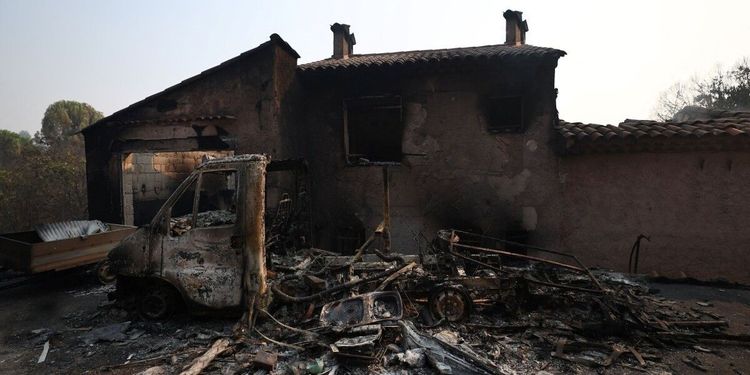
The violence centered on October 17 and 18, during protests over living costs and public services, according to Euronews and Insurance Business. Shops were looted and vehicles burned; a fire also severely damaged Limoges' town hall.
Businesses report gaps in compensation
The grants arrive while businesses near protest sites are still waiting for insurance settlements or government assistance, Localtis reported. CCI France had counted 2,488 affected businesses as early as October 17. The chamber network estimated that revenue at businesses near the demonstrations fell 60% to 80% relative to a normal Saturday.
Nicolas Papazian, president of the Marseille Commerces Hauts de Rome federation, told Localtis that little aid or insurance compensation had materialized. Contract terms have left some businesses receiving much less than their losses, he said. Riot exclusions in some policies could also lead to disputes taking months or longer to resolve.
France Assureurs said initial payments had reached some policyholders, particularly in cases that did not require an expert appraisal. Starting October 19, the federation extended the claim-reporting window to 30 days from five and announced measures intended to accelerate advance payments.
Business representatives, including UMIH president Bernard Marty, are seeking faster disbursements, access to interest-free borrowing and an urban enterprise zone with tax and social-security incentives. They say businesses that lost substantial revenue without sustaining physical damage also need help. For businesses that lost stock, equipment or weeks of trade, the national grant's 10,000-euro ceiling may cover only part of the loss.
Loans, payroll support and payment deferrals
The grants supplement previously announced national assistance. According to Localtis, that support includes tax and social contribution deferrals, short-time work arrangements and a zero-interest Bpifrance loan of up to 50,000 euros for restoring cash flow or replacing inventory before Christmas.
Service-Public Entreprendre said Decree No. 2026-995, dated October 27, 2026, activated the partial-activity scheme for affected firms. For companies employing fewer than 250 people, the state fully covers the scheme's cost. Workers receive 60% of gross pay, while those earning the minimum wage, or SMIC, receive 100%.
Urssaf is also allowing employers and self-employed workers to defer social-security contributions for up to 12 months, the government service said. The relief covers payments due in November and December 2026 and January 2027.
Regional grants in Provence-Alpes-Côte d'Azur
Provence-Alpes-Côte d'Azur has revived Solidarité commerces pillés, a fund created after the 2023 riots. Localtis reported that 12 million euros had been committed to fixed payments of 10,000 euros for damaged businesses, with support from the Bouches-du-Rhône department, the Aix-Marseille-Provence metropolitan authority and shipping company CMA CGM.
The first payments were announced on November 19, although accounts differ on how many applications have advanced. Papazian said just 50 had won approval and most remained pending. Regional officials said more than 300 files had been processed with assistance from the local chamber of commerce.
A separate regional recovery plan announced the same day offers up to 5,000 euros to businesses with major revenue losses, including those that escaped looting or physical damage. It also provides a grant of up to 5,000 euros for storefront security upgrades. The regional tourism committee is preparing a campaign to bring customers back to city centers.
Papazian warned that businesses losing customer traffic were already financially vulnerable before October and that some could become insolvent over the following year.
Insured losses estimated at 207 million euros
France Assureurs put the expected insurance bill for the October 17-18 unrest at 207 million euros across 5,280 claims in a November 19 announcement. Its estimate uses claims reported through November 12 and remains subject to revision as insurers review files and complete damage assessments.
Professional property losses account for 198 million euros, or 95% of the estimated total, across 4,050 claims. The federation estimated losses involving private individuals at 3.5 million euros from 370 claims, and vehicle losses at 6 million euros from 860 claims.
Federation president Florence Lustman described the cost as unusually high for such brief events. France Assureurs compared it with the 209 million euros attributed to the 2005 riots and the 256 million euros from the 2018-2019 Yellow Vest protests, both of which lasted much longer. The estimate is substantially below the roughly 800 million euros in insured damage from the summer 2023 unrest following the killing of Nahel Merzouk.
Municipal property represented 27% of the cost of the 2023 riots, according to France Assureurs figures cited in trade reporting. Local authorities are still awaiting details of an exceptional fund that Minister Françoise Gatel promised on October 19 to help restore damaged public facilities.
Insurance overhaul will not cover October claims
A broader change to riot insurance is being finalized under France's February 19, 2026, finance law, Localtis reported. Scheduled to begin January 1, 2027, the regime will automatically form part of property-damage policies. It will use a fund managed by state reinsurer Caisse centrale de réassurance, or CCR, following a model similar to France's natural disaster coverage.
Insurance Business reported that Article 171 of the 2026 Finance Law makes riot coverage compulsory in all property-damage policies, without exclusions. The requirement will also extend to business-interruption coverage when that protection is already included in a policy. Applicants refused insurance because of riot exposure will be able to ask the Bureau Central de Tarification to compel coverage.
Insurers will be able to transfer riot losses to a risk-sharing fund that reimburses at least 90% of the losses ceded to it. The fund will be financed by a solidarity contribution and carry a state guarantee. A 0.8% solidarity levy is expected to be added to property-damage policies held by households, businesses and local authorities.
The overhaul will not apply retroactively, Papazian told Localtis. David Méheut, managing partner of Clyde & Co in France, also said the mandatory protection would not cover October's losses because the implementing decrees had not been adopted as of mid-October 2026.