
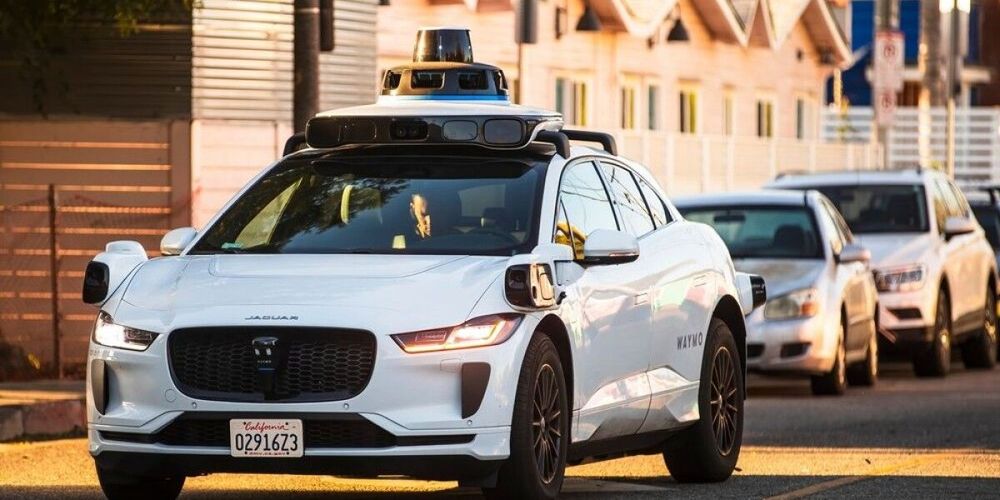
Waymo registers French business entity as part of European expansion
Waymo, the autonomous vehicle company owned by Google's parent Alphabet, registered a business entity in Paris on June 23, 2026, authorised for urban and suburban passenger transport. The move forms part of a coordinated European expansion that saw the company establish operations in Spain, the Netherlands and Germany within the same month.
The company currently operates fully autonomous robotaxi services across 10 US cities, including San Francisco, Los Angeles, Phoenix, Atlanta, Austin, Miami, Dallas, Houston, San Antonio and Orlando. Having accumulated over 100 million miles of real-world autonomous driving experience, Waymo now conducts millions of miles per week with its all-electric Jaguar I-PACE vehicles equipped with its fifth-generation Waymo Driver system.
Safety data supports expansion plans
An independent study published in July 2026 by the Insurance Institute for Highway Safety found that Waymo's driverless vehicles had crash rates 68% lower than human drivers per vehicle mile travelled across four US cities. Separately, Swiss Re, one of the world's leading reinsurers, concluded that Waymo had 92% fewer bodily injury claims and 88% fewer property damage claims over 25 million miles compared to human-driven vehicles.
Neither Waymo nor Google France responded to requests for comment on the company's plans for French operations.
Munich to launch first EU service
Waymo announced Munich as its first European Union market in August 2026, with testing expected to begin within weeks and public robotaxi service targeted for late 2027. The company began testing its autonomous vehicles on London streets in April 2026 with safety drivers, with commercial operations planned for later this year, marking its first European deployment.
French regulatory environment prepared
France adopted the Mobility Orientation Law on December 24, 2019, which established the legislative and regulatory framework for deployment of autonomous vehicles up to Level 4 automation with no driver on board for passenger transport. Between 2010 and 2020, the government introduced legislation and a regulatory framework governing autonomous vehicle fleets.
Despite government support, French firms have struggled to make significant breakthroughs in the autonomous vehicle sector. Toulouse-based EasyMile, founded in 2014 between Singapore and France, built expertise through hundreds of deployments of passenger shuttles worldwide before encountering financial difficulties. The company was acquired by a Singapore-based business and now concentrates on autonomous utility vehicles for industrial and airport logistics applications.
Operational challenges in French cities
Questions remain about how the technology will cope with French driving conditions, particularly in Paris. The roundabout at the Arc de Triomphe, where traffic gives way to cars joining it, presents a notable challenge. Narrower streets to accommodate dedicated bus, taxi and cycle lanes could also prove problematic.
Waymo will also need to navigate Paris's taxi and chauffeured car unions, which are known for staging disruptive, high-profile protests.
Competing autonomous services
Chinese firm WeRide, in collaboration with beti, Renault Group and Macif, has been testing a public-road autonomous minibus service in Valence, Drôme, since last year. Nearly 100 passengers per day travel on a 3.3km route connecting the railway station, a long-stay car park and a business park. The vehicles can be remotely monitored by human operators and are licensed to reach speeds of up to 40km/h.
France turned down Tesla's request for its self-driving system to be registered in the country, although it has been authorised in the Netherlands. In July, Transport Minister Philippe Tabarot cited concerns about safety, noting that the system proposed by Tesla allowed cars to break the speed limit by as much as 50%. Tests showed Tesla cars driving at 70km/h in 50kph zones.
Tabarot said around 200 tests of self-driving systems had been held in France since 2015, and he was confident the first self-driving system would be allowed in 2027.