French couple transforms century-old railway station into family home and holiday business
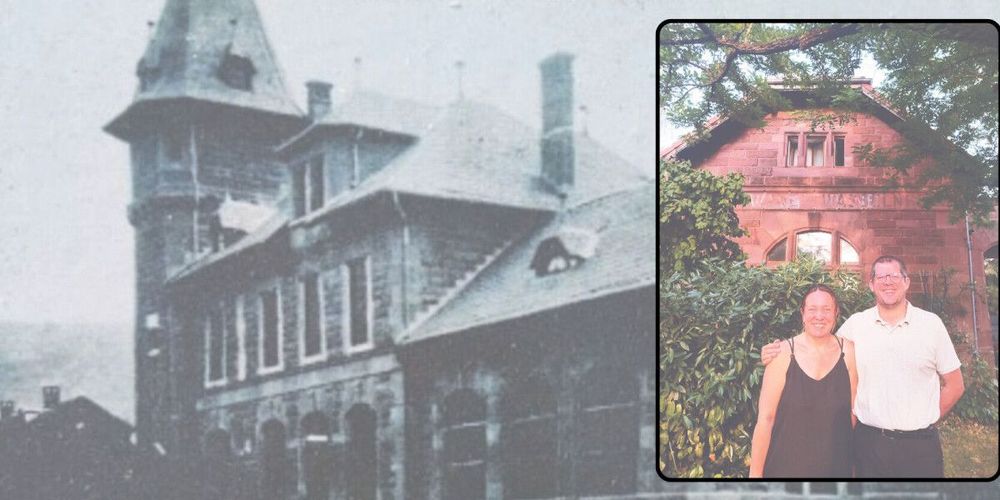
In the town of Wasselonne, Bas-Rhin—a community of approximately 5,780 inhabitants located 23 kilometers west of Strasbourg in the Mossig valley—Alexandra and Patrice Brault, both 48, have made their home in a former railway station alongside their three children.
The couple had relocated to Alsace from western France for work opportunities. Alexandra had long admired the distinctive building during her walks, imagining what life might be like within its walls. In 2018, chance intervened when she discovered the property listed for sale online. After arranging a viewing and bringing Patrice to see it, they made their purchase decision the same day.
The pair had previously discussed operating gîtes or a guesthouse and were actively seeking an unconventional property. The abandoned station proved an ideal match for their vision.
It was obviously an old property. It needed renovation, so at first it was difficult to imagine ourselves living there, but we could see the potential.
Heritage and history preserved
The station building dates to 1905, constructed during a period when Alsace was under German annexation following the Franco-Prussian War. The Imperial Railways in Alsace-Lorraine, which operated from 1871 to 1918, was responsible for railway infrastructure throughout the region during this era. The builders used grès des Vosges, a traditional sandstone whose distinctive pink hue results from decomposing iron oxide formed during the slow cooling of magma. This same material was employed in other notable regional structures, including Strasbourg Cathedral and numerous Alsatian castles.
Gare de Wasselonne sat on the railway line connecting Strasbourg to Saverne, both in Bas-Rhin. The last trains ceased operations in 1988, and the structure remained vacant for several years before being divided into separate residential units.
When we arrived in 2018, the station hadn't operated for 30 years, but thankfully many of its original features were intact.
The couple initially acquired what had been the main hall and a ground-floor apartment from previous owners who had resided there for two decades. This purchase enabled them to establish a family residence while converting the apartment into a four-guest gîte. In 2022, they expanded their holdings by purchasing a first-floor apartment, which became their second holiday rental.
Authorities had faced a decision regarding stations from this period: either designate all as historic monuments or none at all. They chose the latter option, which meant fewer regulatory restrictions on renovation work for the Braults.
It was more a matter of common sense and respecting the heritage. Our aim was to renovate without distorting the building—preserving or highlighting the original features where possible.
The total investment reached approximately €380,000, encompassing the purchase price and complete renovation costs. Major works included replacing all windows and adding a conservatory between the family quarters and the former platform area.
Original features throughout
The 210-square-meter property retains numerous period elements that recall its railway past. The entrance displays its classic blue-and-white enamel signage and wooden wainscoting, while original ceramic tiles remain in place. The main hall, transformed into living space, features warm honey-colored wooden parquet flooring.
The architecture unmistakably evokes its railway heritage, particularly through the series of tall arched windows in the former waiting room, which flood the interior with natural light. Perhaps most touching are the wooden window sills, still bearing traces of words, initials, and hearts carved by passengers awaiting their trains decades ago.
Outside, the former platform has become a stone-paved patio and lawn. Though the tracks disappeared long ago, careful observers can still identify the original platform edging, also crafted from Vosges sandstone.
Business and community
The Braults' holiday rentals have attracted steady interest from visitors. The town itself draws tourists to its annual Foire aux oignons, known locally as Ziwwelfescht—one of Alsace's oldest fairs, dating to the 15th century. Held in late August, the event attracts approximately 50,000 visitors over a weekend.
For those considering similar ventures, operating a gîte in France requires declaring the activity at the local mairie and meeting tax obligations on rental income.
Reflecting on their spontaneous decision, Alexandra and Patrice express satisfaction with the outcome. Their commitment has yielded both a distinctive home and a jointly operated business. Guests particularly appreciate the experience of staying in a railway station without the disturbance of passing trains.
Ultimately, we are the custodians of this heritage. We bought the place partly to maintain and enhance it—our aim has always been to preserve the building's heritage in all the renovations that we undertake. This is not just a business for us—we fell in love with the property, we live here, and we are very aware of how lucky we are.