
The question of conviction
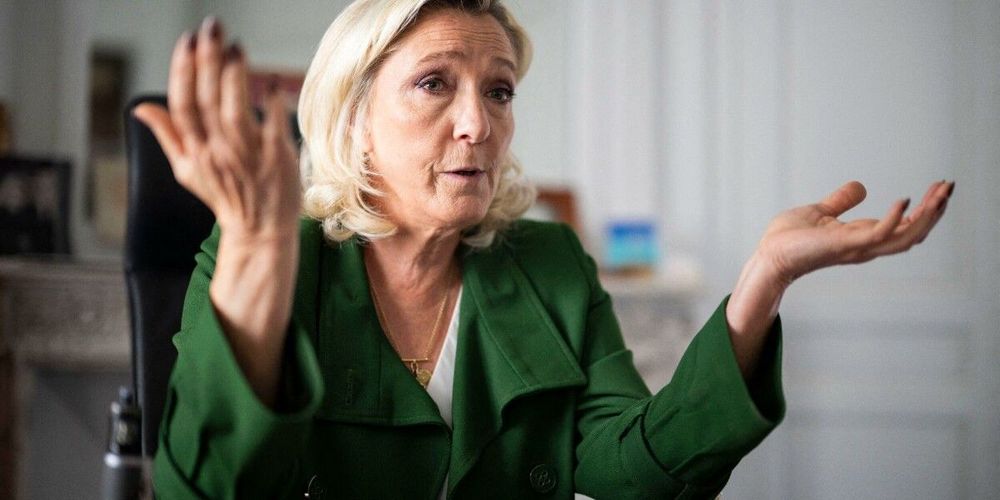
What appeared to be a settled matter has been dramatically overturned. Marine Le Pen, initially banned from seeking public office for five years, is now back in the running for France's 2027 presidential election after her disqualification period was reduced to 45 months, with most of that suspended.
Le Pen was convicted in March 2025 of embezzling European Union funds totaling approximately €3 million, with €474,000 personally involved. The allegations centred on money designated for EU parliamentary aides between 2004 and 2016 that was allegedly used instead to pay National Rally party staff. Though there remains the possibility, pending an appeal to the Cour de cassation, that she could end up campaigning wearing an electronic tag, the reduced sentence has transformed the electoral landscape.
The nation's highest court will determine whether she is actually guilty of the embezzlement charges. In approximately 70% of cases, the Cour de cassation upholds lower court verdicts, making the odds unfavourable for having her name cleared.
Critics argue that French voters would reject a convicted criminal as president. However, two counter-arguments complicate this assumption. First, France's political class is so widely discredited, and Le Pen's alleged offence mirrors practices other parties have escaped punishment for, that it may prove inconsequential. Second, France has previously elected unconvicted individuals whose conduct raised serious questions, including Jacques Chirac and Nicolas Sarkozy, the former dying unprosecuted while the latter faced legal consequences.
Bardella's dashed ambitions
Her political heir, Jordan Bardella, is reportedly struggling to conceal his disappointment. The 30-year-old leader, who became president of the Rassemblement National in November 2022 after serving as acting president from September 2021, would have been the party's candidate had Le Pen's original sentence stood. Given current political momentum, he could have found himself president of France at merely 31 years of age. His expected consolation prize, should Le Pen win, is the post of prime minister under her administration.
Le Pen's return to the political arena has thrown the French establishment into disarray. Perhaps most striking is François Hollande's renewed discussion of his own presidential ambitions. Meanwhile, Le Figaro runs speculative pieces about what would happen if the second round becomes a contest between Le Pen and Jean-Luc Mélenchon.
A fictional precedent
This prospect evokes Michel Houellebecq's 2015 novel Soumission, set during the 2022 presidential election. In that work, the final round pits Le Pen against Mohammed Ben-Abbes, the fictional leader of the Muslim Brotherhood. Mainstream socialists and conservatives urge their supporters to vote for Ben-Abbes, who wins and Islamifies France. Houellebecq's point was not crude Islamophobia, but rather illustrating the lengths to which the French left would go to prevent the hard right from ever holding power, even if it meant compromising traditional French culture.
Mélenchon leads La France Insoumise (LFI), founded in February 2016 and built around an ecosocialist and democratic socialist programme called 'L'Avenir en commun'. His party stands as far to the left as the Rassemblement National does to the right. In both 2017 and 2022, Mélenchon received more than 19% of first-round votes, narrowly missing qualification for the second round on both occasions. A Le Pen versus Mélenchon runoff would leave French voters without a centrist or moderate option, which may be why it is unlikely to occur except by accident.
The political calculus
If such a matchup materialises, the effectively disenfranchised Parti Socialiste and Les Républicains face a difficult choice. Unlike in Houellebecq's fictional world, where antipathy to Le Pen was absolute, some on the traditional centre-right now harbour no such hostility toward her, notably former president Nicolas Sarkozy.
In an extremes-only contest, La France Insoumise would likely prevail. The party's policies appear fundamentally Bolshevik. Mélenchon has expressed admiration for aspects of Hugo Chávez's government and, before Russia's 2022 invasion of Ukraine, often advocated closer relations with Russia while making comments viewed as conciliatory toward Vladimir Putin, as did Le Pen.
Le Pen has spent 15 years attempting to sanitise the fundamentally racist image of her party. The widespread perception of Emmanuel Macron's governance failures, exemplified by his dissolution of the National Assembly in June 2024 following the European Parliament elections, has helped improve the Rassemblement National's image. That decision triggered snap legislative elections resulting in political instability, with the RN winning the first round but ultimately blocked from forming a government. While LFI appears increasingly obsessed with identity politics and Marxism, the RN sounds comparatively statesmanlike.
The polling landscape
Should the contest pit these two against each other, the smart money favours Le Pen. Her 41.5% showing against Macron in the 2022 second round would form the foundation of victory, augmented by perceptions that the French deep state has worked through the courts to prevent her from even reaching the starting line.
Barring unforeseen scandals before April 2027, when the election is scheduled with a potential second round two weeks later, Le Pen appears ready. Emmanuel Macron is constitutionally barred from running, as French presidents are limited to two consecutive terms.
France's only hope of avoiding the hard left or hard right, given the moribund state of the Parti Socialiste, would be finding a popular centre-right candidate. Second to Le Pen in opinion polls, though far behind at around 18% to her 35%, is Édouard Philippe. The former Prime Minister, who served under Macron from May 2017 to July 2020 after previously serving as Mayor of Le Havre since 2010, founded the Horizons party in 2021 as a centre-right force and officially announced his candidacy in September 2024. He leads Mélenchon, who himself is ahead of Bruno Retailleau, nominated as The Republicans candidate on 19 April 2026 following a member vote.
Both the left and centre-right field multiple candidates splitting votes, meaning anything could happen. Le Pen has cause for confidence, though the contest remains over eight months away. Unlike in her previous campaigns, there is still no obvious alternative to her emerging as France's next president.