"The diagnosis has not changed that Europe needs to deliver faster on defence." An EU official offered that assessment after the cancellation. It was precisely the reasoning behind the advisory group Kaja Kallas announced last week. Member states blocked it before it met.
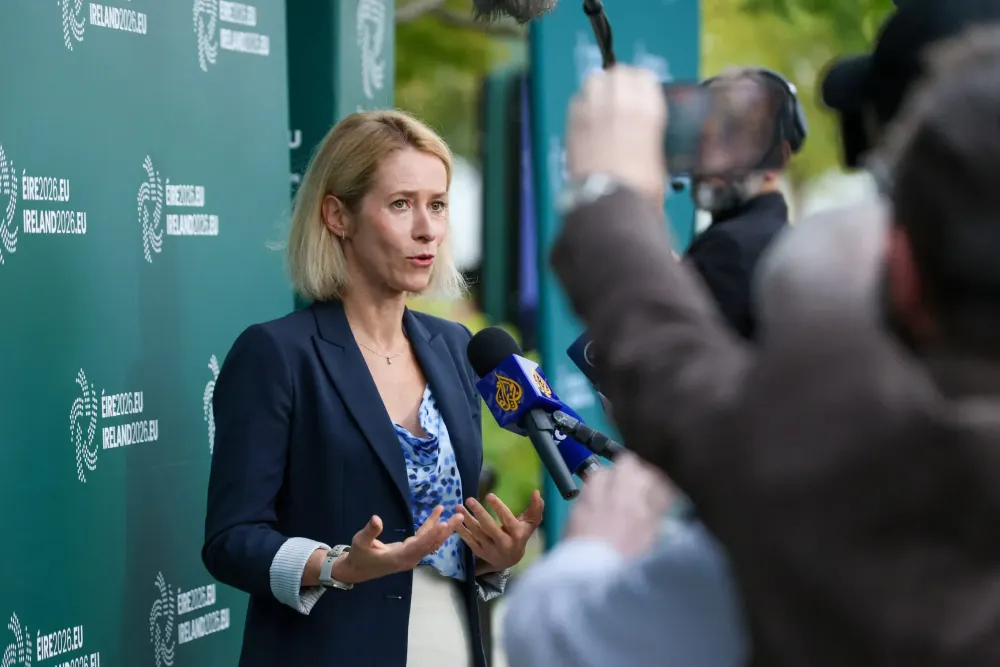
Kallas announced the body at an informal gathering of EU defence ministers in Ireland around September 1. It would bring political and military leaders together in a purely consultative format — no decision-making power over member states, no executive role.
She framed its purpose in ambitious terms: "The aim is to have some of the brightest minds on security and defence come together and really provide out-of-the-box solutions on how we can be faster in fulfilling these gaps and how we can be more effective."
Several member states rejected the initiative regardless, judging it the wrong approach. Invitees had been expected Monday at a Brussels venue for a fireside chat with Kallas. The cancellation reached them Sunday afternoon. Participants' names had never been published. The group never formally launched.
"Some member states felt this was not the right path to pursue at this moment," a source confirmed.
For Kallas, the episode is a sharp political setback. She had recently assembled a new EEAS leadership team to consolidate her institutional position. An initiative announced publicly in Ireland was quietly killed on a Sunday afternoon.
The rest of the EU official's statement underlined what the episode leaves unresolved: "Europe still needs to confront the question the group was designed to address, how to strengthen European defence faster."
That question — the one that launched the group, and that its cancellation leaves unanswered — will need a different forum.