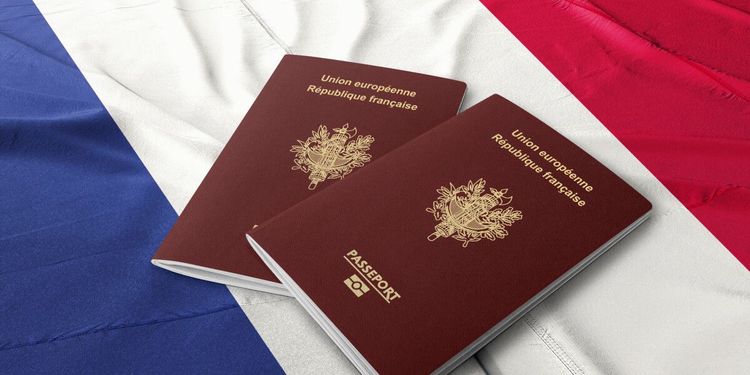
How France treats multiple citizenship
French rules work in both directions: foreigners can retain their previous nationality when becoming French, and French citizens can acquire another nationality without surrendering their French status. Applicants for naturalization or declaration must tell the department handling their case which nationalities they hold and which they intend to retain or formally renounce.
Adults most commonly acquire French citizenship through naturalization or declaration, with declaration routes including marriage or ancestry. Multiple nationality can also arise at birth through birthplace or parentage, subject to the applicable conditions. A child may become French when a parent does if the child lives with that parent and is named in the parent's naturalization decree or declaration.
People with dual or multiple nationality have the same rights and obligations in France as people born French, regardless of how they obtained citizenship.
According to Wikipedia's article on French nationality law, France formally recognized multiple citizenship for both men and women on January 9, 1973. Before October 19, 1945, multiple nationality was prohibited, and French nationals automatically lost their French citizenship if they acquired another nationality.
South Africa's citizenship ruling and tax rules
South Africa's rules have also changed. According to Nedbank, a requirement introduced in 1995 meant citizens age 18 or older had to secure permission from the Department of Home Affairs before voluntarily acquiring another nationality if they wanted to retain South African citizenship. Without that permission, they automatically lost it.
On May 6, 2025, South Africa's Constitutional Court confirmed a 2023 Supreme Court of Appeal ruling that stripping people of citizenship merely because they acquired another country's citizenship was unlawful, Nedbank says. The ruling has retrospective effect from October 6, 1995.
Tax obligations depend on residence. Nedbank says dual citizens who qualify as South African tax residents are taxed on worldwide income and must declare foreign assets and income to SARS. Tax treaties may prevent double taxation.
Residence requirements, fees and processing
For naturalization by decree, Service-Public.fr generally specifies five years of habitual residence in France before an application. Its guidance, verified May 1, 2026, provides a shorter two-year period for certain applicants, including those who completed two years of study at a French higher-education institution.
Some applicants are exempt from the residence-period requirement. These include refugees, native French speakers from francophone countries, and people who have rendered exceptional services to France.
The naturalization application requires a €255 tax stamp, or €127.50 in French Guiana, according to Service-Public.fr. Once the administration issues a receipt, it has a maximum of 18 months to decide. For applicants who can demonstrate at least 10 years of habitual residence in France, that deadline falls to 12 months.
Language, civics and income requirements
According to The Local's October 2025 guide to citizenship-rule changes, France increased the French-language standard from CEFR level B1 to B2 on January 1, 2026, for applications based on residence or marriage. A new written civics exam also took effect that day for residence-based applicants.
The Local also reports that a May 2025 circulaire from then-Interior Minister Bruno Retailleau directed prefectures to refuse naturalization when an applicant's income comes primarily from abroad. It instructed officials to assess "stable and sufficient resources" without counting social benefits.
The income guidance applied immediately, including to applications already awaiting a decision. Eligibility and documentation requirements otherwise depend on the applicant's circumstances and the route used.
When nationality can be lost or a decree withdrawn
Multiple nationality is not necessarily permanent. Changes under another country's laws or international agreements can affect a foreign national's status. A French citizen who has acquired another nationality may formally declare an intention to renounce French citizenship, and French nationality can also be withdrawn following convictions for specified crimes and offenses.
Separately, Service-Public.fr says a naturalization decree may be withdrawn within two years of its publication in the Official Journal if authorities find that the applicant did not meet the conditions. In fraud cases, the two-year withdrawal period runs from the discovery of the fraud.