Walkout leaves talks at an impasse
Disagreement over who should take part in reform talks has deepened the rift between protesters and Prime Minister Sébastien Lecornu's government. Most pupil and student organizations, together with education unions, left a meeting on the Parcoursup admissions system at the prime minister's office in Paris because far-right and business representatives were present.
Éloïse Lefebvre-Milon, co-leader of the Union étudiante student union, appealed for wider support after the walkout: "We are calling on everyone who supports the legitimate demands of young people, but also those of workers, to be out on the streets."
The Intersyndicale jeunesse alliance, comprising L'Union étudiante, La Fage, Unef and the secondary school pupils' union USL, wants a package of ten measures costing €10 billion. Its demands include ending university selection, adding 250,000 university places and reforming student grants.
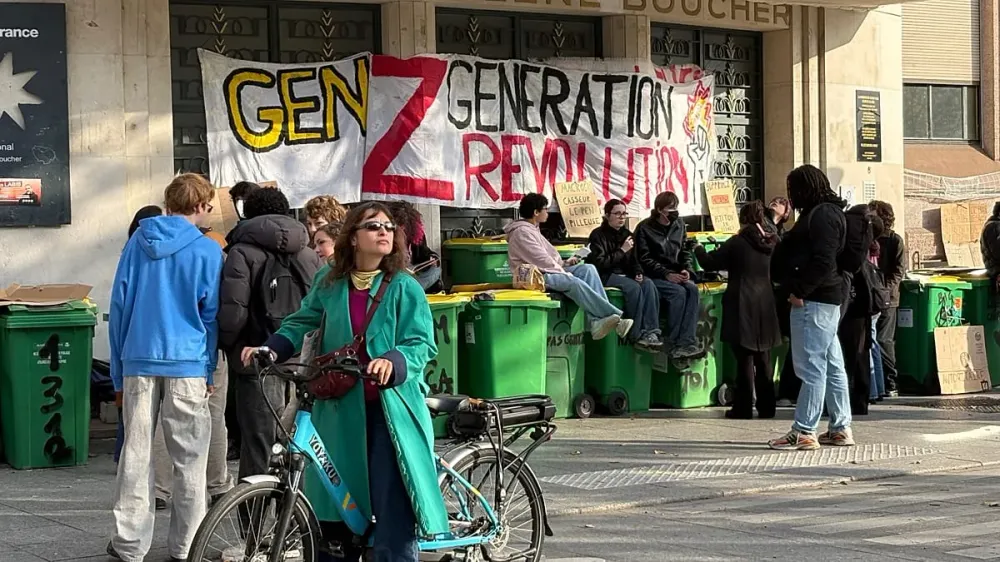
Ryad Rani, president of the Union syndicale lycéenne, said pupils intended to continue protesting for themselves and for teachers' working conditions. "The balance of power is in our favour, we have to keep going," he said.
With tensions growing around schools, Snes-FSU leader Sophie Vénétitay said Tuesday's demonstrations would feature "supervised and secure marches". Snes-FSU is France's largest secondary school teachers' union.
Admissions changes and education funding
The government's October 26 concessions set out two stages for changing Parcoursup, the national online system that allocates university places: an overhaul for the 2027 admissions round, followed by a complete replacement in 2028. France's Higher Education Ministry says a record 1.05 million people applied through the platform this year.
For 2027, institutions would have to publish selection criteria in terms applicants can understand, and every rejection would be explained from June. The plan also recognizes a "right to error" in students' study paths. Guidance would begin in seconde, the first year of upper-secondary school, and include immersion days in higher education.
A committee involving secondary school pupils, teachers and ministers is expected to deliver its first recommendations on Parcoursup's replacement by the end of November 2026. The government has said it will introduce legislation if needed. With the new system scheduled for 2028, responsibility for its launch would rest with the government that succeeds President Emmanuel Macron after the 2027 election.
The package also promises 15,000 additional higher-education places across 2027 and 2028: 10,000 in BTS vocational programs beginning with the 2027 intake, 4,000 in BUT university technology institutes and 1,000 university places tied to the health-licence pathway. Student grants would rise with inflation starting in the 2027 academic year.
For school buildings, the government offered up to €4 billion in low-interest renovation loans through 2030. A separate €1 billion program would fund campus renovations through 2029.
Class sizes in seconde would be limited to 28 pupils beginning in 2027 at the least-favored half of lycées, with the cap extended to all lycées in 2028. To fund the measure, the government plans to reverse 836 secondary teaching-post cuts in the 2027 budget and create another 500 teaching posts.
Injuries and arrests around schools
Although the demonstrations have largely remained peaceful, several schools have experienced violence. On Monday, November 9, firework mortars were discharged inside two secondary schools in Seine-et-Marne, east of Paris. The regional council reported two injured pupils at one school. No one was injured at the other, though education officials described pupils as being "in shock".
That morning in Bègles, near Bordeaux, about 15 masked youths set bins alight outside the Émile-Combes vocational lycée. Projectiles they threw struck the headteacher in the head. He was taken to a hospital, but his condition was not considered serious. Four people were arrested.
France 3 Normandie reported five arrests following disturbances near schools in Le Havre and Rouen. Fireworks were also discharged outside a school in Angers, in western France. Ici reported additional incidents in the northeastern department of Meurthe-et-Moselle.
A wider dispute and another strike call
The lycée movement has joined a broader protest wave that saw widespread rioting and looting on October 17. During those demonstrations, protesters briefly entered Marseille's city hall by force, while a fire destroyed the roof and clock tower of Limoges' town hall. About 2,400 people were arrested in connection with that day's protests.
French governments have faced sustained pressure from youth movements before. During the mass protests against his labor reforms in 2016, then-President François Hollande privately likened a student movement to toothpaste: "You can get it out of the tube, but you cannot get it back in."
At the November 9 social conference, Lecornu also announced that a 1.6% minimum-wage increase would take effect early, on December 1, 2026. It would bring the Smic to about €1,502 net per month. The CGT and other unions rejected the increase as insufficient.
Following the November 9 meeting at Matignon, CGT General Secretary Sophie Binet announced another day of strikes and mobilization for November 17 on behalf of the intersyndicale alliance. A separate public-sector union alliance has called for action on the same date, while UNSA, FSU, Solidaires and CGT have urged private-sector workers to participate.