Ten defendants face trial; alleged leader awaits extradition
The proceedings concern a struggle for control of La Duchère, a large housing estate overlooking western Lyon, in which investigators identified at least 17 victims. Two were killed: Sofiane Sebiat, 16, and Bilal Haifi, 20, who were shot outside a known drug-dealing location.
Eleven people were originally due to stand trial. At the opening hearing, presiding Judge Éric Chalbos separated Ben Addi's case because his extradition could not be completed in time, France 3 Régions reported. He will be tried later. Of the ten defendants appearing in court, six are in pretrial detention.
The trial is scheduled to end on December 18, with a verdict expected that day. It is being heard by a specially composed Rhône assize court consisting entirely of professional judges. France 3 Régions said this court format became available for organized-gang crimes on January 5, 2026, under the anti-narcotics law of June 13, 2025.
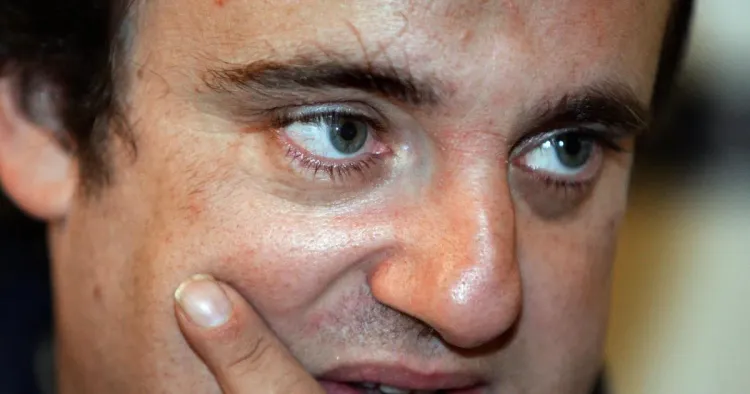
Ben Addi, known as "Fiston" or "El M7", is accused of directing violence against former lieutenants. The Telegraph reported that a 299-page indictment describes the fear he inspired. Ayoub Oubaaziz, who was caught up in the violence, told investigators: "In the neighbourhood, he's the big bad wolf. He traumatises people. I don't want to talk about him. I don't want trouble."
According to France 3 Régions, prosecutors' case covers six episodes in 2022. A February 13 shooting on avenue de la Sauvegarde was followed by a March 19 attack outside 315 avenue Sakharov that wounded five minors, ages 15 to 17. Four men were wounded in a shooting at a barbecue in square Averroès on May 1-2. The remaining episodes were the June 14-15 double homicide, an August 29-30 arson and grenade attack in Écully, and an October 11 attempted killing thwarted by police.
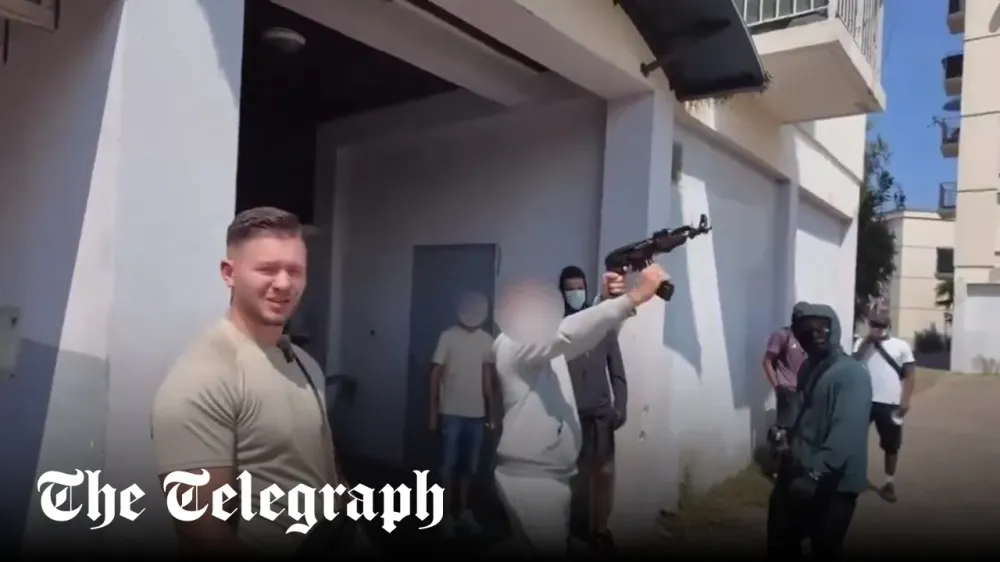
Investigators linked four attacks—on February 13, March 19, May 1 and June 14—to the same Kalashnikov. The dealing location at 315 avenue Sakharov is beneath a residential block that stretches 160 meters and contains more than 300 homes.
Orders allegedly sent from Colombia
Lyon public prosecutor Thierry Dran describes a system of "completely outsourced" violence, with senior bosses "all abroad or in prison" and shooters often hired remotely. Investigators allege that Ben Addi continued ordering attacks after fleeing to Colombia in August 2022.
France 3 Régions reported that Ben Addi had previously established himself in Spain. Following an Interpol red notice, he was arrested on a street in Cali on October 25, 2022. He has since been held in Bogotá's La Picota prison.
A February 2025 Colombian intelligence report said Ben Addi retained "real influence" in prison and linked him to the Lyon operations. A regular visitor was identified as a cousin of Oscar G, a Colombian army veteran implicated in the recruitment investigations. "It seems clear that Karim Ben Addi has resumed control of his criminal operations in the Lyon area from his Colombian prison cell," the report concluded, warning of "further recruitment of sicarios", or hired killers.
Investigators also examined exchanges between one commando and an unidentified handler using the encrypted messaging app Signal. A witness reported hearing prison sounds and conversations in Spanish in the background.
Dran said extradition was slow because Colombia must approve each case against Ben Addi separately. "You can't extradite him for his entire 'body of work'," he said. Before the trial opened, he considered a trial in absentia unlikely. An observer told The Telegraph: "He'll do his best to stay in Colombia for as long as possible."
Colombian recruits, but no 'Colombian mafia'
Reports citing French security sources have put the number of suspicious Colombian arrivals in the Lyon area at more than 30, amid inquiries into former soldiers being recruited for violent assignments. Dran disputes that estimate. He confirmed "seven or eight" arrests in organized-crime cases but said only one of those arrested was a "paramilitary".
One Colombian unit spent a month at a secluded farmhouse in the Loire near the Condrieu vineyards. Its members were supplied with food, a PlayStation and guns packed into suitcases. Investigators say the weapons available included AR-15s, M16s, Kalashnikovs and more than 30 pistols.
Oscar G, a qualified sniper with 11 years in the Colombian army, admitted accepting €5,000 (£4,400) to work as a cobrador, a debt collector who uses violence. Another Colombian told investigators he had been approached to kill people over unpaid drug debts. "I told myself that the targets were drug traffickers, bad people," he said.
Asked whether the Colombian recruitment phenomenon was specific to Lyon, Dran answered: "Yes." But he rejected the idea that a Colombian organization controlled it: "There's no Colombian mafia. Colombians are just a side issue. It could just as easily be Mexicans or Peruvians."
Élise Rey-Jacquot, who represents a Colombian detained since January, said her client had no military training and "didn't come to France to take part in an armed commando unit". She added: "He'd like to go back to Colombia."
A wider market for hired violence
The violence extends beyond the Colombian recruitment cases. Dran said lieutenants and recruiters advertise online for shooters, increasingly drawing minors from Paris, Marseille and other places who have no knowledge of the neighborhoods where they are sent. Recruits receive a gun, a target and sometimes a car. Police unionist Sébastien Gendraud described a market in "low-cost killing", with young gunmen prepared to kill for as little as €2,000 (£1,700).
Lyon's reputation as a prosperous center of French gastronomy contrasts with attacks around drug-selling locations that can generate tens of thousands of euros a day. Rivalries have brought kneecappings, known as jambisations; automatic gunfire directed at doors; and paillassonnages, in which doormats are set alight. The principal flashpoints are outside the historic center, in La Duchère, Vénissieux, Vaulx-en-Velin and the Grandclément area of Villeurbanne.
The city has about 200 drug-dealing locations. Referrals of drug cases to specialist prosecutors have increased 60% over four years, reaching 68 so far in 2026, compared with 61 during all of 2025. Dran also confirmed that Marseille's DZ Mafia operates around Lyon, though not as its dominant force. "They don't control Lyon," he said, describing "alliances with some local groups while fighting others".
Residents unconnected to trafficking have been killed. In Décines, east of Lyon, a fire spread through a stairwell in May after an apparent doormat-burning attack, leaving three residents dead. Mayor Laurence Fautra asked Interior Minister Laurent Nuñez for reinforcements. Nearly six months later, the requested local patrol brigade had not arrived. She told The Telegraph that the outcome, despite years of investment in such neighborhoods, represented a collective failure.
In another recent case, pursuers chased a gangland figure who had just left prison along the A7 highway south of Lyon in broad daylight. They assaulted a nurse who stopped to help and forced the man into a car. His body was later discovered burned, with a bullet wound to the head. "It involved unprecedented violence," Dran said.
Sociologist Thomas Bujon said Lyon already had a history of pioneering large-scale drug importation. The change from around 2020, he said, was the intensity of violence over retail territory. Asked about the use of Colombian contract killers, he offered a tentative assessment: "Militarisation could be a second stage."
New legal powers and a focus on criminal assets
France's anti-narcotics law, Law No. 2025-532 of June 13, 2025, established the Paris-based National Anti-Organized Crime Prosecutor's Office, or PNACO, with expanded jurisdiction. It also made recruiting minors for drug trafficking through online platforms or social networks punishable by up to seven years in prison and a €150,000 fine, according to the Library of Congress's Global Legal Monitor. The Telegraph reported that the law also introduced high-security prison wings and strengthened investigative and anti-money-laundering powers.
Dran welcomed those measures while acknowledging France's relative lack of experience confronting mafia organizations. "We are dwarfs compared with Italy," he said. He nevertheless pointed to results in Lyon, one of France's eight specialist interregional organized-crime jurisdictions: only one of the 21 homicides it handled in 2025 remained unsolved.
Prosecutors have seized or confiscated between €27 million and €28 million in 2026, compared with €21 million the previous year. Dran is preparing a visit to Dubai as France seeks more cooperation on criminal assets held overseas. He argues that imprisonment alone is insufficient if traffickers can recover their wealth on release: "If they go to prison for four or five years and get out and everything they put aside is still there, it doesn't matter to them."
He also cited the prosecution of senior figures associated with the DZ Mafia. On November 16, the special assize court of Bouches-du-Rhône in Aix-en-Provence sentenced Amine Oualane, 32, a presumed leader of the group, to life imprisonment for his role in a 2020 triple murder. His sentence included a 20-year period before eligibility for release. Karim Harrat, 38, presented as the mastermind, received life with a 22-year period, according to Le Monde. Three other defendants received prison terms of 18, 25 and 30 years.
"They've actually traced it right up to the very top of the DZ," Dran said. He cautioned, however, that today's gangs operate as "a sort of loose network" with several leaders rather than a single traditional godfather. "It's not a blitzkrieg," he said. "It's a war of attrition, with small victories."