The case and the law
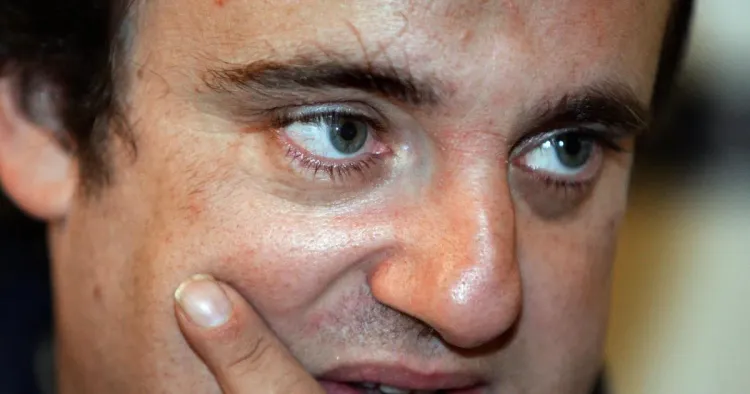
An investigating judge in Nanterre, near Paris, placed Houellebecq under investigation on suspicion of "complicity in incitement to discrimination, hatred or violence." The case stems from a complaint filed in 2023 by the Union of Mosques of France. WSJ Free Expression identifies a second complainant: the anti-racism organization Movement Against Racism and for Friendship Between Peoples, or MRAP.
The accusation falls under the Pleven Law, enacted in 1972, which provides a basis for France's prohibitions on inciting racial or religious hatred. The French government's public-services portal says public incitement to hatred, violence or discrimination against people because of religion, origin or similar grounds carries penalties of up to one year in prison and a fine of up to €45,000.
What Houellebecq said
The interview appeared in Front Populaire in November 2022. Philosopher Michel Onfray, the magazine's editor, spoke with Houellebecq about themes from his 2015 novel "Submission." According to the Washington Examiner, the novel depicts a future France with a Muslim-majority parliament whose rise to power was aided by left-wing parties.
"I believe that the wish of the native French population, as they say, is not for Muslims to assimilate, but for them to stop stealing from and assaulting them, in short, for their violence to decrease, for them to respect the law and other people," Houellebecq said. "Or, another good solution, for them to leave."
He also predicted retaliatory violence: "There will be attacks and shootings in mosques, in cafes frequented by Muslims. In short, Bataclans in reverse." His lawyers maintain that forecasting such attacks is not the same as encouraging them.
The indictment preceded the 11th anniversary of the Islamic State's Paris attacks by three days. France marked that anniversary on Nov. 13, remembering attacks that killed 132 people, including 90 at the Bataclan concert hall, and wounded hundreds.
A shooting cited by the complainants
The Union of Mosques of France has pointed to an Oct. 23, 2026, shooting outside Paris as an illustration of what it considers the danger of Houellebecq's rhetoric. The Atlantic reported that a 39-year-old gunman drove through Trappes and La Verrière, firing a submachine gun at passersby whom prosecutors said he believed to be African or Muslim.
The gunman killed a 26-year-old man of African descent and wounded seven other people, among them an 11-year-old girl. Investigators discovered a copy of Mein Kampf at his home.
Free-speech defense and an earlier acquittal
PEN Berlin has defended Houellebecq's right to speak, arguing that "a warning about violence is not an incitement to violence." WSJ Free Expression reported that PEN America had not commented on the case as of mid-November 2026.
Houellebecq has faced prosecution over comments about Islam before. He was prosecuted in 2002 after describing Islam in an interview as "the stupidest religion" and was subsequently acquitted.