Town in south-west France bans hanging laundry out to dry
A municipality in south-west France has banned residents from hanging clothes to dry outdoors in its historic centre, citing concerns about visual aesthetics and the town's tourism appeal. The permanent decree, which came into force in June, has ignited debate about economic fairness and environmental priorities.
Villeneuve-sur-Lot, a town of approximately 22,350 inhabitants in Lot-et-Garonne, prohibits the drying of clothing on windowsills, balconies, or any part of building façades in designated streets within the historic core. The affected areas possess what the decree calls a heritage, tourism, or commercial character that must be preserved.
According to the municipal order, reports from local residents highlighted laundry visible from public spaces, including garments that could disturb public tranquility. When visible from the street, these items are considered liable to disrupt the harmony of building façades and create visual pollution, the decree states.
Economic impact on vulnerable residents
The ban has drawn fierce opposition from those who argue it unfairly targets the town's poorest residents. Thomas Bouyssonie, an opposition councillor and lawyer, pointed out that the restricted area includes neighbourhoods with the highest poverty levels. Villeneuve-sur-Lot faces economic challenges, with unemployment at 12.8 percent compared to the national average of 8 percent, and median income of €19,420 versus €20,590 nationally.
Many apartments in the affected zone are substandard and often lack tumble dryers or gardens where laundry can be hung to dry, Bouyssonie told France 3. He questioned the legal basis for the restriction, noting that banning a behaviour typically requires it to infringe upon public order, whereas this represents a severe restriction on freedom.
The concern is particularly acute given that only 36 percent of French households own a tumble dryer, while 84 percent prefer air-drying their laundry, according to 2024 industry data. The laundromat market in France grew by 16.5 percent between 2023 and 2024, with 13.7 percent of people under 30 lacking washing machines at home, indicating growing demand for alternative laundry solutions.
Following precedent from other French towns
Local authorities have defended the decision by citing similar policies elsewhere in France. Robert Ménard, mayor of Béziers since 2014, enacted a comparable ban on May 19, 2014, in the Mediterranean town's protected historic center. That bylaw prohibits laundry visibility from public roads between 6am and 10pm to preserve economic and tourism appeal. Ménard, who co-founded Reporters Without Borders and served as its general-secretary from 1985 to 2008, was elected with support from the far-right Front National.
Jean-Eric Rosier, deputy mayor of Villeneuve-sur-Lot, recently visited Béziers and praised the sense of authority and well-being the policy has created, he told Sud-Ouest.
Mantes-la-Jolie, a Paris suburb, has also banned the practice in certain areas, alongside prohibiting rug-beating from windows after 10:00. Both Béziers and Mantes-la-Jolie allow fines of €38 for violations. Most French towns and cities maintain bylaws forbidding hanging washing from windows, citing safety and hygiene concerns, though these are generally less restrictive than explicit aesthetic bans.
Paris itself has a 1979 bylaw stating that objects, plants, and laundry on balconies and windows must not create unsanitary conditions or pose danger or nuisance to passersby and neighbouring building occupants. However, this regulation is less stringent since it does not explicitly ban laundry hanging unless deemed disruptive.
Environmental concerns and cultural context
Critics of the ban have raised environmental objections during a time of climate crisis. Tumble dryers account for approximately 6 percent of residential energy consumption, with each load releasing about 3.3 kg of carbon dioxide, compared to washing machines which represent only 1 percent of home energy use.
One 74-year-old from Lot-et-Garonne questioned whether there are more important issues during this time of climate change. Another resident expressed confusion about a measure that discourages natural drying, which prevents moisture buildup in homes, in favour of energy-hungry tumble dryers.
France has recently moved in the opposite regulatory direction on laundry-related environmental issues, passing legislation requiring new washing machines to be fitted with microfiber filtration devices from 2025 to reduce textile microfiber pollution in waterways.
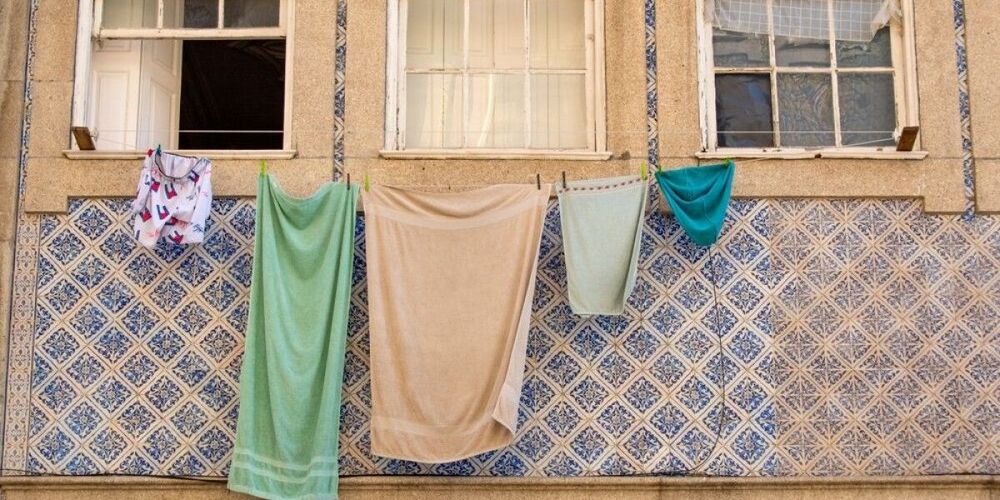
The practice of outdoor clothes drying remains less common in France than in other Mediterranean countries. In Italy and Portugal, outdoor line drying is the cultural norm and forms part of their aesthetic heritage, with apartment buildings routinely designed with shared rooftop drying areas and dedicated laundry terraces. Washing hanging outside, often in inner city areas, contributes to the visual character of these nations.
Divided public opinion
The story has generated significant media attention across France, with residents expressing sharply divided views. Several commenters supported the ban, with one 68-year-old calling the decision reasonable, finding the practice neither attractive nor hygienic. Another complained that the same laundry often stays hanging for days, exposed to the elements, blighting many façades in the town.
Bouyssonie, who lives in the affected area, offered a different perspective.
Villeneuve isn't buried under laundry; it's never struck me as an issue
Residents of shared buildings should verify their building rules, as prohibitions on hanging laundry outside are possible though rare. Tenants may also face limitations on where they can hang laundry based on rental agreements.