Airbus Sees 2026 As 'Turning Point' For Deliveries
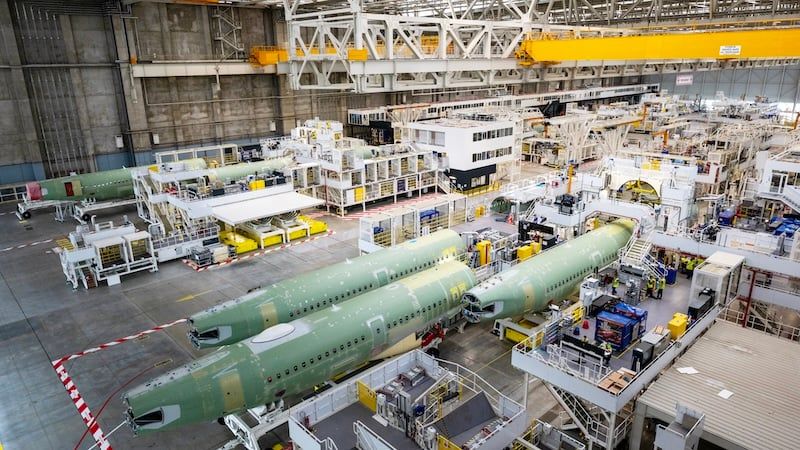
Airbus has indicated that 2026 will mark a critical juncture for aircraft deliveries as the European manufacturer navigates ongoing engine supply constraints that have hampered production plans for its A320neo family. While the company reports general improvements across its supply chain, a substantial number of aircraft remain grounded due to continuing shortages of Pratt & Whitney PW1100G engines.
The manufacturer has set a delivery target of approximately 870 commercial aircraft for 2026, falling short of analyst expectations of around 880 units. Company executives cite insufficient engine supply from Pratt & Whitney as a primary constraint limiting the ability to meet higher delivery volumes.
Engine Crisis Origins and Scope
The PW1100G engine problems trace back to 2020, when Pratt & Whitney discovered contaminated powder metal during an investigation into an IAE V2500 engine blade failure. The same manufacturing process was used for both the older V2500 and the newer PW1100G engines powering A320neo aircraft. Internal investigations revealed that the contaminated powder metal was produced at Pratt & Whitney's facility in Utica, New York, between the fourth quarter of 2015 and the third quarter of 2021, before being used to manufacture high-pressure turbine disks at the company's Columbus, Georgia plant.
The scale of the crisis has been substantial. At its peak, around 650 A320neo aircraft powered by PW1100G engines were grounded. By late October 2025, approximately 835 aircraft with geared turbofan engines sat in storage globally, representing a 33% storage rate of the total GTF-powered fleet. The repair process has proven lengthy, with engine turnaround times ranging from 250 to 300 days wing-to-wing, placing significant strain on global maintenance, repair and overhaul capacity.
Production Rate Delays
The trajectory to support Airbus' planned monthly production rate of 70 to 75 A320neo-family aircraft has been pushed back from 2026 to 2027 due to the engine supply constraints. The manufacturer originally targeted reaching 75 aircraft per month by 2026, but the timeline has been extended as Pratt & Whitney works to resolve the engine availability issues.
Tensions between Airbus and its engine supplier have escalated, with Airbus CEO Guillaume Faury stating the company wants to enforce its contractual rights with Pratt & Whitney. The dispute could evolve into legal action if not resolved through negotiation, underscoring the severity of the supply shortfall's impact on Airbus' production plans.
Industry Response and Impact
Pratt & Whitney has undertaken significant efforts to address the crisis, expanding its geared turbofan maintenance capacity by 300% since 2019. In 2026 alone, the company increased MRO capacity by 26% over the previous year, with facility expansions in the United States, Poland, New Zealand, and other locations.
The engine reliability issues have had severe commercial consequences across the airline industry. Indian carrier Go First filed for bankruptcy in 2023, citing poor reliability of PW1100G engines and claiming Pratt & Whitney failed to comply with a previous arbitration settlement to supply five spare engines monthly. The engine manufacturer disputed these claims, arguing the airline had breached its contractual obligations.
Beyond the powder metal contamination, additional safety concerns emerged when the FAA issued an airworthiness directive in January 2026 requiring airlines to modify fuel system components on 586 PW1100G engines. The directive followed multiple fan-blade fracture events that resulted in three under-cowl fires, highlighting the multi-faceted nature of the engine challenges affecting A320neo operations.
As Airbus positions 2026 as a turning point, the company's ability to meet delivery commitments and ramp production will depend heavily on Pratt & Whitney's continued progress in resolving engine supply constraints and completing the backlog of required repairs and modifications.