Continental stocks gain despite rising bond yields
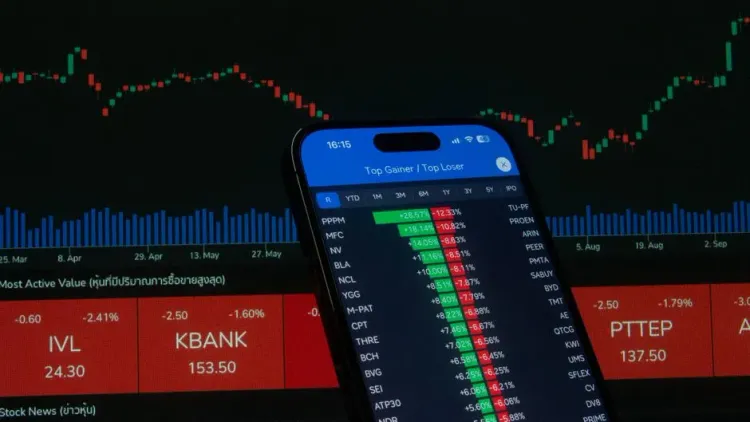
The IBEX 35 finished 0.98% higher in Spain, ahead of Italy's FTSE MIB, which gained 0.69%. France's CAC 40 advanced 0.55% and Germany's DAX added 0.31%. The FTSE 100 moved in the opposite direction, losing 0.29%.
Government bond yields increased across the European benchmarks. The French 10-year yield recorded the largest rise, climbing 8.5 basis points to 4.806%, while Germany's increased 7.5 basis points to 3.328%. Spain's yield reached 3.896% and Italy's 4.380%, both up 7.4 basis points. The UK 10-year yield gained 6.8 basis points to 5.208%.
Inflation surprise drives Treasury selloff
US consumer prices increased 0.4% in October, exceeding the expected 0.3% rise. Core CPI also beat forecasts, increasing 0.3% against expectations of 0.2%. The headline monthly gain was smaller than September's 0.6%, while the core increase was unchanged. Over three months, the annualized inflation rates stood at 5.7% for headline CPI and 3.7% for core.
No year-over-year inflation rate was published for October. According to the Bureau of Labor Statistics, a government shutdown in October 2025 had prevented collection of the data required for that comparison.
Auto insurance, public transportation and medical services all posted unexpected price jumps. Reuters noted that those increases could weigh particularly heavily on middle- and lower-income households, which policymakers regard as the weaker part of an otherwise solid consumer spending picture.
Shorter-term Treasuries led the selloff. The two-year yield climbed 21.4 basis points to 4.761%, and the five-year gained 18.4 basis points to 4.843%. The 10-year rose 15.5 basis points to 5.017%, putting it back above the 5% level to watch during the remaining US session. The 30-year yield increased 11.9 basis points to 5.375%.
The report also pointed to a firmer reading for another inflation measure, according to Inflation Insights President Omair Sharif. Reuters reported his estimate that October core PCE inflation was on track for a 0.34% monthly increase, faster than the previous month and equivalent to an annualized pace above 4%.
Markets raise December hike odds
The core CPI reading landed at a threshold Fed Governor Christopher Waller had highlighted before the release. Speaking in London, he said he favored a 25-basis-point December increase even if October inflation eased, but that a core reading around 0.3% or higher should put a 50-basis-point move under consideration.
Waller pointed to solid economic growth, a stable labor market and broadly based inflation. In his view, tightening too slowly could threaten the Fed's credibility. The subsequent 0.3% core reading helped explain the particularly sharp rise in the two-year Treasury yield.
After the data, markets assigned roughly an 87% chance to a rate increase at the December 8-9 FOMC meeting, compared with 84% on Monday, according to Invezz. Reports from Axios and Reuters put CME FedWatch-based expectations for a half-point increase at about 14-15%, up from zero the previous day.
Dallas Fed President Lorie Logan also argued for further tightening after Tuesday's release. She favored at least another half percentage point of increases before a pause, saying the current 3.75%-4% federal funds target range was too low and was contributing to inflationary pressure.
Anthropic news fails to sustain Nasdaq rebound
Reports on Anthropic's planned IPO briefly lifted the Nasdaq indices out of early losses and into positive territory. The company was reportedly targeting November 18 to price the offering and November 19 to begin trading. Orders were said to cover all available shares already, with about 20% of the offering potentially allocated to retail investors.
That rebound had faded by the European close. The Nasdaq Composite was 1.21% lower and the Nasdaq 100 had lost 1.22%. Elsewhere, the Dow declined 0.56%, the S&P 500 fell 0.77% and the Russell 2000 dropped 1.18%.
Anthropic's amended S-1, filed November 10, 2026, set out an offering of 825 million shares priced between $70 and $78 each. At the upper end, the IPO would raise as much as $64.35 billion and value the company at up to $1.405 trillion on a fully diluted basis. That compares with the $965 billion valuation announced in its May funding round. Anthropic plans to trade on Nasdaq under the ticker ANT.
CNBC reported that the filing also detailed a separate agreement to sell $26 billion in non-voting Class N common stock at the IPO price. Buyers in that private placement are Advanced Micro Devices, Broadcom, Google, Micron, Microsoft, Nvidia and Taiwan Semiconductor Manufacturing Co.
The filing put Anthropic's revenue for the nine months through September 30, 2026, at $33.24 billion, roughly 1,200% above the year-earlier period. Its reported revenue run rate reached about $81 billion at October's end, an increase of $10 billion from the preceding month. CNBC noted that the planned debut would follow SpaceX's record $85.7 billion public offering by roughly five months.
Dollar strengthens as metals retreat
The dollar gained broadly after the inflation release. The euro fell 0.65% to $1.1150, while sterling lost 0.86% to $1.3325. Both currencies slipped back below their 200-hour moving averages against the dollar, leaving those levels as nearby reference points for sellers.
Against the yen, the dollar rose 0.56% to 158.79, close to its session peak of 158.84. The Australian dollar posted the largest decline among the major currencies in the snapshot, falling 1.08% to $0.6851.
Precious metals fell as the dollar and yields climbed: gold lost 2.8% to trade near $4,023, and silver dropped 3.9% to around $51.32. Bitcoin was also lower, down about 2.6% near $73,020.
Oil recovers much of its early decline
Crude prices remained lower but had recovered substantially from their lows by the European close. WTI traded at $86.54, down $0.31, after touching $83.88. It was $2.66 above that low and only $0.39 below its $86.93 session high. Brent stood at $91.93, a decline of $0.64, after falling as far as $89.16.
A softer US stance toward Iran had reduced some of the supply risk premium earlier in the day. After meeting Qatar's prime minister on Monday, President Trump downplayed the likelihood of renewed major strikes against Iran. On Tuesday, Secretary of State Marco Rubio said the administration saw less need for major combat operations, with sanctions and the naval blockade still in place.
Iran's top security official, however, said there were no negotiations underway with Washington. The Strait of Hormuz also remained an unresolved issue.
Waller cautioned that cheaper crude would not necessarily bring comparable relief in diesel prices. He said limited refining capacity could keep diesel expensive even if hopes of Middle East de-escalation pushed oil lower, leaving the Fed to assess how much elevated energy costs were passing through to other goods and services.