Luxury shares retreat
LVMH was down 2.99% from Thursday's close of €418.65 in the November 6 market report, published at 11:46. The CAC 40 was losing 1.43% intraday. LVMH's pullback followed a weekly gain of 5.81%, leaving the shares 15.33% lower over three months and 33.72% below their year-earlier level.
The stock still traded 3.41% above its 20-day moving average and 1.28% above its 50-day average, but remained 12.68% below the 200-day measure. Thursday's closing price of €418.65 marked a resistance level that LVMH had failed to hold.
Kering and Hermès also fell, losing 3.11% and 2.52%, respectively. Their recent performances differed: Kering had dropped 13.49% over one month and 36.26% over three months, while Hermès retained a one-month gain of 5.46%.
The decline in Kering came despite its announcement that Martine Rose would become creative director of Balenciaga, effective November 16, 2026.
US technology rout spreads overseas
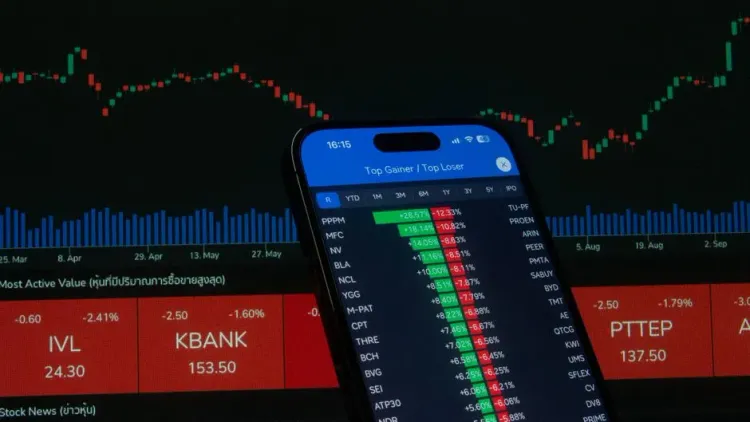
The pressure on Paris followed Wall Street's selloff on Thursday, November 5. According to Benzinga and Idéal Investisseur, the Democratic sweep of both chambers of Congress in the November 3 midterm elections triggered fears of tighter US regulation of AI infrastructure and slower data center construction.
The S&P 500 lost 4.36%, or about 4.4%, and the Nasdaq fell 5.52%. Benzinga described the S&P 500's decline as its steepest since April 2025. The Nasdaq 100, a separate index, dropped 6.4% for its worst session since March 2020, while the Philadelphia Semiconductor Index plunged 12%.
Benzinga estimated that the session wiped roughly $3 trillion from the S&P 500's market value, including about $450 billion at Nvidia alone. The CBOE Volatility Index, or VIX, surged 69.7% on Thursday, its third-largest one-day increase since 1990. The Paris market report put the VIX at 26.39.
The selling extended beyond the United States. Idéal Investisseur reported that Japan's Nikkei 225 closed 5.96% lower. During European trading, the STOXX 600 was down 1.81%, Germany's DAX 2.40% and Britain's FTSE 100 2.34%.
Friday also brought a stronger-than-expected US employment report. Employers added 165,000 jobs in October, compared with expectations for 65,000, and unemployment edged down from 4.2% to 4.1%. According to Benzinga, traders subsequently assigned about an 80% probability to a Federal Reserve rate increase in December, versus roughly 70% before the release.
French budget uncertainty
France faced a separate source of uncertainty after the National Assembly rejected the first part of the 2027 finance bill on the evening of November 4. The vote was 458 against, none in favor and two abstentions.
Idéal Investisseur said the budget developments were keeping the risk premium on French debt elevated. As of November 5, the yield spread between France's 10-year OAT and Germany's Bund stood at 148.2 basis points.
China demand remains a concern for LVMH
LVMH had flagged weaker Chinese demand for fashion and leather goods among the risks accompanying its nine-month results on October 12, 2026. Idéal Investisseur reported third-quarter revenue of €18.5 billion, with 1% organic growth and a 5% decline in Fashion and Leather Goods. The nine-month figures listed in the market report showed revenue of €57.148 billion, down 1.6%.
The group also cited economic and geopolitical uncertainty and exposure to currency movements. Exchange rates had a negative 3% impact over the first nine months of 2026.
Other businesses offered brighter results. Watches & Jewelry posted 8% organic growth, driven by jewelry, while Sephora gained market share and expanded its store network within Selective Retailing. LVMH also highlighted a recovery in champagne and positive momentum for Hennessy cognac in Asia.
Management maintained its confidence despite the uncertain environment. It said LVMH would rely on its brands and employees to strengthen its global luxury leadership in 2026 while continuing a strategy focused on increasing the desirability of its brands.