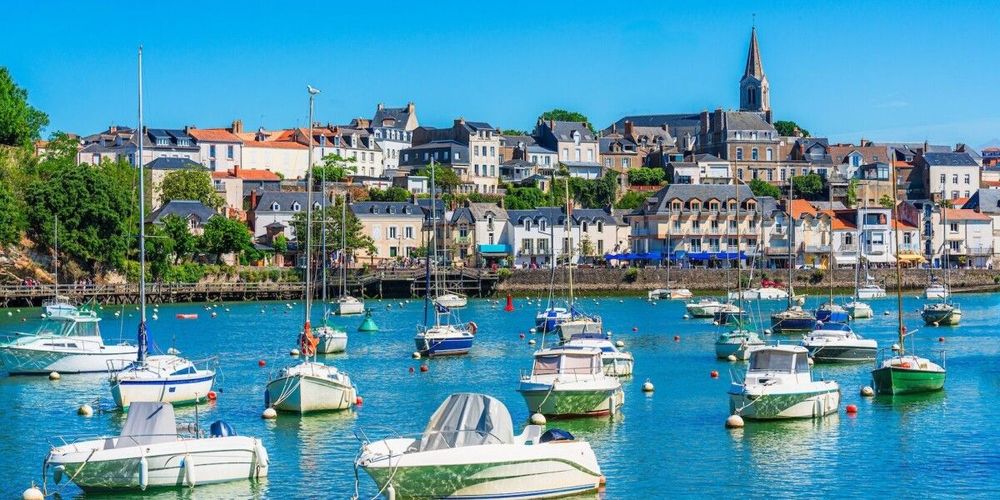
Loire-Atlantique coastal town moves to restrict new second homes
Pornic in Loire-Atlantique is advancing plans to limit the creation of new second homes in designated parts of the town, seeking to ease pressure on housing availability for year-round residents. The measure is part of a proposed revision to the local urban plan and could be formally adopted in March 2027.
The proposal would establish a primary residence zone where newly constructed homes must be occupied as main residences. Existing second homes would remain unaffected by the restriction. Around one third of Pornic's 14,700 homes are currently second residences, and with approximately 2,000 additional homes expected over the next decade, local authorities want to ensure these serve families and permanent residents rather than becoming holiday properties.
The initiative relies on Law No. 2024-1039, known as the Le Meur law, which was adopted on November 19, 2024. Sponsored by MPs Annaïg Le Meur and Iñaki Echaniz, the legislation enables communes where at least 15% of housing stock consists of second homes to restrict new construction to primary residences. The law also doubled maximum fines for illegal short-term rentals of second homes from €50,000 to €100,000 and reduced the micro-BIC tax allowance from 50% to 30% for unclassified furnished rentals.
Buyers or tenants of homes covered by the Pornic restriction would need to commit to using them as their main residence. Short-term holiday letting would still be permitted for up to 120 days annually, the current limit in the town. The Le Meur law grants municipalities the option to reduce this threshold to 90 days if they choose.
Pornic is also examining tighter controls for its approximately 1,300 registered furnished tourist rentals, including potential caps on the number of properties an individual owner can let. Residents have until September 13 to provide feedback on the proposed planning changes ahead of the final decision next year.
Regional and national context
The issue of second homes is particularly acute along France's western coast. Between 2017 and 2022, 62% of new second homes built in France were concentrated in four western coastal regions, including Pays de la Loire where Pornic is situated. In the nearby Guérande peninsula urban community, second homes account for 44.9% of housing stock.
Pornic's population has grown substantially, from 11,903 in 1999 to 18,745 in 2023, representing a 57% increase over 24 years. The median age of residents stands at 54 years, with a significant elderly population adding to housing pressures.
Nationally, France has approximately 3.7 to 3.8 million second homes, representing around 10% of total housing stock. Some 40% of these properties are located on the coast and 16% in mountainous areas.
Other communes taking action
Several French coastal towns have introduced or are considering similar measures. Cancale in Ille-et-Vilaine became the first commune in Brittany to restrict new second homes when it approved restrictions in August 2025. The town's second-home rate had climbed from 35.5% in 2011 to 41.2% by 2022, with furnished tourist rentals increasing by 30% between 2020 and 2024 to reach 582 declared units. Cancale can impose penalties of up to €1,000 per day, with a maximum of €100,000, for violations of primary residence requirements.
Saint-Malo, also in Ille-et-Vilaine, approved second-home restrictions in July 2026, limiting each property owner to a single authorization for furnished tourist rentals and implementing quotas by sector. Royan in Charente-Maritime has also moved to introduce restrictions in designated areas.
The alpine resort of Chamonix, where 70% of housing stock consists of second homes, was among the first communes to implement restrictions using the Le Meur law, demonstrating the legislation's application beyond coastal areas.
Pornic officials state the aim is to preserve housing for people who live and work locally throughout the year while maintaining the economic benefits of tourism.