Competing demands on the budget
The government faces pressure from protesters seeking better public services and relief from rising prices, while bond investors question its ability to curb spending. Presidential elections are due in April, and France's divided politics offer little prospect of a quick agreement on the cuts investors want.
The protests began in September among high-school students in the Paris suburbs, where teacher shortages and poor education standards prompted demonstrations. The movement broadened to include opposition to rising fuel and living costs, a public-sector pay freeze and the proposed austerity budget. Protesters are calling for more teachers, smaller classes, higher wages and cheaper fuel.
More than half a million people demonstrated across France on Saturday, October 17. Although most were peaceful, riots broke out in several cities, with looting, arson and confrontations with police. Interior Minister Laurent Nuñez subsequently put the number of arrests at nearly 2,400.
Higher rates and rising debt
The widening gap between French and German 10-year bond yields is a key measure of financial stability in the eurozone. Separately, Euronews reported that France's 10-year borrowing rate had reached 5%, a level last seen in July 2002. France now faces higher borrowing costs than Italy and Greece, which were at the center of the 2011-2012 debt crisis.
Figures from national statistics office INSEE, reported by Euronews, put French public debt at €3.6 trillion in the second quarter of 2026. Debt stood at 119% of GDP, compared with 115.6% a year earlier. The deficit is expected to reach 5.4% of GDP in 2026, exceeding the EU's 3% limit.
Pressure has also spread beyond French bonds. ING strategists Michiel Tukker and Benjamin Schroeder said Italian and Greek yield spreads over German Bunds increased by almost 15 basis points during the French turmoil, according to Euronews. The outlet also reported that the euro touched $1.1161 during Asian trading on a Monday.
What the government's plan would change
Prime Minister Sébastien Lecornu's minority government has submitted a draft budget for 2027 that combines spending savings and additional revenue totaling about €54 billion. Its goal is to reduce the deficit to 5% of GDP in 2027 from the 5.4% expected in 2026.
Spending restraint would account for roughly two-thirds of the adjustment, with higher taxes and contributions providing the remaining third. The proposals include €6 billion in pension savings and another €6 billion in healthcare savings.
Borrowing needs will remain substantial: the French Treasury plans €340 billion in debt issuance for 2027, an increase of €20 billion over 2026, as borrowing from the pandemic years falls due.
Even full implementation would not immediately stop the debt ratio from rising, according to BNP Paribas economist Stéphane Colliac. He forecasts debt of 121% of GDP in 2027, stabilizing at 124% only in 2032. If substantial deficit reductions are delayed until 2028, he expects the ratio to reach 126% by 2032.
The limits of ECB support
The ECB could purchase French government bonds to lower borrowing costs, and wider bond-market panic could force it to act. Any intervention, however, would be politically contentious and would depend on the judgment of its 27-member governing council.
One available mechanism is the Transmission Protection Instrument, which permits targeted bond purchases in response to "unwarranted" market disruption. As Euronews reported, access depends on considerations including debt sustainability and compliance with fiscal policy requirements. It does not guarantee France a particular borrowing cost unconditionally.
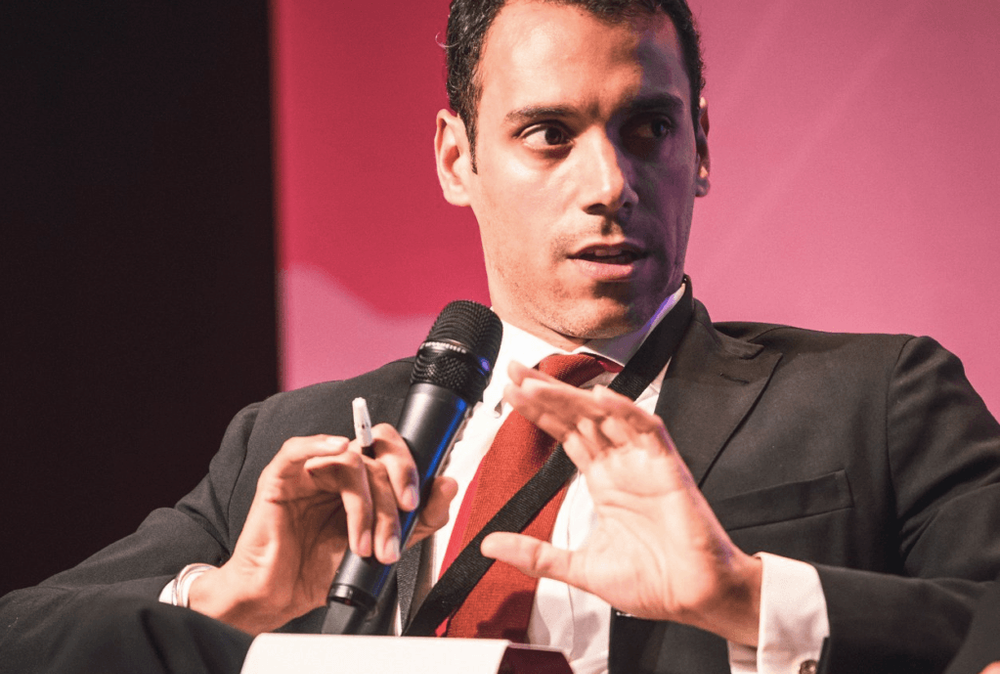
Shahin Vallée, a senior associate fellow at the German Council on Foreign Relations, wrote in a recent blog post that the ECB "is unlikely to say or do anything helpful" for now.
Vallée advises institutional investors and previously worked for Herman Van Rompuy during his tenure as European Council president in the eurozone crisis. He later advised Emmanuel Macron when Macron was France's economy minister.
EUobserver interviewed Vallée about the crisis, opening with a question about the IMF's call in Bangkok the previous week for both rich and poor countries to reduce deficits and control debt. Vallée had been in Bangkok, and the interview asked whether that prescription was appropriate for France.