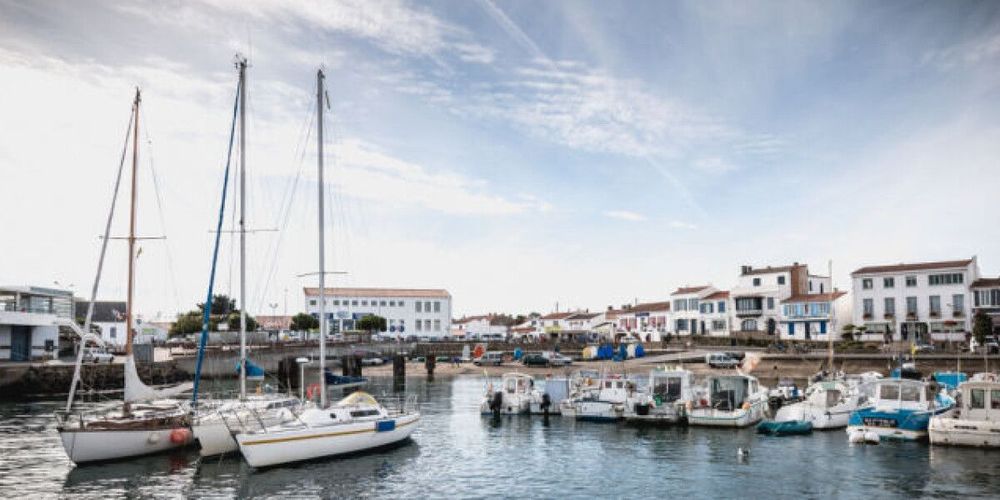
Ile d'Yeu becomes latest French commune to ban second home construction
Ile d'Yeu, a 23-square-kilometer island located approximately 17 kilometers off the Vendée coast in western France, has prohibited the construction of new second homes as local authorities seek to ensure permanent residents can continue living on the island.
Over the past five decades, the number of properties on the island has surged from 2,200 in 1968 to 8,680 in 2026, while the permanent population has grown only modestly from 4,400 to 4,880 residents. Mayor Patrice Bernard said the restriction was necessary to protect housing availability for families with long-term ties to the community.
The island, accessible only by ferry or air with more than 300,000 visitors arriving annually via ferry services, typically sees its population swell five to seven-fold during July and August. Many visitors are expected this year to seek refuge from heatwaves affecting mainland France, as temperatures on the Bay of Biscay island often register up to seven degrees lower than on the continent.
Legal framework under loi Le Meur
The ban follows authorization granted under Law No. 2024-1039, known as the loi Le Meur, which was promulgated on November 19, 2024, and published in the Journal officiel the following day. The legislation gives French communes new powers to regulate furnished tourist rentals and require new constructions in designated areas to serve as main residences, particularly where second homes exceed 15 percent of housing stock.
Under the new rules on Ile d'Yeu, existing properties currently used as second homes may continue to be sold as such. However, newly constructed properties must serve as main residences either for owner-occupiers or for tenants signing three-year rental agreements and living on the island.
The law also introduced fiscal measures to discourage short-term rentals, reducing tax deductions for classified furnished tourist rentals from 71 percent to 50 percent and for non-classified rentals from 50 percent to 30 percent, effective January 1, 2025. Maximum fines for illegal short-term rentals doubled from €50,000 to €100,000.
Growing trend across France
Ile d'Yeu joins approximately 20 other French communes that have adopted similar measures. Chamonix in Haute-Savoie became the first major resort to implement such restrictions in March 2025, where 70 percent of the housing stock consists of second homes. The Alpine town, which has a permanent population of almost 9,000, aims to reserve 87.5 percent of residential space for permanent residents by 2035. Chamonix had previously increased second home taxes from 5 percent to 60 percent in summer 2023.
Other municipalities followed Chamonix's lead, including various communes in the Chamonix valley, seaside town Royan in Charente-Maritime, and Breton communities Cancale and Saint-Malo. In Corsica, Bonifacio adopted similar restrictions, as did Annecy in Haute-Savoie.
The five Basque councils of Biarritz, Bayonne, Anglet, Bidart and Boucau agreed to work jointly on reforms, reserving 1,000 hectares of land zoned for urban development exclusively for new main residences.
National context
Approximately 3.8 million of France's 38.4 million dwellings—roughly 10 percent—were second homes or used only occasionally as of 2023. Around 350 communes nationwide face particularly acute pressures, with second homes accounting for 70 percent or more of total housing. The village of Germ near Peyragude ski station in Haut-Pyrénées has the highest concentration, with 671 second homes serving just 38 permanent residents, representing nearly 97 percent of its housing stock.
Approximately 60 percent of French second homes are located either on the coast or in high-altitude regions, with concentrations along southern and western shores, in the Pyrenees, and in the southern Alps. Coastal areas, mountainous regions in the Alps and Pyrenees, as well as Corsica, are particularly targeted under the loi Le Meur framework.
The planning restrictions represent part of a broader policy approach combining taxation, planning controls and enforcement measures to address housing availability challenges in tourist destinations and resort areas.