Attack altered cold-store settings
EFS said the incident targeted a refrigeration service provider on Monday, November 2, affecting the systems used to monitor and control its cold stores. The facilities contained donated blood samples and plasma bags used for transfusions and medicine production.
Le Canard Enchaîné, the French magazine that first reported the attack, said the temperature settings had been changed to 110°C rather than -30°C. EFS reported "no health impact" and said hospitals and other healthcare facilities continued to receive blood supplies.
Health Minister Stephanie Rist's office credited the monitoring and alarm systems with protecting the stored products. The health ministry and France's national cybersecurity agency are investigating. The ministry did not identify a suspected attacker.
POLITICO reported that French media had named Coolworld as the refrigeration supplier involved. Coolworld said the incident "concerns a component supplied by a third-party provider and not directly controlled by Coolworld" and affected only a "limited number" of its units.
Supermarkets face a wider wave of attacks
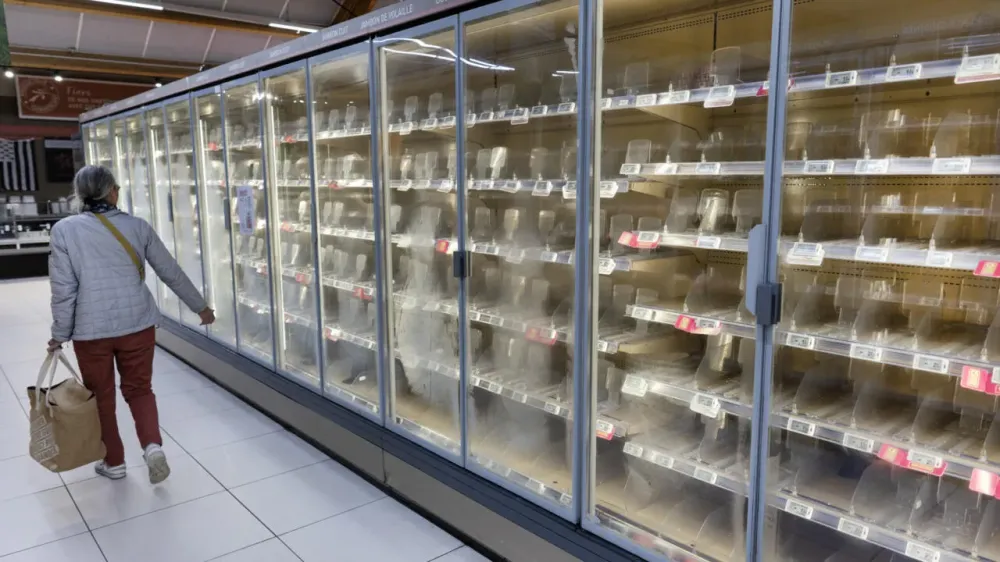
The EFS incident occurred on the same Monday that cyberattacks struck supermarket refrigeration systems across at least 10 European countries, according to BBC News: Belgium, Estonia, Finland, Ireland, Italy, Luxembourg, the Netherlands, Portugal, Germany and Sweden. Retailers had to throw away food after freezer temperatures reportedly reached as high as 50°C (122°F). No group had claimed responsibility for those attacks.
France had already experienced a supermarket refrigeration attack on October 12. That incident disrupted as many as 700 grocery stores and caused food losses estimated at tens of millions of euros, BBC News reported.
Some affected systems shared a supplier. Swedish retailer ICA said the stores hit in Sweden used an external refrigeration control system from Danish manufacturer Danfoss, according to AFP. Danfoss was also the supplier targeted in the October 12 French attack. The affected equipment in Estonia consisted of older Danfoss models similar to those targeted in France.
Italian Prime Minister Giorgia Meloni's government convened emergency talks with intelligence chiefs after the attacks. It described the impact in Italy as "currently very limited" and said affected businesses were "mostly still equipped with obsolete security systems, with interfaces directly exposed to the internet and inadequate authentication mechanisms".
Officials warn of supply-chain disruption
EU food and agriculture commissioner Christophe Hansen called the supermarket attacks "a deliberate attempt to disrupt our food supply chain and undermine consumers' confidence in it". He said the bloc was taking the incidents "very seriously".
Speaking to the French Senate, Digital Minister Anne Le Hénanff said the recent refrigeration attacks "have directly targeted our economy and our supply chain". She suggested a possible broader motive, saying their objective "may potentially be to undermine the unity of our country and to create anxiety among the population".
Bank reports fraud as retailer forecasts losses
French cooperative bank Credit Mutuel Arkea also disclosed an attack on Wednesday, November 4. It described the attack as similar and said it had "enabled fraudulent transactions to be carried out", while maintaining that customers' money was unaffected. "The incident has been contained, operations are resuming, and client assets are not affected," the bank said in a statement reported by Reuters.
Separately, Dutch retail group Ahold Delhaize outlined the expected financial cost of an October cyberattack that affected stores in the Netherlands, Belgium and the United States. According to The Brussels Times, the company forecast a fourth-quarter net sales reduction of €200 million to €250 million and a decline in underlying operating profit of €75 million to €100 million, excluding response and remediation costs.
Ahold Delhaize also lowered its forecast for full-year 2026 underlying earnings-per-share growth to 1–3%, down from 4–9%.