
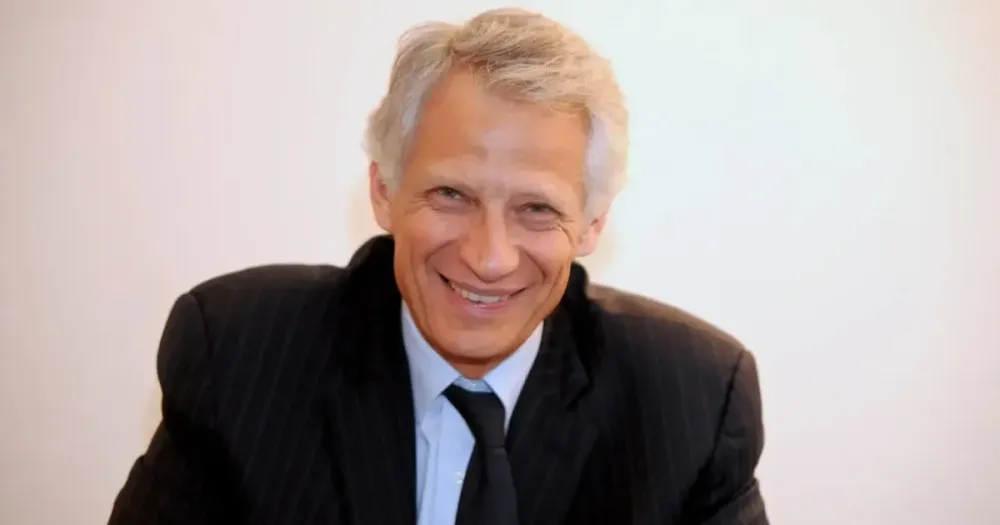
A return to electoral politics
"I am a candidate for the presidential election of 2027," Villepin said at a news conference at the Maison de l'Amérique Latine. His declaration settled months of speculation over whether he would run.
Villepin described his candidacy as an answer to France's social divisions, criticized Emmanuel Macron's record and sought to distinguish himself from both the far right and the radical left.
His announcement follows the creation of his movement, La France humaniste, in June 2025. According to RTL, the movement marked his return to politics and claims 78,000 members.
Taxes, pensions and presidential power
Villepin's domestic priorities include reducing inequality and public debt while reviewing certain tax and social exemptions. He also wants to expand citizen consultation and give negotiations with social partners a greater role, particularly in pension policy. He favors a presidency less focused on the individual holding office.
RTL reported that his platform, "Réussir à nouveau", sets out 258 proposals under four pillars: "dire la vérité", "redresser l'État", "vivre ensemble" and "continuer la France". Its targets include a public deficit below 3% by 2031 and carbon neutrality by 2050. It also calls for reinstating the wealth tax, known as the ISF, abolished in 2018, and reducing the number of taxes from more than 400 to nine.
On foreign policy, Villepin supports international law and greater independence for French diplomacy. As foreign minister, he drew attention with his February 2003 address to the UN Security Council opposing an immediate war against Iraq. He later served as prime minister under Jacques Chirac from 2005 to 2007.
Low voting intentions in a developing field
Before declaring his candidacy, Villepin registered between 1% and 3% in voting-intention polls, according to RTL. An Ifop/Fiducial survey for TF1, LCI, Le Figaro and Sud Radio, published November 18, 2026, put his support at 1.5%.
His popularity ratings were higher: RTL cited 45% favorable opinions in the October 2026 Ifop-Fiducial dashboard and 26% in the November 2026 Cluster 17 barometer.
Several rivals had already been selected by mid-November, Linternaute reported: Marine Le Pen for Rassemblement national, Jean-Luc Mélenchon for La France insoumise and Bruno Retailleau for Les Républicains. Raphaël Glucksmann had won the social-democrat primary, while debate continued in the center and on the right over whether to hold a primary.
Endorsements still required
Declaring a bid does not secure a place on the ballot or constitute approval by the Constitutional Council. French presidential candidates must obtain endorsements from 500 elected officials.
RTL reported that Villepin's team said he had secured around 300 promises of endorsements, with a March 12, 2027, deadline to gather the required total. His earlier attempt to run in 2012 failed because he lacked enough endorsements; according to RTL, he finished about 30 short.
Linternaute reported that the Constitutional Council is expected to validate the endorsements by March 12, 2027, at the latest, establishing the official candidate list for the first round scheduled for April 18.






