Conference to address artificial intelligence
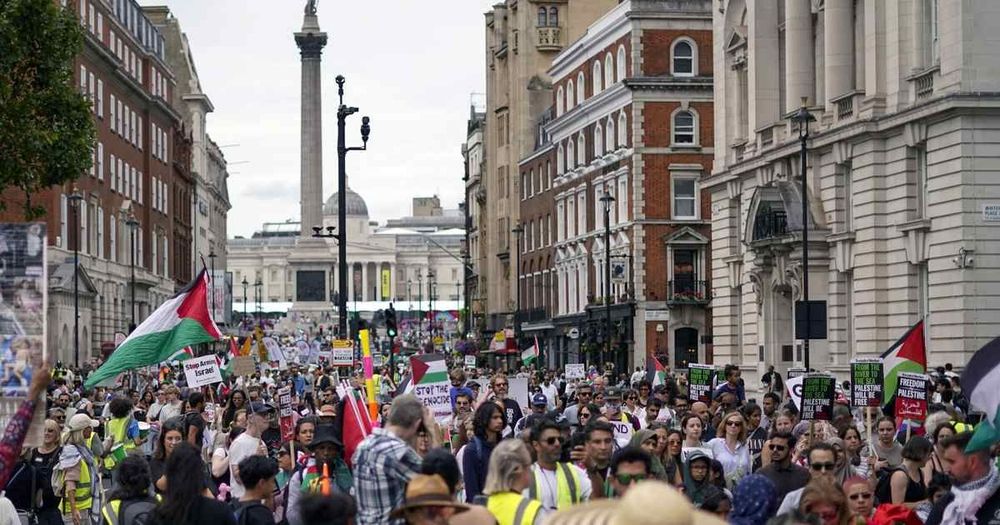
The IHRC's 13th annual conference will examine allegations about the use of artificial intelligence in Gaza and against protesters, according to the Daily Mail's account of the organization's website.
The conference description says that "for some analysts, Gaza has been described as the world's first AI-assisted genocide". It alleges that Israeli authorities used AI to gather data and target Gaza, and that Western governments and private entities used the technology to identify and dox protesters.
Ameli's military and academic background
Ameli established the IHRC in 1997 and led its Board of Trustees from 2006 through 2022, the Daily Mail reported. He co-directed the organization with Massoud Shadjareh, who remains in that role.
His involvement with the IRGC began in 1980, according to United Against Nuclear Iran (UANI), as cited by the Daily Mail. During the Iran-Iraq war, he served under Ali Fazli. From 1997 to 1999, he was deputy commander of the Imam Sadeq Brigade within the IRGC's Seyed-al-Shohada Division.
Ameli now teaches as a professor of communication at Tehran University. He earned his doctorate in the sociology of communication from Royal Holloway University of London in 2001, according to the newspaper.
Sanctions and the IHRC's defense
Canada sanctioned Ameli for "gross and systematic human rights violations in Iran, including through the lethal suppression of demonstrations across Kurdish areas of Western Iran", the Daily Mail reported.
The newspaper also reported that Britain sanctioned two bodies with which he remains affiliated: the Supreme Council of the Cultural Revolution and the Supreme Council of Cyberspace. Those measures came less than a month after Ameli stepped down as a director of a UK business on June 14, 2023.
Responding to the Daily Mail, the IHRC described Ameli as "a brilliant and sincere academic". The group said Canadian sanctions do not apply in Britain and that there is "no legal impediment" to his conference participation. It also said he has publicly opposed the enforcement of hijab in Iran.
Concerns over access to university research
Kasra Aarabi, UANI's director of IRGC research, told the Daily Mail that the Supreme Council of the Cultural Revolution oversaw an agreement granting the IRGC maximum access to ties between Iranian and Western universities.
According to Aarabi, the IRGC used that access to obtain sensitive research for its lethal drone program, including research from British universities. He said the agreement expressly names artificial intelligence as one of the IRGC's procurement priorities.
Charity regulator examines funding trust
The IHRC receives funding from the Islamic Human Rights Commission Trust, a charity that shares its building in Wembley, northwest London. A Charity Commission spokeswoman told the Daily Mail that the regulator had opened a statutory inquiry into the trust because of continuing concerns about its relationship with the IHRC.
The newspaper also reported that Shadjareh called Iranian general Qasem Soleimani a "martyr" at a January 2020 meeting at the Islamic Centre of England. That center received an official Charity Commission warning in 2020 and is also subject to a statutory inquiry.