
Excalibur tests joint operations
A French Airbus A330 MRTT tanker supported the fighters during the exercise, which the two armed forces said was designed to improve their ability to operate together.
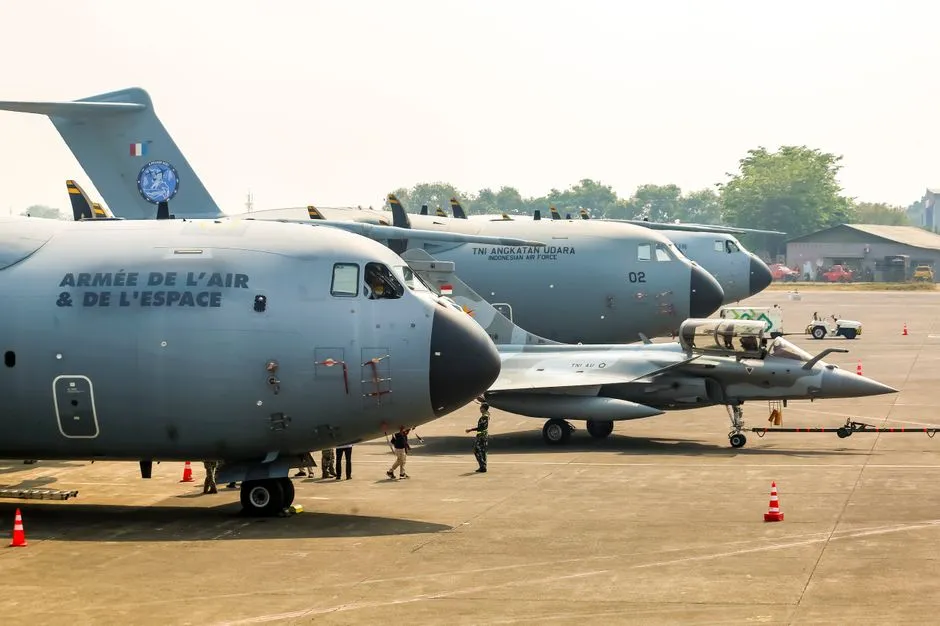
Images released by Sweden's military placed French and Swedish aircrew at Kallax Air Base near Luleå. Separate French military photographs showed at least three two-seat Rafale B aircraft and two Gripen C fighters. Neither country's defense ministry officially named the bases used for Excalibur.
The Swedish Armed Forces presented the drill as evidence of the countries' readiness to conduct joint operations and their commitment to deterring threats and reinforcing allied security. France's Armed Forces General Staff said the aircraft demonstrated close coordination in nuclear deterrence, with the deployment intended to support European security.
The exercise follows another first for France's deterrence cooperation. During Exercise RUMMY on Oct. 20-21, 2026, Royal Air Force Typhoons escorted French Rafales on a simulated nuclear-strike mission over the Mediterranean. It was Britain's first participation in a French nuclear deterrence exercise; the Rafales flew from Saint-Dizier Air Base in northeastern France.
A roadmap from discussions to exercises
France is pursuing closer deterrence cooperation with European partners against a backdrop of Russian nuclear threats and uncertainty about future U.S. security guarantees to Europe.
Macron unveiled forward deterrence on March 2, 2026, at the Île Longue naval base. Sweden and Denmark agreed that day to open discussions with France. Their prime ministers, Ulf Kristersson and Mette Frederiksen, welcomed the proposal in a joint statement while making clear that neither country would change its nuclear policy.
France and Sweden then convened their first nuclear steering group in Paris on April 23. Co-chaired by the Élysée and the Swedish Prime Minister's Office, the meeting established a cooperation roadmap. Sweden's Armed Forces described Excalibur as a step toward putting that roadmap into practice.
Finland formally entered the framework on September 14, 2026, agreeing to create a nuclear steering group of its own with France. In total, nine countries responded favorably to the French offer: Germany, Belgium, Denmark, Finland, Greece, Norway, the Netherlands, Poland and Sweden.
A French Senate report highlights the group's predominantly northern European geography. It says their points of contact with Russia on land, at sea and in the air are intended to complicate an adversary's calculations.
France keeps control of nuclear decisions
Participation in the framework gives partners no authority over the use of French nuclear weapons. France alone retains that decision, and the initiative entails neither nuclear sharing nor a transfer of decision-making.
France is the European Union's only nuclear power and has an estimated 290 warheads. Its deterrent combines strategic ballistic-missile submarines with Rafales able to carry MBDA-developed nuclear-tipped cruise missiles. Rafales assigned to the Strategic Air Forces are built to carry the ASMPA-R nuclear-armed air-launched cruise missile.
In the same March 2 speech, Macron announced plans to expand the arsenal, reversing the course of reductions begun in 1995 and reaffirmed in 2008. The French Senate report describes that decision as a response to a worsening strategic balance and advances in adversaries' air defenses.
Potential roles for dispersed aircraft and Gripen escorts
Etienne Marcuz, a senior analyst at the Fondation pour la Recherche Stratégique, said the Swedish deployment could give French aircraft an opportunity to practice dispersal, reducing their vulnerability to a strike intended to disable them.
He also identified possible changes to mission planning: cooperation could support longer-distance operations or smaller strike packages needing less aerial refueling. These were potential benefits of the cooperation, not announced outcomes of Excalibur.
Marcuz assessed the Gripen as a capable fighter designed to operate against Russian air-defense systems. In his view, Swedish aircraft could take supporting roles in a nuclear-strike mission, freeing French Rafales for other assignments.






