
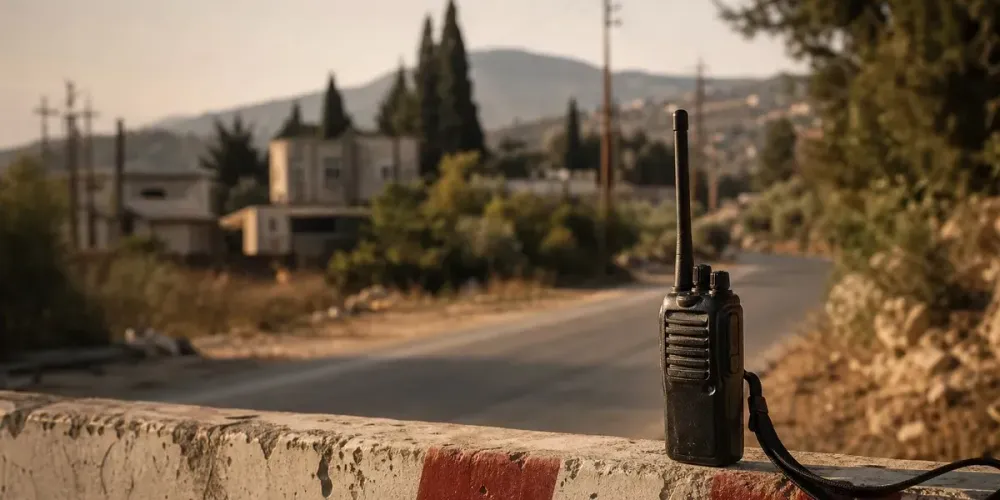
Patrols and training under a French initiative
The Jerusalem Post, citing three sources familiar with the initiative, reports that President Emmanuel Macron's government is considering the deployment without a UN mandate. That arrangement would make it more difficult for the United States and Israel to prevent the mission from proceeding even without their agreement, according to the report.
Israel opposes stationing such forces south of the Litani River. Separately, the sources say France intends to establish bases elsewhere in Lebanon to train the country's armed forces and send instructors to help strengthen the army.
Italy is among the countries resisting the proposal. Although it previously backed the idea of an international coalition with France after UN peacekeepers withdraw, it does not support sending Italian troops under the plan Paris has put forward. The Jerusalem Post reported that position, citing three sources who spoke to Fox News. Italy is both a key European partner of France and a major contributor to the existing UN mission.
A transition beyond UNIFIL
The proposals come as the United Nations Interim Force in Lebanon, known as UNIFIL, approaches the end of its mandate. Security Council Resolution 2790, adopted in August 2025, calls for operations to stop on December 31, 2026, followed by an orderly drawdown and full troop withdrawal from southern Lebanon within a year, by the end of 2027.
The Jerusalem Post reports that a mandate extension currently appears unlikely and that, without one, UN troops could leave Lebanon by September 2027.
European diplomatic sources cited by Al-Monitor describe France's proposal as a two-stage transition. UNIFIL personnel would initially remain until their planned September 2027 withdrawal, carrying out certain tasks to assist the Lebanese military. After the transition ends in the fall of 2027, a European-led multinational military coalition would support the army, including its efforts to disarm Hezbollah.
UNIFIL has approximately 7,500 peacekeepers as of November 2026, according to Al-Monitor. France, Italy and Spain are major European troop contributors, and UN member states finance its annual budget of roughly $600 million.
France is also pursuing a separate option involving about 500 UN observers assigned to monitor the ceasefire. Israel rejects that proposal, and Washington could block it at the Security Council.
Washington considers a civilian alternative
US Secretary of State Marco Rubio said he discussed UNIFIL's future with Macron, but Washington does not necessarily see a need for another military deployment. "It doesn't have to be a military mission," he said. "It could be a civilian mission." The United States is working on a verification mechanism to oversee security arrangements in southern Lebanon.
US Ambassador to the UN Mike Waltz has also ruled out retaining the existing mission unchanged. "UNIFIL in its current form will not continue, and it must not continue," he told Fox News. He said Washington was working with international partners on the mission's drawdown.
The French initiative emerged during Waltz's visit to Lebanon, where he met President Joseph Aoun, Prime Minister Nawaf Salam and Parliament Speaker Nabih Berri. He also went to UNIFIL's headquarters in Naqoura. Discussions covered the future international presence, security arrangements in southern Lebanon and Hezbollah's disarmament.
Security agreement faces delays
The debate over a future deployment comes amid slow progress on the US-brokered agreement Israel and Lebanon reached in June 2026. The arrangement ties Israel's gradual withdrawal from designated areas in southern Lebanon to Lebanese troop deployments, alongside efforts to disarm armed groups and keep Hezbollah from rebuilding its military presence.
According to the Jerusalem Post, implementation has advanced slowly beyond the initial pilot zones. Talks in October ended without agreement on how to move the process forward.






