Publishers welcome stronger negotiating powers
The legislation seeks to make publishers' revenue-sharing rights more effective when platforms display their news to search and social media users. Those rights stem from a 2019 EU directive, but US-based technology companies have challenged the mechanism through litigation and contentious negotiations.
Marc Feuillee, who heads the Alliance for General News (Apig), a group representing news companies, told AFP after Thursday's adoption: "The major platforms will no longer be able to drag out negotiations or hide what they do with our content."
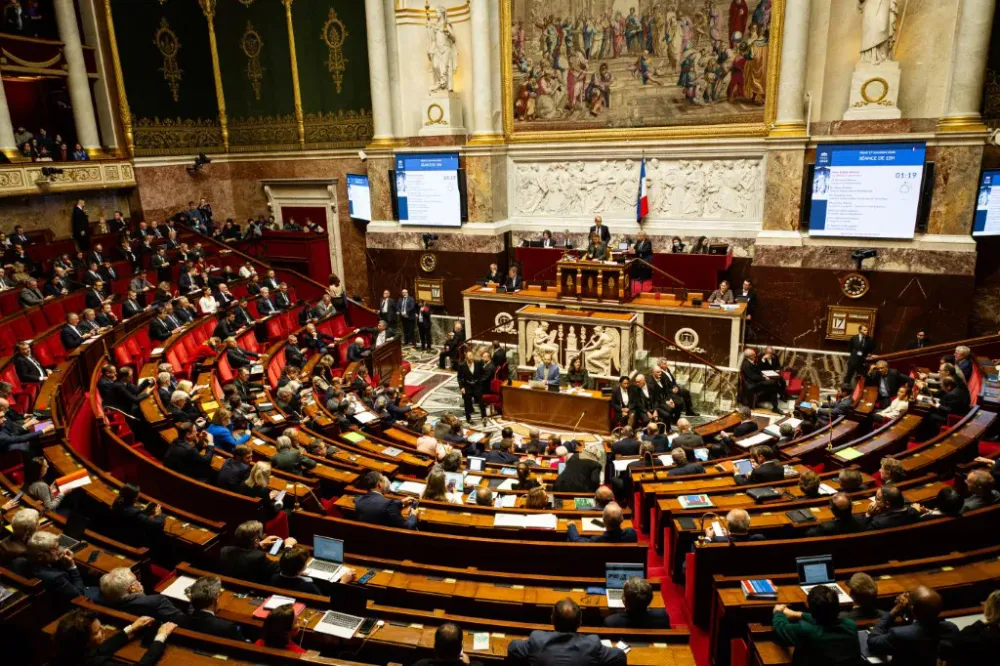
Known as the Balanant law after National Assembly member Erwan Balanant, the measure is formally titled proposition de loi visant à renforcer l'effectivité des droits voisins des éditeurs et des agences de presse. Michel Laugier served as its Senate rapporteur. The National Assembly adopted the joint-committee text on November 12, 2026, followed by the Senate's final vote on November 19.
Trade reports said promulgation was expected within a maximum of 15 days, unless the Conseil constitutionnel was asked to review the text.
Data disclosure, arbitration and penalties
Access to information has been a central obstacle for publishers: without data on how platforms use their work, they have struggled to assess what they are owed. The legislation requires platforms to supply the information needed to calculate payments and gives media regulator Arcom the power to order disclosure.
If negotiations remain unresolved after three months, either side can ask Arcom to set the payment amount. Platforms that disregard the regulator's injunctions face penalties of up to 1% of worldwide turnover.
Platforms would also be prohibited from lowering the visibility of press content while negotiations are underway. When potentially anticompetitive conduct arises, the law provides for cooperation and referrals between Arcom and France's competition authority, the Autorité de la concurrence.
A separate investigative provision lets Arcom use automated methods to gather publicly accessible data even when platform terms of service prohibit that collection. This power does not invalidate licenses that publishers have already granted.
Publications recognized by the CPPAP, the French commission that certifies online press services, would be presumed to qualify for the neighboring right. Other eligible publications could still establish their entitlement. The legislation also requires greater transparency for journalists and other authors about the sums publishers and news agencies receive.
The limits set by EU law
The payment framework does not amount to an unconditional right to compensation. In a November 19, 2026, Opinion concerning Belgium's implementation of the same publishers' right, Court of Justice of the European Union Advocate General Maciej Szpunar outlined the scope for national oversight.
In Streamz and Others (Case C-663/24), Szpunar concluded that EU law generally allows member states to establish administrative supervision of publisher-platform negotiations and require platforms to disclose information. Such disclosure must be necessary, and commercially sensitive information must remain confidential.
He also reiterated limits established by the Court's May 12, 2026, judgment in Meta Platforms Ireland (Case C-797/23). Article 15 of Directive (EU) 2019/790 gives publishers the exclusive right to permit or prohibit use of their content, rather than an automatic right to payment. Publishers must be able to license uses for free, platforms must be able to choose not to use the content, and regulators cannot force the parties to enter a licensing agreement.
Years of disputes with Google and Meta
The French measure and the EU directive aim to shift the commercial balance between wealthy internet platforms and financially strained media businesses whose reporting attracts large online audiences. Negotiations have become more complicated as Google has changed its algorithms to reduce traffic to media companies and AI-assisted search services such as ChatGPT and Claude have grown.
France's competition authority has already imposed substantial penalties on Google over publishers' rights. On March 15, 2024, it fined Alphabet Inc., Google LLC, Google Ireland Ltd and Google France €250 million, announcing the decision on March 20. The companies had failed to honor commitments made binding by Decision 22-D-13 of June 21, 2022, concerning implementation of the 2019 neighboring-rights law.
The authority found that Google's Bard AI service had trained on content from publishers and news agencies without notifying them. It also found that Google tied that AI use to the display of protected content, hindering publishers' ability to negotiate payment. An earlier penalty of €500 million, imposed under Decision 21-D-17 on July 12, 2021, concerned failure to comply with injunctions.
Meta has faced intervention as well. On July 8, 2026, the competition authority issued interim measures directing it to restart good-faith negotiations with press publishers and provide the information needed to value their content. The Paris Court of Appeal upheld the measures on October 29.
In Case No. 26/12581, the appeals court observed that Meta's terms of service did not rule out a finding that it might be using its market power to impose unfair trading conditions.
Journalists question their share
The national journalists' union SNJ offered a less favorable assessment of the legislation. It told trade publication CB News that many professional journalists had not received a single euro from neighboring rights and called the bill "remarkably empty for journalists".
Separately, the Senate rapporteur asked the government to examine whether publishers and agencies could receive a portion of future Arcom fines. That proposal was a request for study, not a provision included in the law.