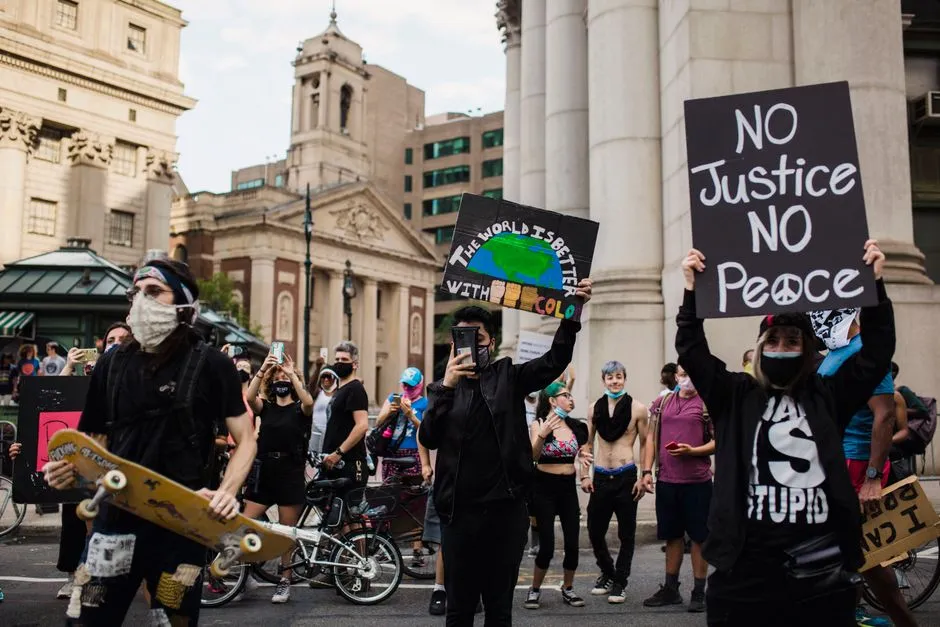
Separate gatherings in Paris
Unions and student organizations are calling for higher wages, stronger purchasing power and more support for young people at their authorized march in the capital. Yellow Vest activists, meanwhile, intend to assemble at the Place de la Concorde despite an official ban.
The square is near the National Assembly and the Élysée Palace. Benjamin Cauchy, a member of the Yellow Vest movement's coordinating committee, called for "collective disobedience," according to Agence France-Presse.
Interior Minister Laurent Nuñez said the nationwide security deployment is intended to prevent a recurrence of the violence and looting during the October 17 protests. The Catalan outlet Ara reported on November 5 that hundreds of shops were looted during those protests, particularly in Paris, and nearly 2,000 people were detained.
A protest wave that began in schools
CNN traced the current movement to September, when students and teachers at a high school in the Parisian suburbs went on strike over staffing and resources. That student-led action developed into a nationwide movement over the cost of living.
During the national strike on Thursday, November 5, four in ten scheduled trains were canceled and the Eiffel Tower closed for the day, CNN reported. The Interior Ministry reported 642 arrests during Thursday's demonstrations. Authorities have also opened dozens of internal investigations into allegations that security forces used excessive force against protesters.
Official and union estimates of Thursday's turnout differed sharply. Authorities counted about 575,000 participants, while the General Confederation of Labour, or CGT, put attendance at roughly 1.6 million.
An election to succeed Macron
The unrest comes amid widespread dissatisfaction with economic and social conditions and growing support for the far right. France's presidential election begins on April 18, 2027, according to The Connexion's November polling roundup. If no candidate receives more than 50% of the vote, the top two will compete in a May 2 runoff. President Emmanuel Macron cannot seek a consecutive third term.
The polls compiled by The Connexion put Marine Le Pen of the Rassemblement National ahead in the first round, with support ranging from 32.5% to 38%. Jean-Luc Mélenchon of La France Insoumise was second at about 17.5%. Édouard Philippe averaged about 15%, Raphaël Glucksmann about 13.5% and Gabriel Attal about 11%.
The Connexion reported that Macron is pushing for a "grand coalition" extending from the Socialists to the right-wing Les Républicains, and potentially further right, to form a common front against the far right and far left.
Competing wage demands ahead of Monday's talks
Unions want a minimum wage increase beyond the automatic adjustments tied to inflation, as well as broader salary increases, better working and educational conditions, and tax changes to reduce the burden on low- and middle-income households.
Their minimum wage proposals differ. According to CNN's November 5 coverage, the CGT is demanding an immediate 10% increase, while the more moderate CFDT wants an additional 100 euros a month, or about 7%. France last granted an exceptional minimum wage increase in 2012; the automatic adjustment last June was 2.41%.
Recent wage data show a decline in purchasing power. A November 6 report by Briefs.co, citing France's labor statistics office DARES, said private-sector pay fell 1.1% after inflation in the third quarter of 2026 compared with a year earlier.
On Friday, November 6, Labor Minister Jean-Pierre Farandou raised the possibility of aligning the minimum wage with inflation and bringing a planned increase forward from January to December, Briefs.co reported. He said the change could bring net monthly earnings to about 1,500 euros.
The government's efforts to reduce public debt constrain its ability to offer large financial concessions. Prime Minister Sébastien Lecornu is scheduled to meet union and employer representatives on Monday to discuss wages and purchasing power.