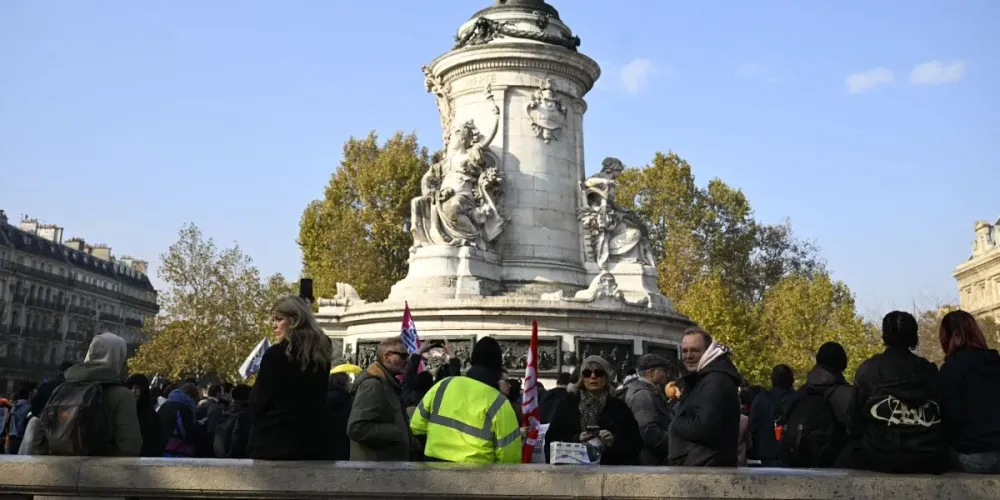
Smaller gatherings across France
Students, unions and yellow vest supporters rallied in several cities for a fourth consecutive Saturday. The ministry recorded 68 gatherings and actions by early afternoon, compared with 65 involving 15,000 people on October 31 and 108 involving 37,000 on October 24.
The authorized Paris march began shortly after 2 p.m., following Boulevard Voltaire from Place de la République toward Place de la Nation. Authorities had anticipated between 40,000 and 60,000 participants in the capital's demonstrations.
Authorities banned a separate yellow vest rally at Place de la Concorde, but the movement urged supporters to attend anyway. Benjamin Ball, a coordinating committee member, said: "We are calling for mass disobedience."
In Lyon, police dispersed demonstrators who had assembled despite a ban. Le Monde put the crowd outside the Manufacture des Tabacs in the eighth arrondissement at roughly 900. Officers then followed about 200 people heading toward Grange-Blanche.
Earlier marches and gatherings drew about 500 people each in Pau and Clermont-Ferrand. In Toulon, the Var prefecture counted 300 participants at a union demonstration organized by CGT, FSU and Solidaires, which finished peacefully at 11:45 a.m.
Security deployment follows unrest and strikes
The Interior Ministry deployed 70,000 police officers and gendarmes across France, matching the previous weekend's deployment. Announcing the security plans, Interior Minister Laurent Nunez warned: "If there are any rioters or looters... we'll be ready and waiting for them."
The protests on October 17 had brought France's worst rioting in years: more than 2,000 stores were looted and historic buildings were set ablaze. Estimates of that day's turnout ranged from the ministry's 550,000 to the unions' 800,000.
Saturday's demonstrations came two days after a much larger mobilization. For November 5, CGT reported 1.6 million participants across France, including 350,000 in Paris; the ministry counted 575,000 nationally and 65,000 in the capital.
The November 5 strike affected schools, hospitals and public transportation, while closures included the Eiffel Tower and some exhibition rooms at the Louvre. Disruption at nuclear plants meant France was expected to import more electricity than it produced. Government figures put civil servant participation at about 9.89%, and the Education Ministry reported that 16% of teachers had walked out.
Despite 642 arrests, the Interior Ministry said the November 5 protests had "generally gone well." Police tactics have also drawn criticism as heavy-handed, and allegations of brutality against demonstrators have prompted dozens of internal investigations.
From school conditions to wages and prices
The movement started in September 2026 with protests over inadequate conditions and resources in lycées, or high schools. It subsequently reached universities and drew in workers and a revived yellow vest movement opposing high prices. Its demands now include higher pay, stronger purchasing power and more funding for education and public services.
One union priority is an increase in France's minimum wage, the Smic, currently €12.31 per hour. CFDT leader Marylise Léon said her union wants a net monthly increase of €100.
The government has released 10 million barrels of diesel from strategic reserves to lower fuel costs and ease anger over prices. Ministers have also pledged changes to the unpopular Parcoursup university admissions platform, with its eventual replacement promised by 2028.
Student organizations consider those responses insufficient. Unef Secretary-General Manon Moret said young people were still "determined and angry" and intended to keep protesting.
Government talks scheduled before the next protest
The demonstrations are taking place less than six months before voters choose a successor to President Emmanuel Macron. The far right leads in opinion polls.
Prime Minister Sébastien Lecornu has convened a social conference at Matignon for November 9, when unions and employers' organizations are to discuss wages and purchasing power. The government is also scheduled to meet student and education organizations later that day.
Another protest is being planned for Tuesday, November 10.