France celebrates strongest summer tourism performance in 15 years
France experienced its most successful summer tourism season in 15 years, with new data revealing 260.5 million nights spent in hotels, campsites and other collective tourist accommodation between May and August 2026.
The figure represents a 1.1% increase compared to the same period in 2025, according to statistics agency Insee. The strong performance reinforces France's position as the world's most visited country, a title it has held for over three decades. In 2025, the country welcomed 102 million international tourists and generated €77.5 billion in international tourism revenue, representing a 9% increase from 2024 and 37% above pre-pandemic levels.
The tourism sector plays a vital role in France's economy, contributing approximately 7.2% to GDP and supporting 2.8 million jobs, or about 10% of total employment. For 2026, France is projected to generate approximately €80 billion in international tourism receipts, with July alone reaching €9.4 billion, a 3.7% increase compared to July 2025.
Domestic and international visitor patterns
French residents accounted for the largest share of stays, recording 55.3 million hotel nights during the summer period. They also spent 89.1 million nights at campsites, up from 87.5 million the previous year.
Among international visitors, the United States led overseas hotel markets with 5.4 million hotel nights, followed by the United Kingdom with 4.3 million and Germany with 3.9 million. British visitors also represented one of the main overseas markets for campsites, with 4.4 million overnight stays. While two-thirds of foreign holidaymakers to France in 2025 came from Europe, the strong presence of American visitors highlights the country's appeal to transatlantic travelers.
Campsites maintain dominance
Campsites remained the most popular type of collective tourist accommodation, recording 126.5 million overnight stays, up 1.1% compared with 2025. Hotels recorded 92 million stays, up 1.7%, while other collective accommodation, including holiday residences and youth hostels, recorded 42 million, down 0.4%.
The rise in camping was driven by French residents, whose stays increased by 1.8%. Foreign visitors spent slightly fewer nights at campsites overall, with 37.4 million compared with 37.6 million in 2025.
Geographic shifts in tourism patterns
The summer figures reveal a notable difference between rural areas and major cities. Overnight stays in rural areas increased by 3.2%, representing 3.7 million additional nights compared with 2025. Conversely, overnight stays in densely populated urban areas fell by 3.9%, representing 2.5 million fewer nights. The decline was particularly pronounced among overseas visitors to these areas, whose overnight stays dropped by 7.7%.
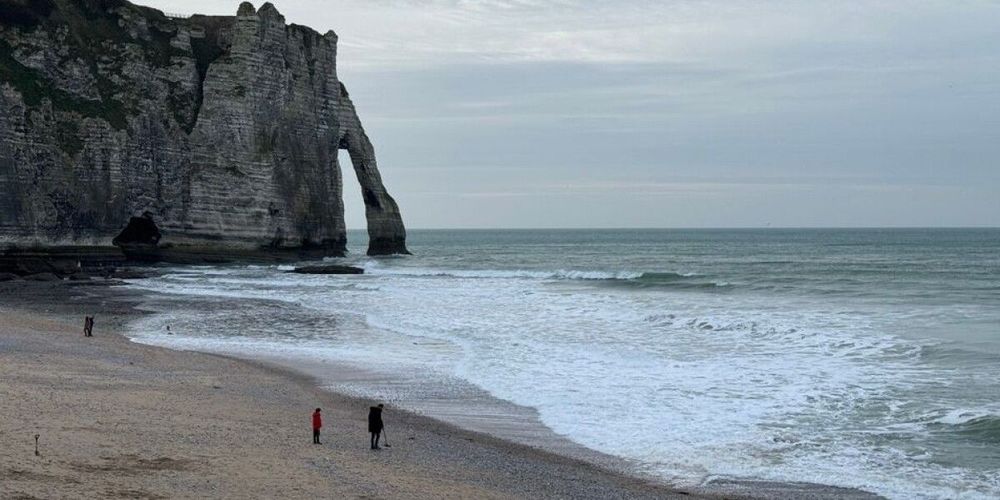
Alliance France Tourisme, a tourism industry think tank representing leading French tourism companies that collectively employ over 1 million people and generate more than €130 billion in revenue, previously told The Connexion that record heat did not reduce demand but redistributed it. The organization noted that cooler destinations such as Normandy, Brittany and the Channel coast performed strongly.
The new Insee data appears to reflect this shift. Coastal areas recorded 106.3 million overnight stays during the summer, up 1.4% on 2025. The strongest increases were recorded along the eastern Channel and North Sea coast, up 5.6%, and the north Atlantic and western Channel coast, up 5%. The Mediterranean coast saw a much smaller increase of 0.3%, while overnight stays on the South Atlantic coast fell by 2.3%.
Insee noted that tourism in Gironde was particularly affected by numerous fires in July, although the fires could only explain part of the decline, as visitor numbers had already fallen in June.
Revenue concerns despite high visitor numbers
However, Laurent Barthélémy, president of UMIH Saisonniers, which represents seasonal hospitality businesses, previously told The Connexion that high visitor numbers did not necessarily translate into stronger activity in restaurants and bars.
"The hotels were full, but in restaurants and bars, people were not spending in the same way," he said. He explained that the cost of living was affecting holiday spending, with people ordering fewer drinks, avoiding desserts or choosing something to share.
The strong summer performance builds on recent momentum following the Paris 2024 Olympic and Paralympic Games, which attracted 12 million ticket holders and drew over 15 million spectators. That event helped France reach 100 million international visitors in 2024 for the first time, making it the first country ever to cross this threshold, and boosted the tourism economy by an estimated €2 to €4 billion.