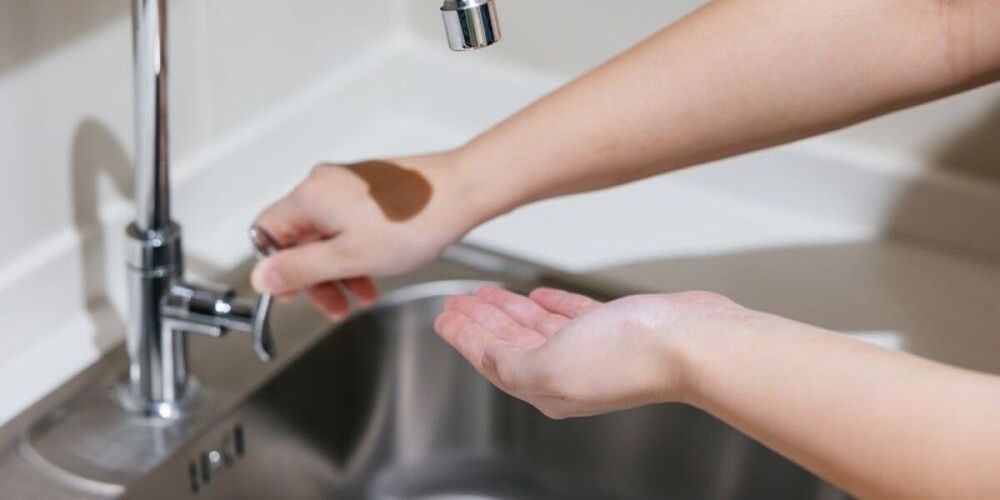
France drought crisis: 40,000 lose tap water as 43% of waterways dry up
More than 40,000 people in France have lost access to tap water as the country's drought crisis deepens, Minister for Ecological Transition Monique Barbut confirmed on Wednesday (August 12). The figure marks a sharp increase from approximately 30,000 people affected at the end of July, with a further 550,000 now in 'tension zones' at imminent risk of supply cuts.
In total, around three million residents face some degree of risk to their drinking water access as the drought tightens its grip on the nation's water infrastructure.
Historical severity of current crisis
Speaking at a crisis meeting, Ms Barbut drew comparisons to France's most severe droughts on record.
"Several hydrological indicators are returning to levels comparable to the major benchmark droughts our country has experienced, in 1976 and 2022,"she said, adding that the drought now
"affects the entire country [and] will not end with the summer."
The 1976 drought, which began in May 1975 and lasted 16 months, was the driest such period in over 200 years across the UK and Western Europe, with all its characteristics falling in the upper decile of historical records. The 2022 event saw more than two-thirds of French regions placed on the highest drought alert, with over 100 municipalities requiring truck-delivered drinking water—then described as the country's worst drought on record.
Current conditions have surpassed even those benchmarks in some respects. According to the French Office for Biodiversity, 43% of France's small waterways—1,373 out of more than 3,000—have been partially or completely dried up, representing
"the most critical situation ever observed at this time of year."
The European Drought Observatory reported that more than 85% of France was under drought warning or alert conditions in mid-July 2026, compared with around 65% at the same time in 2025 and less than 2% in 2024, demonstrating a dramatic two-year escalation.
Meteorological factors and economic impact
July 2026 was the hottest month ever recorded in France and the third driest July in terms of precipitation, with a nationwide rainfall deficit of nearly 70%, according to Météo-France. The heatwaves and drought over the past three months have broken temperature records, caused thousands of excess deaths, and fueled massive wildfires across the country.
Ms Barbut estimated the drought will cost the French economy between €10 billion and €15 billion. This aligns with recent precedent: in 2022, climate-related hazards in France led to losses amounting to €10 billion, reaching a level not seen since the devastating storms of 1999. The 2022 drought alone inflicted roughly €3.3 billion in European insured losses, ranking as Europe's worst drought in 500 years.
Stricter enforcement of water restrictions
The minister has urged departmental authorities to implement further tap water usage restrictions and expressed concern that
"they are not being applied with the same diligence everywhere."She called for departments to
"systematise the implementation of inspections"to ensure households, farmers, and businesses comply with current rules.
All French departments have now implemented tap water warnings or restrictions in at least one commune, though exact measures vary greatly. At least one department in every region has a commune facing 'crise' level restrictions—the highest possible tier for household tap water usage.
These restrictions are distinct from complete water cut-offs. They place limits on non-essential water use such as garden watering, car washing, and swimming pool filling, aiming to conserve supplies before reserves become critically low.
The minister highlighted that the most concerning situations remain
"along a corridor stretching from the Vendée to the Grand Est region [but] is now extending to the central part of southern France."Local media have reported tap water cut-offs in the Manche, Haut-Rhin, Bas-Rhin, and Jura departments.
What happens during a water cut-off
Residents facing imminent cut-offs are typically informed in advance via text message from their water management company, letters, public notices, or local authority apps. The most common suppliers are Veolia, Suez, and SAUR, which manage services through long-term contracts with municipalities across France's approximately 15,250 water treatment plants and 800,000 km of network infrastructure. Around half of households receive water from inter-municipal public utilities owned directly by local authorities.
During cut-offs, local authorities organize bottled water distribution from central points such as town halls or public squares. Water is typically provided free but may be limited per household. In some cases, communal facilities like sports halls are opened for showering if disruption persists.
Water tankers may be deployed, though primarily to top up local water towers rather than make daily household deliveries. In Quincy-le-Vicomte and Quincerot (Côte-d'Or), water deliveries this summer are set to reach up to €25,000 in additional costs—expenses municipalities must absorb through budget cuts or local tax increases.
Preparing for potential disruptions
While tap water cut-offs remain a last resort, households are advised to maintain at least six liters of bottled water as part of emergency supplies. Residents should verify contact information is current with both their mairie and water supplier to receive timely alerts.
The national VigiEau system tracks water restrictions but does not include information about complete cut-offs, which are managed locally. Regular monitoring of VigiEau can nonetheless indicate risk levels: prolonged 'crise' alerts make eventual cut-offs more likely. The Bureau de recherches géologiques et minières provides monthly water table updates, with current data showing 63% of France's aquifers at below-average levels as of August 1.
The pattern of drought in France has intensified markedly in recent years, with mid-summer dryness affecting production in 2015, 2018, 2019, 2020, and 2022—making 2022 the fifth such occurrence in eight years. Climate projections indicate that drought frequency, severity, and spatial extent are expected to continue intensifying across Europe, particularly in southern regions including France.