France confronts €5.7bn cost to eliminate 'forever chemicals' from drinking water
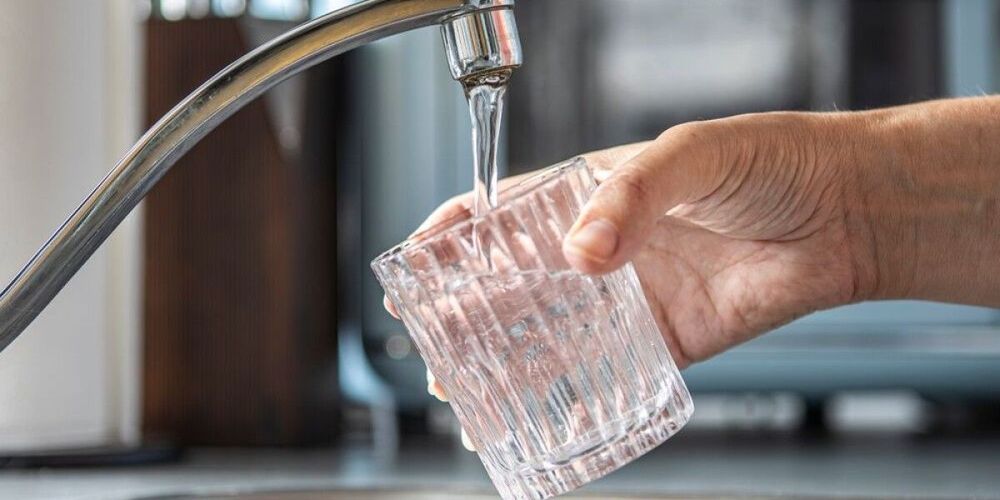
France faces an annual investment requirement of €1.3 billion to €5.7 billion to upgrade water treatment facilities and reduce PFAS and pesticide contamination in drinking water, according to a new government report examining the cost of compliance with stricter European standards.
The financial burden comes as new EU regulations that took effect in January 2026 require systematic monitoring of PFAS in drinking water for the first time across all member states. These 'forever chemicals' are synthetic compounds that persist in the environment indefinitely, and exposure to certain PFAS has been linked by Anses, France's health and safety agency, to elevated cholesterol levels, specific cancers, reproductive problems, and liver and kidney disorders.
A 2024 study revealed that approximately one-third of France's population could be exposed to PFAS concentrations exceeding recommended EU limits through tap water. France is among the most affected countries in Europe, hosting more than 1,000 contamination sites and five of the 20 PFAS production facilities operating across the continent. Across Europe, roughly 12.5 million people live in communities where drinking water is polluted by PFAS, with around 23,000 contaminated sites identified.
Four treatment scenarios
The government report evaluated four scenarios with varying costs and effectiveness. The least expensive option, at €1.3 billion annually, would address the most severely contaminated water sources, primarily through dilution with cleaner water supplies. This approach, already employed in some areas for pesticide residues and high nitrate levels, would still leave 28% of the population receiving water containing PFAS above regulatory thresholds, though at reduced concentrations.
Critically, this baseline scenario would not effectively treat trifluoroacetic acid (TFA), the most frequently detected PFAS compound. TFA presents exceptional technical challenges because conventional treatment methods such as activated carbon filtration and ozonation cannot remove it. Only expensive technologies like reverse osmosis or ion exchange can successfully eliminate TFA from water supplies.
The three more expensive scenarios progressively achieve lower TFA concentrations but carry significantly higher price tags. Only two of the four scenarios modelled would keep average water price increases below 35%, the maximum threshold that the SGPE, the government's ecological planning body, believes the public would accept. The remaining scenarios would require steeper rate increases, raising concerns about public resistance.
Infrastructure crisis compounds challenge
The PFAS treatment costs arrive against a backdrop of severe underinvestment in France's water infrastructure. The Cercle français de l'eau estimates an existing maintenance deficit of €4.6 billion annually for water and sanitation networks, entirely separate from PFAS treatment expenses. Water losses through leakage currently amount to approximately 26% of supply, equivalent to 1,000 million cubic metres annually or the consumption of around 18 million people.
The government report does not specify funding sources for the proposed upgrades, a particularly acute challenge given France's strained public finances. First-half 2026 figures showed debt-servicing costs jumped 18%, despite budget priorities focused on reducing the national debt burden.
Any water price increases would need to include support measures for vulnerable households, the report emphasizes. The report notes that steeper price rises carry the risk of significant public pushback.
Industry structure and contamination sources
Water distribution in France is predominantly managed by major private companies including Veolia, which holds 39% of the private market, Suez with 19%, and Saur at 11%. However, approximately 69% of France's water services are operated as public utilities directly by local authorities. Smaller firms such as Agur have recently secured contracts from larger competitors. Nearly all water in France is metered, with available data indicating an average price of €4.69 per cubic metre in 2023-24.
Analysis has identified several PFAS contamination hotspots, most notably around Lyon and more recently in the Ardennes, Meuse, and Vosges departments. The Lyon contamination is linked to chemical plants in the Pierre-Bénite area, where Arkema has been producing PFAS chemicals for over 65 years since 1957, with industrial effluents discharged into the Rhône River. Testing in the area found 67% of tap water samples exceeded EU guidelines, potentially affecting over 200,000 residents.
Following the 2024 study, authorities launched an action plan to strengthen PFAS research and testing, identify priority chemicals, reduce public health risks, develop treatment solutions, and improve public communication. The European Chemicals Agency proposed broad restrictions on PFAS manufacturing and use in 2023, with support declared in March 2026 following proposals from the Netherlands, Germany, Denmark, Norway, and Sweden for comprehensive bans.
Checking your water quality
Every commune's tap water undergoes regular testing by the regional health agency (ARS), with results publicly available. Residents can verify their local supply by searching for 'qualité eau' followed by their commune name, or by visiting the health ministry's water quality portal. Tests on individual water sources are also mapped on the ecology ministry's website.
Water suppliers are legally required to send an annual summary sheet, often included with water bills, covering water quality information. When a commune's water fails to meet standards, suppliers must directly inform residents and implement corrective measures.
Well water considerations
Some properties retain functional wells from periods before piped water arrived. Well water is subject to the same usage restrictions as tap water during drought periods, but homeowners considering drinking their own well water should have it tested for PFAS and other contaminants first.
Properties using well water as their primary supply must install a meter and pay annual fees of approximately €0.15 per cubic metre for the communal water system and €0.34 per cubic metre for wastewater treatment.
Basic water testing kits available at DIY retailers for €20 to €30 can detect heavy metals and nitrates but cannot identify pesticides or PFAS. A joint platform established in 2024 by Anses and the Office français de la biodiversité lists approved laboratories for comprehensive water analysis, including PFAS testing. Full testing typically costs around €250 for individual samples.
Some private laboratories offer testing without Anses certification at lower prices. Local medical laboratories may also conduct water sampling depending on their workload, typically providing sterile collection bottles for sample submission.