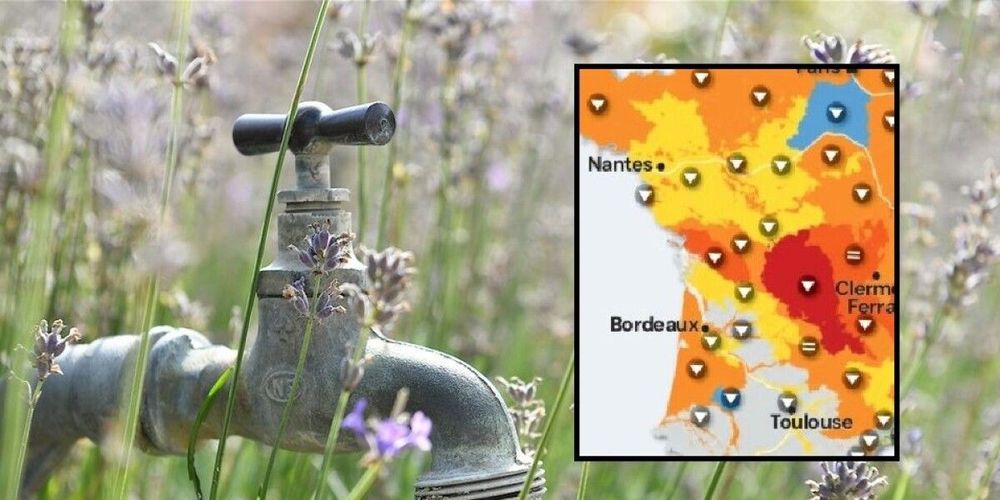
France's groundwater crisis deepens as 63% of aquifers fall below seasonal averages
France's underground water reserves have reached crisis levels, with 63% of the country's aquifers now below average for the season, according to the latest monthly report from the Bureau de recherches géologiques et minières (BRGM), France's national geological survey.
The assessment, based on data from August 1, marks a significant deterioration from the same period last summer, when 44% of aquifers were below average. July 2026 proved to be France's hottest month on record and the third driest July for rainfall, with a precipitation shortfall of nearly 70%, according to Meteo-France.
Aquifers are underground layers of rock or sediment that hold groundwater, serving as a critical component of France's water infrastructure. These reserves provide approximately 66% of the country's domestic water supply, 31% of industrial water and 37% of agricultural water use. France maintains 6,500 aquifers, including 200 of regional importance with surface areas ranging from 1,000 to 100,000 square kilometres.
Widespread decline across monitoring network
BRGM's national piezometric network, comprising 1,860 boreholes monitoring groundwater levels in real time, recorded water table drops at 94% of measuring points during July 2026. Only 2% of monitoring stations registered increases in aquifer levels.
The most severely affected regions include northern and eastern France, as well as central areas west of Clermont-Ferrand. Only the area south of Paris and pockets of Occitanie and Nouvelle-Aquitaine maintain above-average water levels.
Even in areas where water is sourced primarily from rivers rather than underground aquifers, significant shortages are occurring, with approximately half of France's small rivers and streams now running dry. These shortages have left more than 40,000 people without access to tap water.
Historic drought conditions
The crisis represents an escalation of drought conditions that began earlier in the year. April 2026 ended with a rainfall deficit of nearly 70%, making it the fourth driest April recorded between 1959 and 2026, while ranking as the third warmest April since 1900.
By July 9, Météo-France reported that average soil-moisture levels across metropolitan France had fallen to the driest level ever recorded for that date, lower than at the same point in both 2022 and 2025, which were themselves severe drought years. The European Drought Observatory found that more than 85% of France was under drought warning or alert conditions in mid-July 2026, compared with around 65% at the same time in 2025 and less than 2% in 2024.
In Paris, only 27mm of rain fell during June, July and the first half of August 2026, representing 80% less than the average for the same period over the past 50 years. The previous record low of 43mm was set in 1921.
Long-term recovery challenges
All mainland French departments now have at least one area either facing water restrictions or issuing warnings about tap water usage. Minister for Ecological Transition Monique Barbut has indicated these restrictions could extend well into autumn, potentially winter, to allow the worst-affected aquifers to replenish.
The dried-out soil conditions pose an additional obstacle to recovery. Following steady rainfall at the start of the year, successive heatwaves have desiccated soils, meaning future autumn rainfall will need to dampen soils sufficiently to make them permeable before water can begin replenishing aquifers. Research indicates that groundwater takes an average of three years to recover from drought for aquifers untouched by human activity, with recovery times potentially longer in regions with excessive pumping.
BRGM noted that the current situation is typical for the summer season. High temperatures promote evapotranspiration and increase plant water demand, while rainfall from violent storms does not infiltrate soil effectively. Water withdrawals for irrigation and tourism may have locally accelerated the decline in levels.
Excess water has also been required for tackling wildfires this season, with France on track to record its most damaging year for blazes following several major fires.