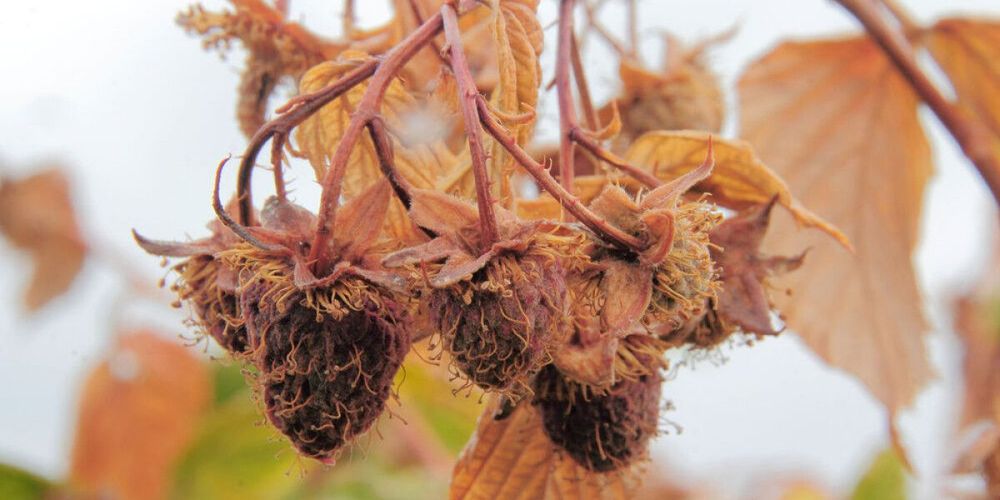
Record drought drives French fruit and vegetable prices sharply higher
French consumers are facing sharp increases in fruit and vegetable prices as an unprecedented heatwave and drought take a heavy toll on agricultural production, forcing farmers to discard damaged crops and triggering some of the steepest price rises recorded this year.
Courgette prices jumped 32% in July compared with the same month last year, while tomatoes rose 31% and green beans climbed 24%, according to consumer group Familles Rurales. Fresh fruit prices have surged 54% since 2015, with vegetables up 62% over the same period.
The crisis deepened after France recorded its hottest day on record on June 24, when the national average temperature reached 30.0°C and a single weather station at Pissos in the southwest registered 44.3°C. Météo-France issued top-level red alerts for a record 58 departments.
Historic soil moisture deficit
By July 9, Météo-France reported that average soil-moisture levels across metropolitan France had fallen to the driest level ever recorded for that date in its national series, lower than at the same point in both 2022 and 2025, which were themselves severe drought years. More than 85% of France was under drought warning or alert conditions in mid-July, compared with around 65% at the same time in 2025 and less than 2% in 2024, according to the European Drought Observatory.
The drought conditions began building in spring, when France recorded a 70% rainfall deficit in April, making it the fourth driest April recorded between 1959 and 2026. That month also ranked as the third warmest since 1900, with temperatures 2.3°C above the 1991-2020 seasonal average.
Agreste, the Ministry of Agriculture's statistics service, noted in a regional report for Nouvelle-Aquitaine that the heatwave had slowed fruit growth, caused sunburn on exposed apples and led to local production losses of between 5% and 15%. Strawberries and tomatoes have also been affected by the extreme temperatures.
Widespread crop damage
In some areas, losses have been catastrophic. A vegetable grower in Aveyron was forced to discard peppers, lettuce and courgettes after they were damaged by the heat. Of 400 kilograms of green beans harvested, she was able to save only 10 kilograms, Franceinfo reports.
An apple grower in Loire-Atlantique said the size of some apples had been reduced by two-thirds because of heat and drought, with the grower estimating that 75% of production at the orchard was compromised, TF1 reports.
The damage extends beyond fruits and vegetables to major grain crops. France's maize harvest is expected to be the worst in decades, with around one-third of the crop wiped out by high temperatures, according to the agriculture ministry. The French corn crop is forecast to drop to 9.4 million tonnes in 2026, down from 13.8 million in 2025, the lowest level in more than 20 years.
France's soft wheat crop is expected to fall to 30.80 million metric tons in 2026, down 7.6% from 2025, with yields at 6.67 tons per hectare, some 6.5% below the 10-year average, according to Argus Media.
Severe water restrictions compound crisis
The situation has become more difficult because farmers need more water during periods of extreme heat, while drought-related restrictions limit how much they are allowed to use. By early August, every single mainland department in France had issued restrictions or warnings over tap water usage, with 48 departments facing crisis-level restrictions.
Two-thirds of the aquifers that provide most of France's drinking water have dropped below normal levels as of August, according to France's Bureau of Geological and Mining Research, due to shortfall in rainfall and increased water demand in agriculture and tourism.
Produce damaged by heat is often unsuitable for sale or may deteriorate more quickly, adding to pressure on producers and contributing to higher prices. The consequences have been witnessed across a range of products including apples, tomatoes, courgettes, green beans, peppers and lettuce, while even summer fruits like peaches and apricots can be affected by the conditions.
Broader European context
France's agricultural crisis is part of a wider European phenomenon. Total EU and UK grain production for 2026 is expected to drop 23.4 million tonnes from the previous year to 286.6 million tonnes due to the heatwave, according to COCERAL, which issued an extraordinary out-of-cycle crop forecast prompted by the weather situation.
Crop losses caused by droughts and heatwaves in the EU have tripled over the past 50 years, according to the European Commission's agriculture department, with temperatures in many countries rising 5°C to 12°C above seasonal averages in July 2026 alone.
Some growers are adapting by irrigating where possible, changing varieties or adjusting their growing practices. But these measures cannot remove the immediate pressure from heat, drought and rising production costs.
Familles Rurales noted that fruit and vegetables have become one of the food categories whose prices are rising fastest, even though they are at the heart of public health recommendations.