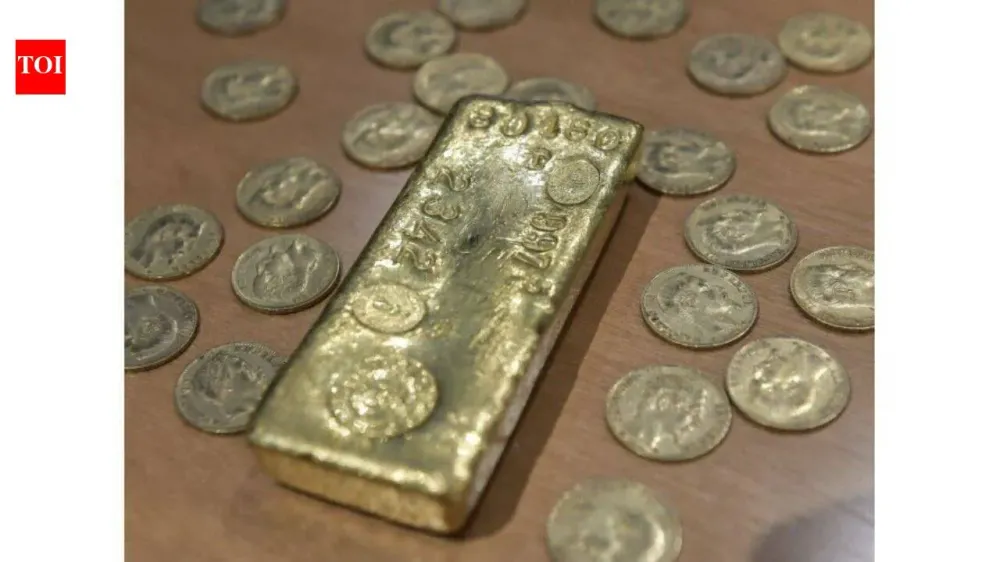
Gold packed in buried plastic bags
The homeowner had purchased the house about a year before the excavation exposed several plastic bags containing the gold. The property is in a town of about 8,000 people north of Lyon.
The discovery did not become public until November 5, 2025, when Le Progrès first reported it. The newspaper put its estimated value at €700,000, and the town hall subsequently confirmed the details to AFP. The homeowner has chosen to remain anonymous.
After the discovery, he went directly to the town hall to report it. That was a legal requirement rather than simply a voluntary disclosure: TF1 Info reported that France's Heritage Code requires such finds to be declared.
Investigators checked for theft and archaeological value
The gold underwent two kinds of scrutiny. Cultural authorities considered whether it qualified as an archaeological discovery, while law enforcement checked whether it was connected to a crime.
The Regional Directorate of Cultural Affairs, known as DRAC, was among the agencies notified. As Le Progrès explained, a find with historical or archaeological significance can prompt the French state to commission an expert assessment and potentially claim the objects. In this case, officials found no archaeological significance, and local authorities confirmed that the homeowner could retain the gold, according to The Independent.
For the criminal inquiry, the gendarmerie used identification numbers on the five bars to trace their origins and check for connections to thefts or burglaries in the region, Le Progrès reported. Investigators determined that the gold had been legally acquired; it did not appear to be linked to a recent crime.
The Brussels Times reported that a company in the Lyon area had melted the bars and coins roughly 15 to 20 years earlier. Investigators nevertheless could not establish who later hid them in the garden or why.
Ownership rules leave room for a claim
Article 716 of the French Civil Code provides the legal basis for the homeowner to keep the discovery. In force since March 21, 1804, it treats an object as treasure when it is hidden or buried, found purely by chance and has no owner who can prove title to it. Someone who discovers such treasure on their own land receives all of it. On another person's land, the finder and landowner each receive half.
That rule does not necessarily foreclose a later ownership claim. Jean-Christophe Genevrier, first vice-president of the Chambre interdépartementale des notaires, told Le Progrès that the finder had complied with the law but could lose ownership.
As Daily Galaxy explained, an heir of the person who buried the gold could, in theory, claim it with evidence establishing ownership. That could include a purchase invoice, an estate inventory or records corresponding to the serial numbers on the bars.
Le Progrès reported that the property's previous owner was believed to have died. The gold had been buried before the current homeowner bought the house, but the burial date remains unclear, and nobody appeared to know who concealed it or under what circumstances.