Earlier increase fails to satisfy unions
The government announced the measure on November 9, 2026, following a "social conference" with employee and employer representatives at the Hôtel de Matignon. Euronews reported that an implementing decree would be published shortly.
The increase comes after protests that started in September over school underfunding expanded into broader unrest. Major cities saw riots and looting on October 17, and hundreds of thousands of people marched again last week. Government turnout estimates cited by Bloomberg put participation at about 146,000 on November 7, down from a November 5 peak.
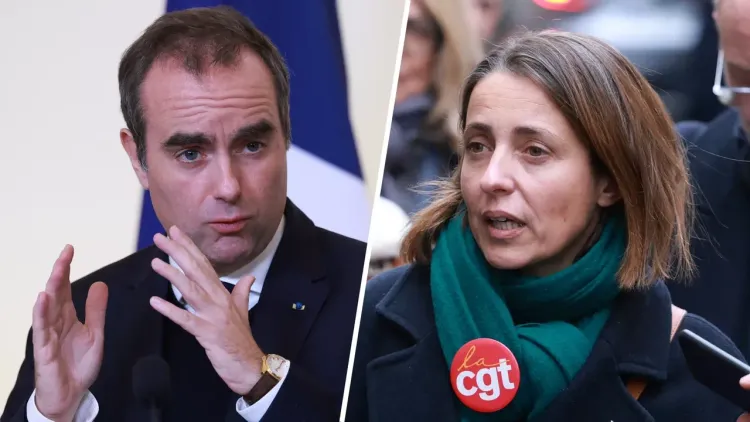
Unions are seeking substantially more than the government has offered. The CFDT, France's largest union, asked for an additional €100 a month. The hard-left CGT sought a 10% increase, or roughly €150, along with wage adjustments linked to prices. CGT leader Sophie Binet called the offer "crumbs" and announced further strikes for November 17.
What changes for workers and employers
The 1.6% increase will take the net monthly minimum wage, known as the SMIC, from €1,478 to €1,502. Most of the adjustment would have arrived anyway: the SMIC is linked to inflation and normally increases automatically on January 1. Lecornu moved that adjustment forward by one month and included an additional discretionary increase, the first since 2012, according to Bloomberg.
Lecornu described the increase as the second-largest in two decades. That description applies to the year's combined adjustments, including June's 2.4% increase, rather than December's 1.6% alone.
The wage floor stands at about two-thirds of average earnings. Eurostat figures cited by Reuters show that roughly 12.7% of French employees earn at or close to it, compared with about 8% in Germany and 3.5% in the Netherlands. That concentration means even a modest adjustment raises labor costs for many employers, including small retail, hospitality and care businesses. The U2P employers' federation warned of closures, describing a raise as "a catastrophe."
Alongside the wage announcement, the government promised reductions in employers' social contributions and renewed industry-by-industry pay negotiations. It also launched a project to reform general reductions in social security contributions, with the stated goal of increasing take-home pay, Euronews reported.
The accompanying tax package includes an overtime tax exemption up to €10,000, tax-free reimbursement of public transportation costs and a tax break for value-sharing bonuses, also known as the Macron bonus, according to Euronews.
Debt costs constrain the government's response
France's borrowing costs have risen sharply while the government tries to contain spending. DW reports that the country has not balanced its national budget since 1974. Over the past six months, its 10-year bond yield has risen from roughly 3.7% to nearly 5%.
The yield gap between French and German government bonds has more than doubled since June, reaching a level last seen during the 2011 eurozone debt crisis. France's annual interest payments are expected to exceed €79 billion in 2026 and are projected to rise above €91 billion in 2027.
The proposed 2027 budget seeks roughly €43 billion in savings and a deficit of 5% of GDP, down from a projected 5.4% in 2026. Budget Minister David Amiel warned that amendments made in the National Assembly would instead have left the deficit at 5.9%, according to POLITICO.
Explaining the limits on the government's offer, Lecornu said: "The duty of the government is to commit to things that are realistic and doable, truthful in a budgetary sense."
Budget battle heads to the Senate
The National Assembly rejected the budget's revenue provisions on the night of November 4, with 458 votes against, none in favor and two abstentions. That defeat also struck down the spending section. POLITICO reported that the bill would proceed directly to the Senate, with debate beginning November 20. A Senate vote is scheduled for December 9, according to Euronews.
Without a majority in the lower chamber, the government could use Article 49.3 of the Constitution to bypass a parliamentary vote, but doing so would leave it exposed to no-confidence motions. Another option is adoption through executive orders, a route POLITICO described as unprecedented in France's recent history. The confrontation comes roughly five months before a presidential election, with Marine Le Pen leading the polls.
AInvest's analysis sees the €24 monthly increase as offering limited support for low-income spending, rather than a substantial boost to French consumption or an answer to protesters' demands. It identifies the budget's fate and the French-German bond yield gap as the more consequential issues for investors. Failure to pass spending cuts, coupled with further increases in the risk premium demanded by lenders, could weigh on French and European assets and raise borrowing costs across the eurozone.