Pay demands and government measures
Public-sector workers want the government to unfreeze the pay scale point that determines their basic salaries. Unions estimate that public servants have lost 16 percent of their purchasing power since 2017. Al Jazeera reported that the government's draft budget rules out an across-the-board pay increase for a fourth consecutive year.
The government had already offered an increase of about $30 a month in the minimum wage, according to Al Jazeera, but protesters and unions said it did not adequately address inflation.
The minimum-wage adjustment also affects public-sector salaries. According to AFP reporting carried by La Libre, the December 1, 2026, revaluation of the Smic, France's minimum wage, would have left about 1.1 million public employees with base salaries below that threshold, roughly 20 percent of the total.
The government raised base pay for the lowest-paid civil servants, but about 660,000 employees would still have basic salaries below the Smic. They would receive an allowance covering the difference, though that payment does not count toward their pensions, La Libre reported.
Public Accounts Minister David Amiel estimated that the minimum-wage adjustment and measures for the lowest-paid public employees would together cost more than 1 billion euros, according to La Libre.
Conflicting crowd counts and lower strike participation
The nationwide gap between official and union turnout estimates was also evident in Paris. The Interior Ministry's tally included 28,000 protesters in the capital, matching the Paris police prefecture's count. The CGT and the Ile-de-France inter-union estimated 175,000, according to L'Humanité.
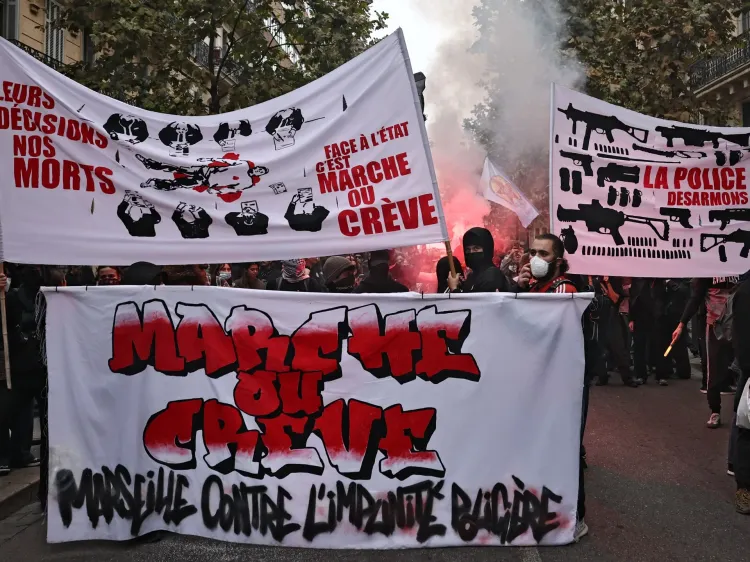
AFP reported through La Libre that demonstrations in several cities were smaller than those on November 5. In Marseille, the prefecture estimated about 5,000 participants, compared with the unions' 80,000. In Toulouse, the respective estimates were about 5,000 and 20,000.
Strike participation among state civil servants also declined: fewer than 3 percent stopped work, compared with nearly 10 percent on November 5, according to the same report.
A third public-sector action since September
Tuesday marked the third joint call for public-sector protests and strikes since September, Al Jazeera reported. The wider protest wave started in mid-September with student-led demonstrations over education conditions, then broadened to include wages, high fuel prices and social housing.
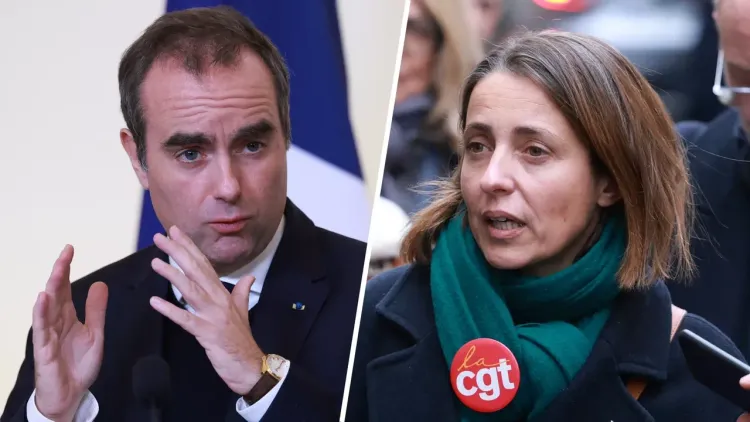
At the November 17 demonstration, Coppelia Moreau of the student collective Interfac called for another mobilization on November 26, 2026. CGT General Secretary Sophie Binet demanded that the government meet with all unions together and make immediate announcements. She said the mobilization would end only when the government responded to their demands.