Lower official turnout, competing crowd estimates
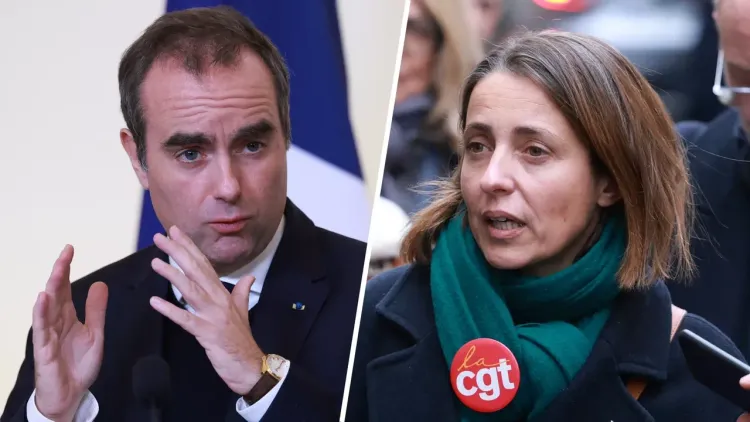
Tuesday marked the third joint public-sector strike and protest day since September. Unions had called on the country's 5.8 million public-sector employees to take part after Friday's talks with Prime Minister Sébastien Lecornu failed to deliver the broad pay increases they sought.
The Interior Ministry's total included 28,000 demonstrators in Paris. The CGT reported 175,000 in the capital as part of its nationwide estimate. Before the protests, police sources told AFP they expected 40,000 to 80,000 people in Paris and as many as 300,000 across France.
Official turnout was down from the previous unified protest on November 5, when the ministry counted 575,000 people nationwide, including 65,000 in Paris, according to Reuters. That earlier mobilization also brought clashes in several cities, where police used tear gas.
Strike participation fell as well. Government figures reported by The Rio Times showed that fewer than 3% of central government civil servants stopped work, compared with nearly 10% on November 5. Those figures exclude hospital and local-authority employees, whose strike rates were recorded separately at 3.93% and 1.96%, respectively.
A dispute over broad raises and targeted measures
Additional unions backed Tuesday's strike after meeting with Lecornu, arguing that his proposals fell short of addressing an urgent squeeze on pay and living standards. The talks followed the previous week's minimum wage boost for private-sector workers.
Unions want the government to lift the freeze on the index point that determines civil servants' basic salaries. They say it has remained frozen for four years, cite October 2026 inflation of 3.4%, and estimate that public employees have lost 16% of their purchasing power since 2017. The CGT is seeking roughly €150 more in monthly take-home pay, along with wages linked to inflation.
Ahead of the strike, the government announced eight extra index points for the lowest-paid public employees and moved the national minimum wage increase forward to December 1. Government spokesman Mathieu Lefèvre also outlined a guarantee that civil servants would not be paid below the minimum wage and proposed gross pay increases of up to €650 for more than 1.3 million public-sector employees.
The draft 2027 budget nevertheless excludes a general public-sector pay increase for a fourth consecutive year. Citing pressure on public finances, the government says raising the index point by 1% would cost the state €2.4 billion. The public deficit is forecast to reach 5.4% of GDP in 2026.
Paris march and the wider protest movement
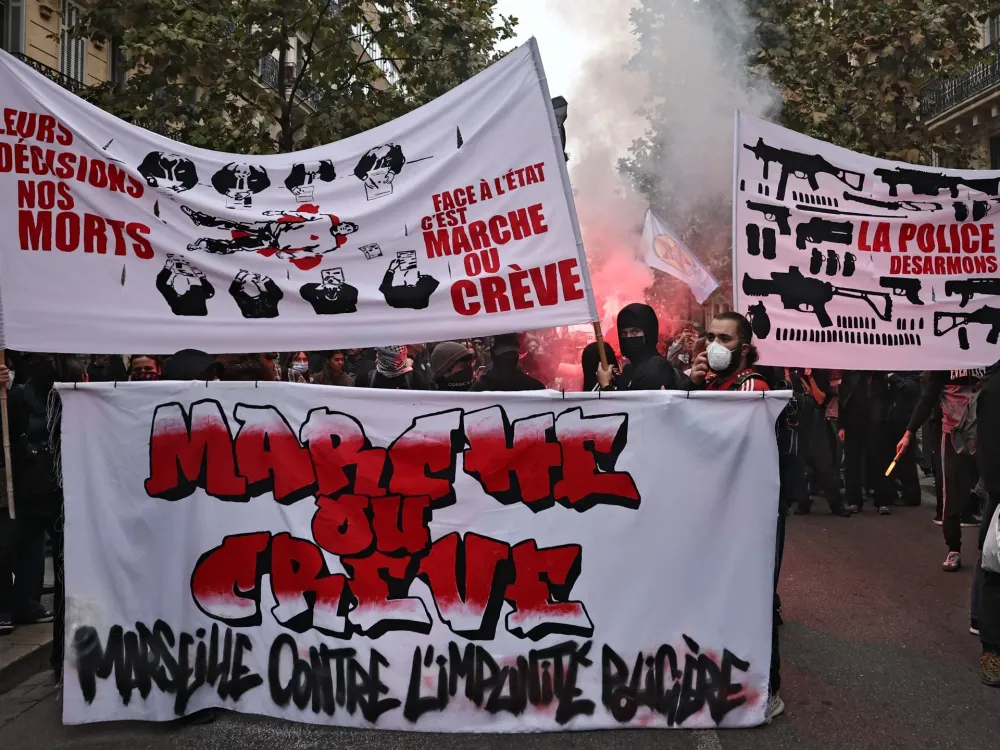
The main Paris procession began at 2 p.m. at Place de la Nation in the city's east and headed toward Place d'Italie. Dozens of other demonstrations were planned around France as protests continued over living standards and strained public services.
University professor Nicolas Prevot, who joined the Paris march, said his reasons included defending human rights and public services, as well as preventing the far right from winning power in the following year's presidential election.
Euronews traces the wider movement to high school students protesting school conditions in mid-September 2026. Its demands later expanded to include rising fuel prices and the cost of living.
The Paris administrative court also suspended a police prefecture restriction on unauthorized gatherings near educational sites. The order, which was to apply from November 16 through November 20, barred such gatherings within 100 meters of 10 high schools and five university sites. The court found the restriction disproportionate.