Turnout exceeds October mobilization
The Interior Ministry put nationwide participation at 575,000 as of 6 p.m. local time, revising its initial estimate of nearly 600,000. Its Paris count was 65,000. The CGT union reported much larger crowds: nearly 1.6 million across France, including 350,000 in the capital.
Thursday brought the movement's largest turnout so far, according to The Rio Times and Benin Web TV. The ministry's provisional estimate exceeded the 550,000 it recorded on Oct. 17, when unions counted 800,000 participants and the protests turned violent.
Unions press competing pay demands
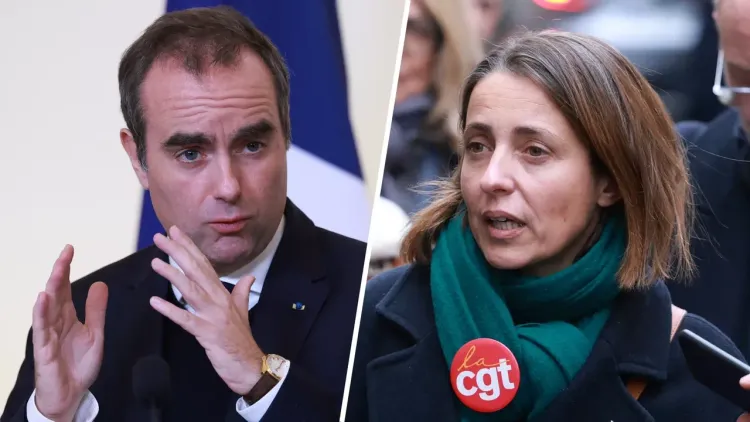
Speaking at the Paris march, CGT Secretary-General Sophie Binet described the strike as extremely effective and urged the government to answer workers' demands. She said the movement would not be stopped and sought raises for all workers, including a 10% increase in the minimum wage.
The CFDT, France's largest union, called for workers to receive an additional 100 euros in net pay each month, Benin Web TV reported.
Participation estimates also differed in education. The SNES-FSU union said 52% of middle and high school staff joined the walkout, while government figures reported by Benin Web TV put participation among teachers at 16% and among civil servants at 9.89%.
The Rio Times reported that the finance ministry's midday figures showed strike participation of 9.89% in the state civil service, 4.60% in local government and 3.93% among hospital staff.
School protests grow into a broader movement
The mobilization began in French high schools in September 2026, with students protesting inadequate resources and study conditions, according to Benin Web TV. It subsequently spread to universities and workers.
Students sought better-maintained school buildings, more education resources, substitutes for absent teachers and the abolition of the Parcoursup university-admissions platform, SWOI media reported. The government has promised to phase in a replacement for Parcoursup by 2028, according to Benin Web TV.
On Thursday, the Higher Education Ministry reported significant disruption at 60 of 184 institutions. Police intervened at student blockades in cities including Paris and Bordeaux, local media reported; those interventions contributed to injuries among officers.
The strike also affected cultural attractions in Paris, where the Eiffel Tower and some Louvre exhibition halls closed, according to Benin Web TV.
Mostly peaceful marches, with fires and arrests
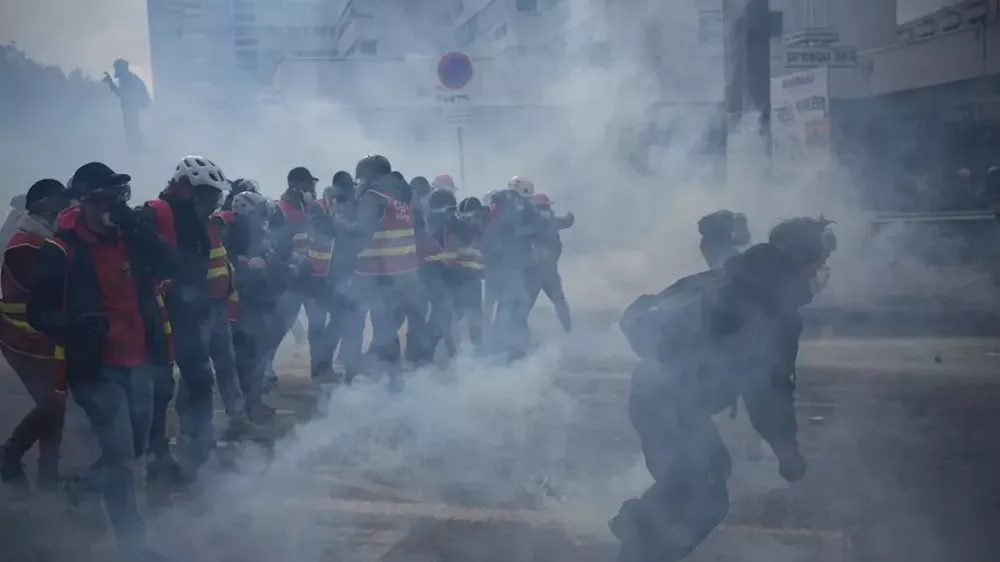
Although demonstrations were largely peaceful, unrest continued into the evening, with tensions in Paris, Lyon, Rennes and Toulouse. Authorities reported 448 arrests and 53 injured police officers, while the Interior Ministry recorded 86 fire incidents.
Interior Minister Laurent Nuñez had announced on the eve of the strike that the government would deploy 70,000 officers, citing the risk of violence, Últimas Noticias reported.
The outlet reported that protesters in Strasbourg burned a giant cardboard figure of a CRS riot police officer bearing the inscription "CRS SS." Educational facilities in Toulouse and Lille sustained partial fires.
In La Courneuve, outside Paris, a man stabbed someone blocking a school, according to Últimas Noticias. The attacker was arrested, and the victim was hospitalized with injuries that were not life-threatening.
Consultations ahead of Monday's conference
The social conference is scheduled for Monday, Nov. 9, at Matignon, the prime minister's official residence. It will bring together trade unions and employers' organizations to discuss the grievances behind the strikes, which pose a fresh test for President Emmanuel Macron's administration.
Lecornu asked Labor Minister Jean-Pierre Farandou to complete consultations by Sunday, The Rio Times reported. The government said discussions with civil-service representatives were also continuing.