The dispute over the 2027 budget
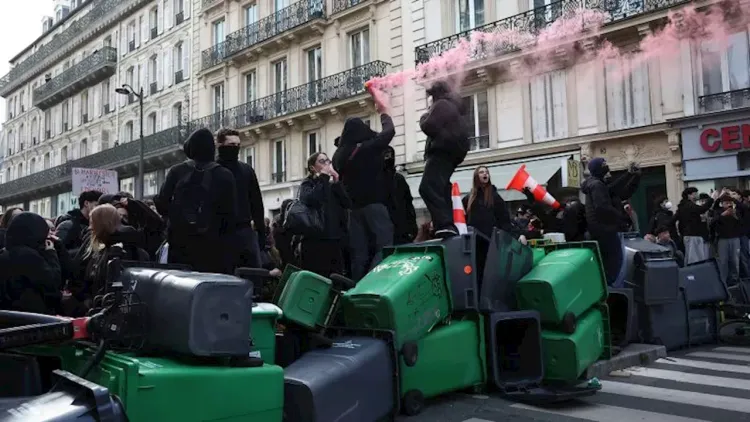
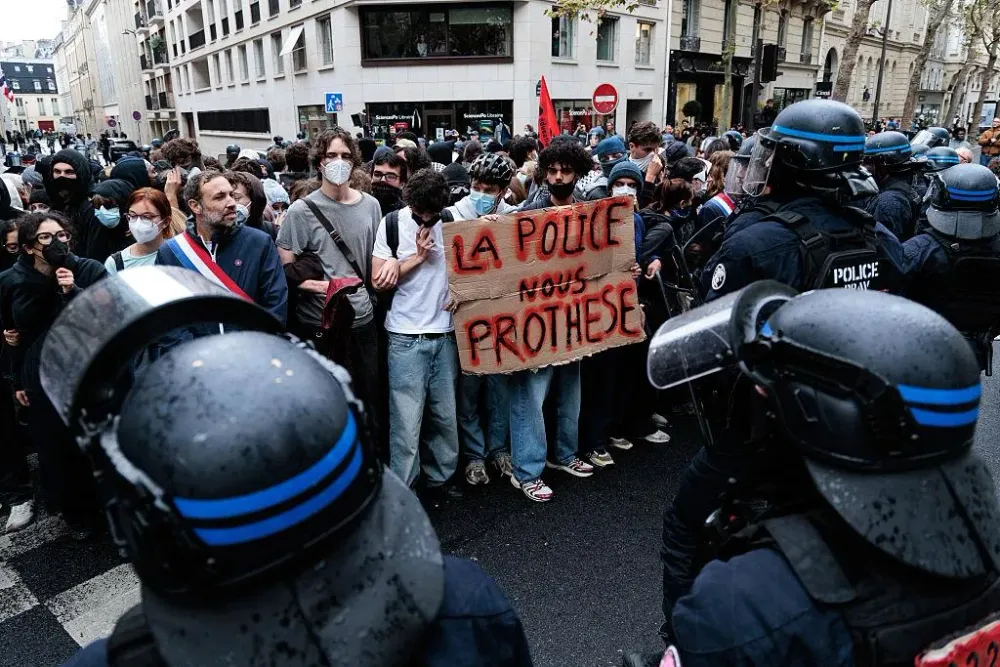
The CFDT, CGT, FO, Unsa and FSU called the nationwide action against a backdrop of school blockades and repeated demonstrations over living costs. The CGT is calling for a general strike beginning Nov. 5, with workers at each workplace deciding whether to extend it.
The unions are challenging the 2027 budget proposed by Prime Minister Sébastien Lecornu's minority government. According to The Rio Times, their objections include planned savings and a freeze on the civil-service pay index, which serves as the benchmark for public-sector wages. Alongside higher pay and pensions, they are seeking more funding for public services and tax justice.
France recorded a budget deficit equal to 5.1% of GDP in 2025, with public debt at 115.7% of GDP and an interest bill of €65.7 billion, The Rio Times reports. The country has been subject to the European Union's excessive deficit procedure since July 2024.
School blockades and competing march counts
The movement began in late September with high school blockades in Seine-Saint-Denis, a working-class suburb north of Paris with many African and Arab families, according to Struggle-La Lucha. Students eventually blocked more than 700 schools nationwide.
By Oct. 17, the marches had drawn unions, farmers, retirees and veterans of the Yellow Vest movement, which began in 2018 in opposition to fuel taxes. Organizers and the CGT estimated participation at 800,000 that day. The CGT reported roughly the same turnout on Oct. 24.
The Interior Ministry reported smaller crowds: 550,000 on Oct. 17, followed by 410,000 on Oct. 24 and 320,000 on Oct. 31. It also reported more than 500 arrests on Oct. 31. In eastern Paris, a Molotov cocktail thrown at a gendarme at the Porte de Charenton led to an attempted-homicide inquiry.
Struggle-La Lucha reports that a police stun grenade severed a 15-year-old protester's hand in northern France on Oct. 5 and that another marcher suffered the same injury on Oct. 17. The outlet also says far-right groups have tried to redirect the youth protests toward immigration and Islam.
The mobilization has included the ports. The CGT's ports-and-docks federation called a separate 24-hour walkout for Oct. 30 at 24 ports, including Le Havre, Dunkirk and Marseille-Fos. The federation said the action could reduce port activity by 95%; that was its forecast, not a reported outcome.
European protests and Germany's chemical industry
Struggle-La Lucha places the French movement within a broader wave of European unrest. Citing a group that tracks protests worldwide, it reports more than 3,600 demonstrations in less than three weeks of October, in countries including Belgium, Italy, Portugal and Albania.
In eastern Germany, about 700 workers marched in May 2025 against Dow's plans to close production facilities. Dow's board has approved the shutdown of its ethylene cracker in Böhlen and its chlor-alkali and vinyl assets in Schkopau, with both closures expected in the fourth quarter of 2027. Its plan also includes a siloxanes plant in Barry, UK, whose closure was expected in mid-2026. Across the three sites, about 800 Dow roles are affected, and the company expects charges of $630 million to $790 million.
A separate dispute over chemical-industry pay ended in a collective agreement in late March 2026. After employers initially sought a wage freeze, the chemical and pharmaceutical union IG BCE secured an agreement covering 585,000 workers. It provides a 2.1% raise in January 2027 and another 2.4% in January 2028.
The agreement also requires employers to contribute €300 per worker and €150 per apprentice to a job-security fund in each of 2026 and 2027. More than €350 million is to be invested in job security over those two years.
Energy prices and dependence on US supplies
Struggle-La Lucha links the French protests to European governments' support for the US war on Iran and their growing dependence on US gas. Its account argues that energy companies have benefited from the war: Shell nearly doubled its third-quarter profits, while TotalEnergies more than doubled its gas profits over three months and announced $5 billion in share buybacks.
European companies continued purchasing Russian gas after earlier moves to reduce reliance on it. The EU is now phasing those purchases out. A ban on Russian gas delivered by tanker takes full effect Jan. 1, with the remaining pipeline supplies due to end by fall 2027.
Nearly two-thirds of Europe's tanker-delivered gas now comes from the United States, Struggle-La Lucha reports. Replacement supplies from Louisiana and Texas are being sold under 20-year contracts. While the European Commission describes the shift as energy independence, the outlet argues that it deepens Europe's reliance on Washington.
The United States and Israel launched the war on Iran on Feb. 28, 2026. According to Struggle-La Lucha, Iran's control of the Strait of Hormuz nearly halted gas shipments from Qatar, one of Europe's principal suppliers. US gas companies took over much of that market at wartime prices, and European gas prices have more than doubled.
The outlet also describes US pressure on European trade and fuel policy. In July 2025, Trump threatened a 30% tariff on all European products sold in the United States. The European Commission instead accepted a 15% tariff and committed to buying $750 billion in US oil, gas and nuclear fuel. On Oct. 1, 2026, the administration demanded that European governments release emergency diesel stocks to lower US prices, threatening to stop US diesel exports to Europe. Trump announced the following day that Europe had agreed.
Another dispute involved Romania, which produces its own gas and resisted buying substantially more from the United States. Struggle-La Lucha reports that US Ambassador to Greece Kimberly Guilfoyle spent 2026 promoting US gas across southeastern Europe. It cites The Wall Street Journal's account of a March 18 embassy dinner in Athens, where she allegedly told Greece's energy minister, "We can do that to any country we want. We can do that here." Her lawyer disputed the account. Romania's government fell on May 5, but no evidence has emerged that the United States organized the vote.
Police deployment and further demonstrations
France is deploying 70,000 police for the Nov. 5 strike, matching the force used on Oct. 31, according to The Rio Times. In Paris, police rejected the unions' proposed march from Bastille to Concorde and approved a route from République to Nation instead.
Yellow Vest activists have called a "People's November 5," with blockades potentially continuing on Friday, Nov. 6. They have also called a fourth Saturday demonstration, "Act IV," at Place de la Concorde on Nov. 7.