Ministry defends continued use
Nuñez argues that tear gas gives police an alternative to more dangerous weapons. The Interior Ministry says no published scientific studies demonstrate that CS, the chemical irritant used in the grenades, causes menstrual changes or miscarriages.
According to the ministry, other effects usually subside within hours, although longer-lasting symptoms involving the skin and eyes "cannot be ruled out." The available information does not establish that tear gas caused the reproductive-health complaints.
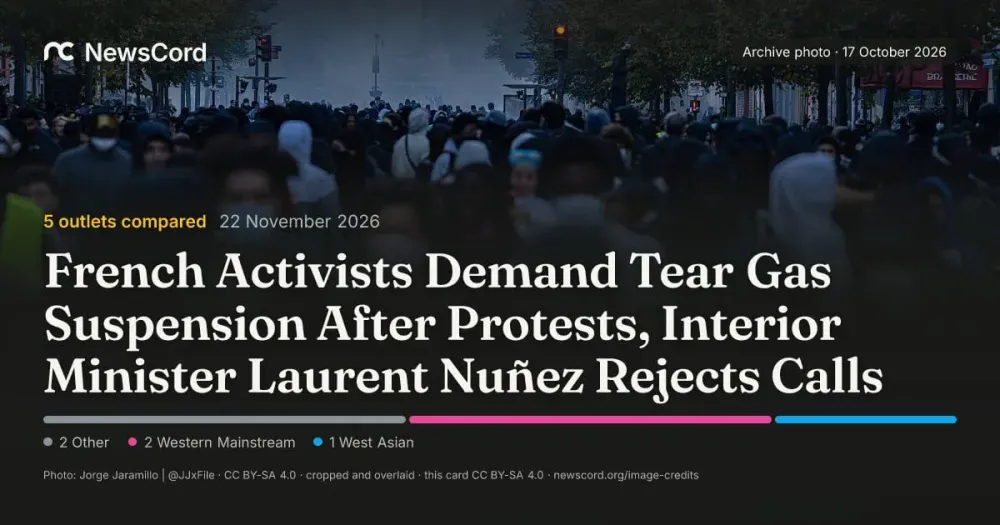
The demands for a suspension follow a protest wave that began in September 2026. France 24 reported that conditions in French schools sparked the demonstrations, with the cost-of-living crisis adding to the unrest. Police fired 22,000 tear-gas canisters on October 17 alone, according to the outlet, many before peaceful demonstrations turned into rioting and looting.
Women's accounts reach the National Assembly
Mélina Galland, 24, described unusually severe abdominal pain after tear gas grenades were fired at the October 17 protests in Paris. She said: "Heading back home, I felt intense belly pain which was unusual because I never experience pain that intense at that stage of my period."
Former journalist Eva-Luna Tholance founded the advocacy group Lacrymos de sang, or "Tears of blood," during the protests. The group says it gathered testimony from more than 10,000 women from October 8 through October 31, 2026. It brought its initial findings to France's National Assembly on November 17.
Le Temps examined 9,480 testimonies and reported that nine in ten respondents described gynecological symptoms following exposure. Uterine cramps were reported by 59%, ovarian pain by 43%, bleeding between periods by 32%, and abnormally heavy bleeding by 25%.
Of 47 pregnant respondents, 15 reported miscarriages. Le Temps described that figure as twice the rate expected in the general population.
Reports of symptoms have also emerged outside France. France 24 cited a Portland study conducted after the 2020 Black Lives Matter protests: In a survey of 2,200 people, more than half reported cramping, increased bleeding or other health problems following tear-gas exposure. Some said the effects lasted for days.
Earlier warnings and a separate weapon suspension
Concerns about the health risks of tear gas predate the current demonstrations. France 24 cited a 2017 report in which France's human rights ombudsman warned that its use "can endanger health and must not be trivialised".
The Interior Ministry did suspend one type of stun grenade in October 2026 after it tore off a teenage pupil's hand in Lens, according to France 24. The ministry has nevertheless refused to revise its use of other weapons classified as "less-lethal."