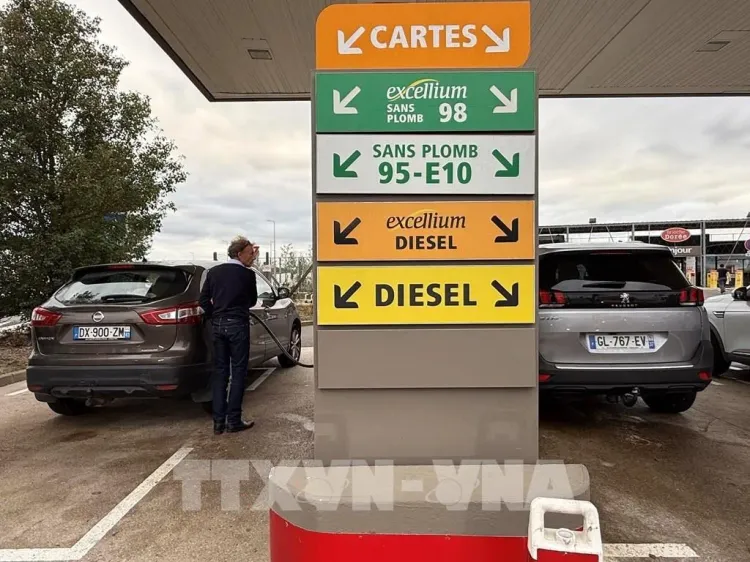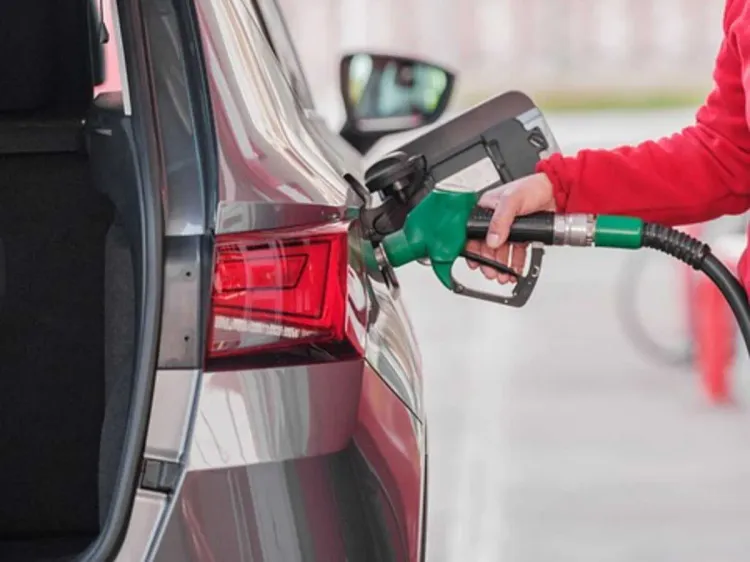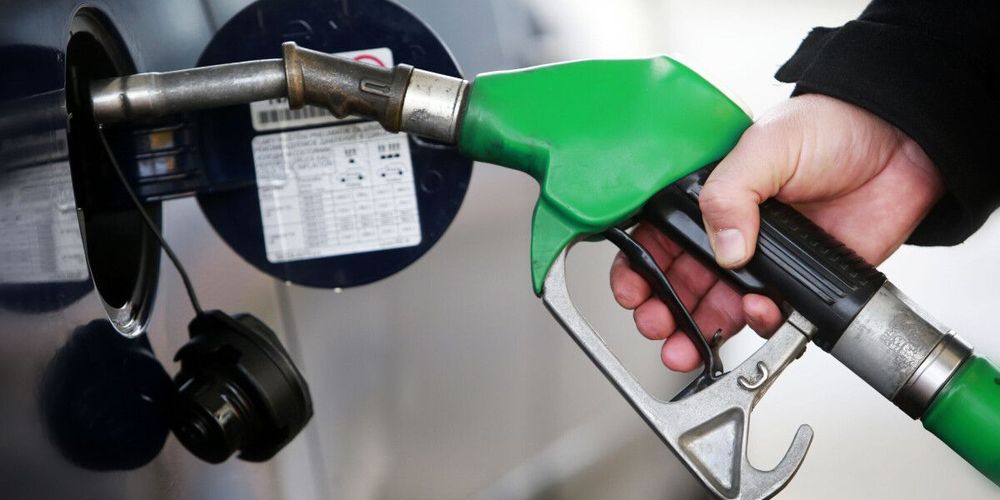
Drivers in eastern France are facing a localised but severe petrol shortage. Over the weekend, nearly 30% of service stations in some departments ran out of certain fuel types. The cause is the record drought, which has sharply reduced river shipments of fuel along the Rhine.
Where stations are running dry
The shortage mainly affects SP95 and SP98, the most common types of unleaded petrol in France. On Sunday, August 16, the departments with the highest out-of-stock rates were Bas-Rhin (29.0%), Haut-Rhin (28.1%), Territoire de Belfort (27.8%), Vosges (20.5%) and Haute-Saône (17.9%). Nationwide, 653 of 9,804 stations had no unleaded petrol on Sunday evening, an out-of-stock rate of 6.7%.
A regional snapshot taken on August 11 found 88 of Alsace's 283 service stations, about 30%, without at least one fuel, against a national average of about 6%. SP98 was the worst affected, with 54 stations out. That count covers any fuel type rather than unleaded petrol specifically, so it cannot be compared directly with the per-department rates above.
Anne, a driver in Haut-Rhin, described the situation to Le Parisien.
"It's been hell trying to find fuel for my older car," she said. "I use E5, which has been basically impossible to find in the Haut-Rhin the past week, and my car has broken down several times."
She bought two five-litre jerricans to keep for emergencies and has otherwise stopped driving.
Why the Rhine matters
Earlier shortages in recent years stemmed largely from geopolitical tensions, oil price spikes or strike action. This one is caused by the drought affecting France and other parts of Europe.
Departments in the west and south are supplied by large domestic production sites or by fuel imported through major western and southern ports. Eastern departments obtain much of their fuel from neighbouring countries such as Germany. Alsace has no refinery of its own, and up to 70% of its service stations are supplied by river shipments down the Rhine. Fuel arriving via Germany, typically imported from several other sources rather than produced there, is often cheaper for Alsatian stations to buy than fuel hauled from western France, because the distances are shorter.
This summer's drought has pushed water levels on the Rhine to exceptional lows. The gauge at Kaub in Germany, a key chokepoint for shipping, fell below its previous all-time low of 25 cm, set in October 2018. Readings reported in August included 15 cm on August 11 and 6 cm on August 14. The gauge is a navigation reference value rather than the actual depth of the river.
Fuel vessels have been hit particularly hard by drought-related safety restrictions, with some authorised to carry only about 25% of their usual load. Jean-Laurent Kistler of the French Waterways Authority in Strasbourg said tankers on the Rhine were carrying about 350 tonnes, against more than 1,500 tonnes in normal conditions. He said similar disruptions occurred in 2018 and 2023, but not on this scale.
Demand rises as supply falls
The drop in supply has coincided with higher demand in eastern France. Families heading off on summer holidays and a surge of tourists in the area have increased fuel use. The end of temporary fuel tax relief in Germany has also made cross-border purchases less attractive. That relief, the "Tankrabatt", ran from May 1 to June 30, 2026, cutting energy tax on petrol and diesel by 14.04 cents per litre, or 16.7 cents including VAT. It expired at midnight on July 1, after which German pump prices rose sharply.
SP98 and E5 SP95 are less common in French vehicles, so stocks are generally lower and shortages harder to plug. With their usual refill routes restricted, stations have been left with dwindling supplies.
This explains why most other areas of France are largely untouched, with the shortage remaining a localised issue in the east at the start of the week. Diesel supplies are relatively unaffected. France imports most of its diesel, so suppliers spread it more evenly across the country than petrol, which is produced domestically and therefore reaches some areas more easily than others.
Emergency measures for tankers
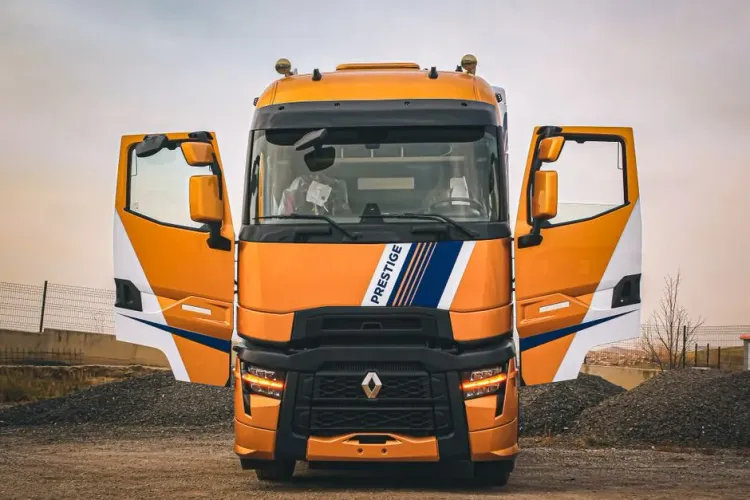
Authorities approved exceptional measures to ease the situation. An emergency order signed on Friday, August 14 by the prefect of the Eastern Defence and Security Zone lifted the weekend ban on lorries over 7.5 tonnes carrying hydrocarbons across the Grand Est region. Tankers were allowed to run from 22:00 on Friday to 22:00 on Sunday (August 14-16). They are normally banned from driving overnight and at weekends.
The prefect said Alsace could be supplied from main depots in Moselle, Meurthe-et-Moselle, Marne and Côte-d'Or. Local reporting said some tanker fleets were travelling as far as Paris or Lyon to load fuel. The measure was expected to bring additional supplies from departments further west and ease conditions at the start of the week.
Local reports also said the Rhine was not expected to recover for several weeks, and that the Bas-Rhin prefecture was not planning to renew the weekend exemption.
Prices and aid
Petrol and diesel prices have both risen slightly over the past week. Continued tensions in the Middle East are keeping fears of further fuel shortages fresh for governments and drivers alike.
France's €100 fuel aid for people who use their car for work or commuting remains open until August 31, according to the information available at the time of publication. Live information on fuel prices and shortages is available on the official government comparison website.