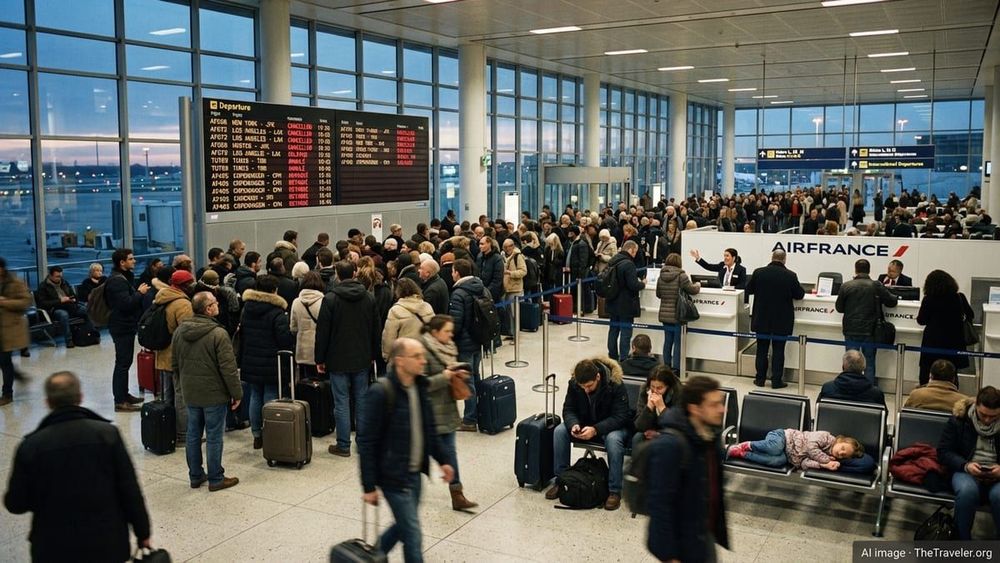
October 24 and November 5 flagged
Israel's Foreign Ministry identified October 24 and November 5 as dates when renewed rioting is a particular concern, according to i24NEWS. The warning cites violence at several locations during the October 17 demonstrations.
Media summaries of the advisory urge Israelis to "exercise caution" in crowded public places and keep away from protests, including marches that appear peaceful. Routes, police deployments and local restrictions could change with little notice.
The warning comes amid broader concerns about antisemitic incidents in Europe and heightened political tensions around the anniversary of the October 7 attacks. It calls for greater security awareness, not an immediate departure from France or automatic cancellation of travel plans.
Unrest prompted arrests and overnight curfews
French authorities estimated that about 550,000 people joined the October 17 protests, while organizers, including the CGT union, put attendance at 800,000, France 24 reported. About 110 marches took place nationwide, according to ABC News.
Violence in several cities left cars burned, storefronts damaged and public buildings attacked. Among the buildings set ablaze by protesters were Limoges' 19th-century city hall, whose roof collapsed, and Lyon's tourism office. Justice Minister Gérald Darmanin said counter-terrorism authorities were participating in the investigation into the Limoges fire.
On October 19, Interior Minister Laurent Nunez said 2,513 people had been taken into custody during the unrest and 67 had been imprisoned. He also said roughly 60,000 police and security personnel had been deployed across France.
Overnight curfews began that Monday night in cities including Paris, Bordeaux, Nice and Lyon. Prime Minister Sébastien Lecornu said the restrictions had helped restore a measure of calm.
What travelers should check
The advisory recommends checking demonstration schedules and local security conditions before setting out, particularly near central squares and frequent gathering points in Paris, Marseille, Lyon and other major cities. Travelers should follow local reporting alongside updates from city authorities and transport operators.
Buses and trams near march routes may be diverted or suspended, metro stations may close temporarily, and security checks at major railway stations may increase. Local restrictions can also change quickly in neighborhoods affected by violence or looting. Visitors are advised to confirm whether an evening curfew applies to their accommodation and carry identification at all times.
Several governments still advise increased caution in France rather than avoiding the country altogether. Their guidance notes recurring strikes and demonstrations, especially in large cities, while saying that most visits are trouble-free when travelers take basic precautions.
French and international reporting describes a visible police presence in Paris and some regional cities, with substantial deployments planned for the October 24 weekend. The Louvre and several other national museums have announced temporary security-related closures ahead of major protest days.
Tourism continues, with localized disruption
Tourism representatives quoted in French business coverage report damage to shops and visitor infrastructure in some neighborhoods. They say attractions including the Eiffel Tower and the Champs Élysées remain open except during specific protest periods or targeted strikes. Although the industry is concerned about cancellations by travelers abroad, representatives say overall bookings have not collapsed.
Visitors posting on public travel forums have described differing experiences. Many said they continued their Paris trips with relatively little disruption after avoiding march routes and changing their schedules. Others reported encountering tear gas near major squares or finding attractions temporarily closed when demonstrations became violent.
France remains open to visitors, including Israelis, but the advisory calls for flexible itineraries and daily attention to local conditions rather than assuming plans can proceed unchanged.
A wider political and regional backdrop
The demonstrations come ahead of France's April 2027 presidential election, which will bring President Emmanuel Macron's two terms to an end. Prominent potential contenders include Marine Le Pen, leader of the far-right National Rally, and Jean-Luc Mélenchon, leader of the left-wing France Unbowed.
Related protests over education and living costs also took place during the October 17 weekend in major cities across Belgium, Spain, Portugal, Italy, Greece and Albania, according to ABC News.