Inside the Serenza design
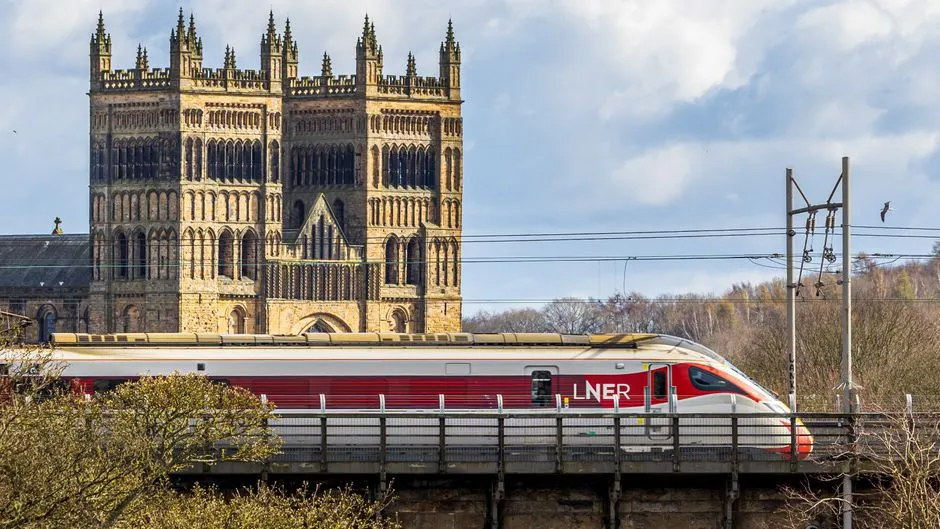
The award-winning fleet will comprise ten 10-car trains, each with 569 seats across Standard and First Class, plus wheelchair spaces with companion seating. CAF is building the trains, with financing from Porterbrook.
According to LNER, the interior will provide a power outlet at every seat and introduce USB-C charging ports. Each train will also have five water bottle refill stations, information screens in every car, redesigned bike storage and reclining First Class seats.
Accessibility features include braille seat numbers. LNER says its Accessibility Forum submitted 47 recommendations and that the vast majority were included in the design.
LNER describes Serenza as the UK's first long-distance tri-mode fleet: the trains will use overhead electric power where available, with diesel engines and batteries allowing operation where there are no overhead wires.
Service entry expected in 2028
The Class 897s will be the first new fleet introduced as part of Great British Railways. Ordered under the previous government, they are intended to replace LNER's remaining InterCity 225 trains.
LNER placed the order with CAF in November 2023. Construction is split between Spain, where the first two trains are to be built, and CAF's Newport plant in Wales, which will build the remaining eight.
In May 2025, LNER announced a delay to the fleet, with passenger service now expected to begin in 2028.
Design, technology and cabin winners
The other cabin award, Rail Cabin of the Year, went to JR East's Train Suite Shiki-Shima. The luxury cruise train contains 15 suites, with observation cars at either end named View Terrace Kizashi and View Terrace Ibuki.
Shiki-Shima's Komorebi lounge occupies car 5, followed by the dining car in car 6. Car 7 houses its two top-tier rooms, the Shiki-Shima Suite and Deluxe Suite, each fitted with a specially made cypress bath.
Zweigrad Design received Design Innovation of the Year for CHLOE – The Accessible Train Toilet. The technology category recognized AGC's Transparent 5G Glass Antenna, while Belmond's Celia Dining Car earned Concept of the Year.
For Project Collaboration of the Year, the judges selected the team behind the TrainSolutions Portugal Intercity Train: SERMEC II, CP, NomadTech, O2a Composites, NSS, BusRail, Sunviauto, FEUP, INEGI, Catim, CCF, PFP and AIMMAP.
Collaboration and sustainability recognized
RedCabin, an organizer of transport-interior innovation summits, developed the awards with The Rail Interiors Show. The program emphasizes the passenger experience and aims to "celebrate and reward excellence in design, collaboration and engineering within the international rail interiors sector".
RedCabin founder and CEO Monica Wick said collaboration among designers, engineers and operators could transform passenger experiences. She said this year's winners had "set an extraordinary new benchmark for the industry" and described the Alstom-sponsored European Summit as a fitting setting for the announcements, given its focus on industry cooperation.
The evening's final presentation named Ilse de Vos van Eekeren of Nederlandse Spoorwegen (NS) Visionary of the Year. The judges honored more than a decade of her work advancing sustainability in rail.