What Level 2 means for travelers
France is at Level 2 on the four-level U.S. travel advisory scale. The designation is not a travel ban or a recommendation to cancel a vacation. It calls for greater attention to security, particularly in crowds, urban areas and places hosting major events, and readiness to change plans if conditions deteriorate.
The State Department identifies terrorism and unrest as the principal concerns. Its guidance warns of possible attacks at transportation hubs, cultural attractions and other public places frequented by visitors. Travelers are advised to remain aware of their surroundings and monitor official updates; the department reviews its assessments continually and can revise them at short notice.
France shares its Level 2 rating with Spain, Italy, Belgium, Germany and the United Kingdom, primarily because of terrorism and, in some countries, unrest or crime. Ireland, Portugal, Romania and Latvia remain at Level 1, which calls for travelers to "exercise normal precautions." Ukraine and Russia are at Level 4, "do not travel," because of armed conflict, security conditions and limited consular access.
These advisories differ from the broader assessments in insurance and assistance providers' 2026 risk maps, which place most of Western Europe in the lowest or second-lowest categories for overall security and health. Those maps nevertheless identify major cities as potential terrorism targets, especially when they draw international events and large numbers of foreign visitors. European governments and tourism organizations emphasize that most visits take place without serious incident.
Recent alerts describe protest violence
The U.S. Embassy in Paris reported in an October 22 security alert that violence and rioting associated with ongoing protests had recently occurred in France and could continue. It described extensive property destruction, uncontrolled looting and attacks against police. Officers had used tear gas and other crowd-control methods in response.
The alert said groups had filed plans for demonstrations on Saturday, October 24. It also urged Americans visiting Paris for the NFL game on Sunday, October 25, to exercise caution and remain aware of their surroundings. Both dates have now passed; the alert's warnings concerned those planned events, not confirmation that demonstrations or violence occurred on those days.
The embassy also warned that curfews affecting parts of France, including some Paris neighborhoods and nearby areas, might remain in place, and that authorities could impose them at short notice.
Australia's Smartraveller service offered a similar warning in its October 23 update. It reported large-scale demonstrations across France on October 17 and said protests could continue, with authorities potentially introducing partial or localized curfews. Its advice remains to "exercise a high degree of caution" because of terrorism.
Although many demonstrations are peaceful, U.S. guidance tells visitors to stay away from protest areas and never attempt to cross police lines. Previous protest periods have caused blocked roads, public transportation delays and occasional property damage in central Paris and other cities. Monitoring local news and allowing extra time for airport transfers or connecting trains are recommended when large demonstrations are announced.
France's security posture and counterterrorism measures
France uses its own counterterrorism framework, Vigipirate, alongside the foreign travel advisories. According to Lima Groupe's September 24 explainer, a June 22, 2026, overhaul replaced the old tier names with three stages: "vigilance," the baseline; "vigilance renforcée," or reinforced vigilance, the intermediate stage; and "alerte attentat," or attack alert, the highest.
The summer-autumn 2026 posture places the entire country at the intermediate stage, a status also reported in Smartraveller's October 23 advice. This is below the former highest level, "urgence attentat," which had been maintained continuously since March 2024.
Under the revised rules, the highest stage lasts no more than 12 days unless the prime minister expressly authorizes another 12-day period. Without that renewal, the country automatically returns to the intermediate stage. Lima Groupe says this new limit is intended to reserve the highest alert for circumstances that warrant it.
The summer-autumn posture has three priorities: responding to the drone threat following renewed overflights in France and elsewhere in Europe; protecting tourist attractions and crowded places ahead of the summer holidays and Christmas 2026; and securing public and institutional buildings.
A separate assessment appears in the OSAC France Country Security Report, published August 12, 2026. It cites State Department ratings of MEDIUM for terrorism directed at or affecting official U.S. government interests in Paris, Bordeaux, Lyon, Marseille, Rennes and Strasbourg. All six cities also receive a MEDIUM rating for political violence. These are specific threat assessments, not substitutes for the nationwide travel advisory.
The OSAC report says Operation Sentinel remains active, with approximately 10,000 soldiers and police deployed nationwide. About 6,500 are in Paris to support police and provide a more visible security presence. Deployment locations include airports, rail and metro stations, schools, major visitor attractions, places of worship and government facilities.
The report records two terrorism-related incidents in 2026: the March 15 arrests of two Moroccan men accused of planning an antisemitic attack against a synagogue in Normandy, and the March 28 disruption by French authorities of a bombing plot against a U.S. financial institution in Paris.
It also describes a political calendar against a background of regular strikes and demonstrations. The August report notes that municipal elections took place in March 2026, lists Senate elections as due in September 2026 and identifies April 2027 as the date for the presidential election.
Preparing for holiday crowds and disruptions
The advisory update comes as airlines and rail operators prepare for increased transatlantic travel during the year-end holidays. Tourism data from recent seasons show that Christmas markets, New Year's celebrations and winter cultural events attract large crowds to Paris, Lyon, Nice and Strasbourg.
Security analysts say major gatherings often bring additional policing around city centers, transportation hubs and attractions. Visitors may encounter bag inspections, longer lines or temporary closures during security operations. Travel briefings recommend particular vigilance at large events, religious sites and shopping districts, as well as during national holidays and major sporting events.
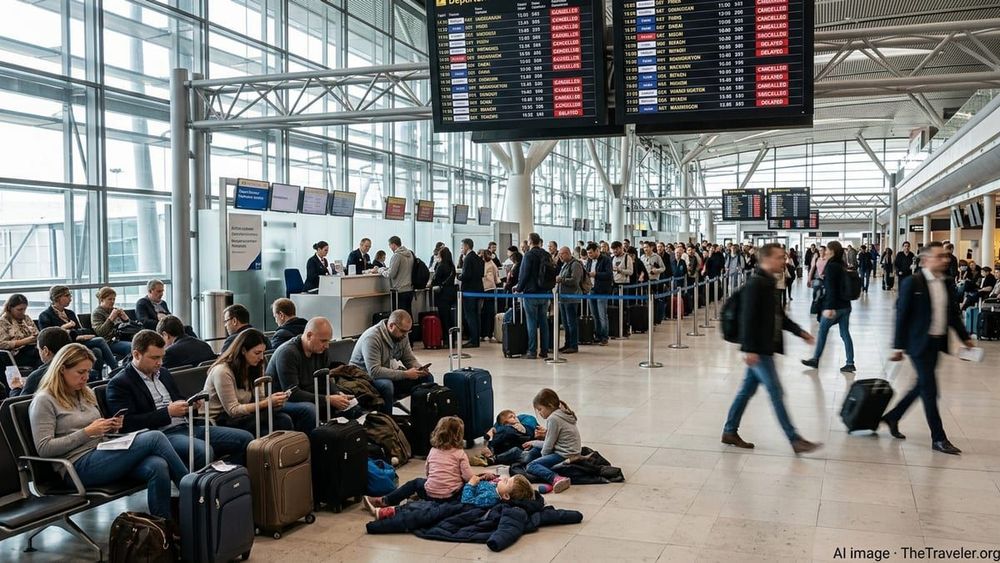
Airports serving France have periodically experienced delays from both enhanced security screening and staff industrial action. Such disruption is not necessarily connected to a terrorism threat. Industry advice recommends leaving more time for transfers and considering off-peak travel during busy periods.
Practical preparations before departure
Travel guidance recommends enrolling in the State Department's Smart Traveler program, reviewing the France advisory before departure and checking notices from airlines, tour operators and local authorities. Travelers should also know where the nearest hospital and police station are in relation to their accommodations.
Security briefings advise keeping paper or digital copies of passports and other essential documents and leaving an itinerary with a trusted contact at home. They also recommend avoiding conspicuous displays of expensive jewelry or electronics, keeping a low profile in crowds and securing passports and most cash in a hotel safe while carrying only what is needed for the day.
Official and private-sector guidance strongly recommends comprehensive insurance for medical treatment, interrupted trips and emergency evacuation. Coverage varies, so travelers should check specifically whether strikes, unrest or transportation shutdowns are covered.
Consular services and travel clinics also advise learning local emergency numbers and a few French phrases for requesting help, particularly for trips beyond heavily visited neighborhoods where English may be less widely spoken.