
A referendum to settle internal party disputes
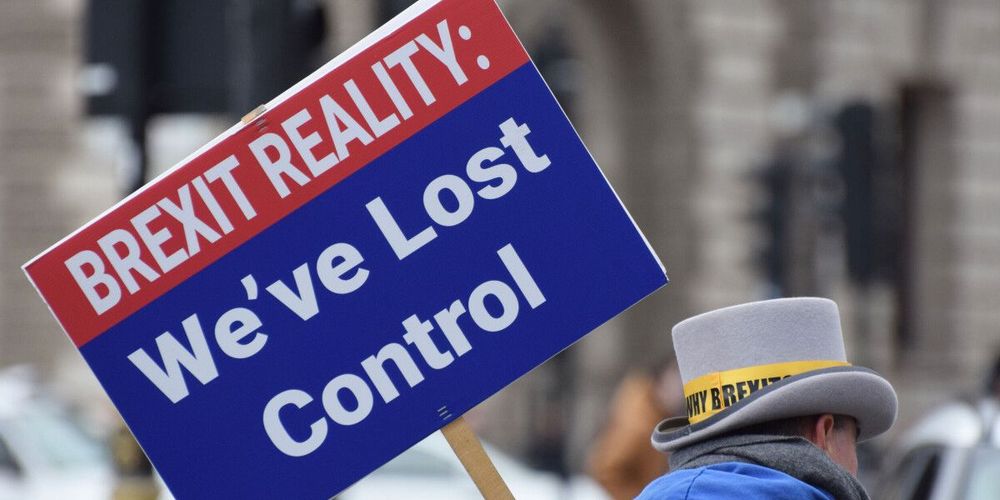
As Britain marks the tenth anniversary of the Brexit referendum, held on 23 June 2016, the silence from those who campaigned for leaving the European Union has become deafening. While 52% of voters—more than 17 million people—chose to exit the bloc that summer day, the promised benefits have failed to materialise, and the architects of Brexit have largely retreated from public view.
The British media has filled its pages with retrospectives from the key players of 2016, yet notably absent are the voices of Leave campaigners who once assured the public that Brexit would deliver prosperity and renewed sovereignty. They used to insist that time would prove them right. Now, they no longer even make that claim.
The fundamental misunderstanding persists: Brexit was never truly about Europe. David Cameron called the referendum as part of his 2015 General Election campaign, responding to the rise of the UK Independence Party and attempting to resolve bitter divisions within his own Conservative Party over EU membership. It was a political gamble designed to settle a factional dispute among the ruling elite.
Surveys conducted at the time revealed that most ordinary citizens possessed little or no knowledge of what the EU actually did, how it functioned, or where sovereignty truly resided. The EU simply was not a burning political issue for the general public until Conservative leaders transformed it into a high-stakes dare game.
The narrative that Britain split neatly into two hostile camps—Leavers and Remainers—is a convenient fiction that ignores a more complex reality. It overlooks the divide between those willing to engage with facts and those who staked their identity on an illusion of Britain as a great post-imperial nation capable of thriving alone. It also erases people like myself, who viewed the EU as a deeply flawed and questionably democratic institution, yet recognised that storming out without a coherent plan was foolish.
Campaigns built on emotion, not facts
To characterise the referendum campaign as an intelligent, informed debate is simply wrong. The Remain side was led by establishment politicians incapable of articulating the strongest arguments for EU membership. Leave campaigners, meanwhile, understood they could say whatever they wanted—true or false—as long as it triggered anti-establishment emotions.
Both sides exaggerated and lied, caring little about the consequences of their fanaticism as long as others bore the costs.
The business toll
Two groups paid the immediate price of Brexit ideology. The first was the business community. After the Trade and Cooperation Agreement came into force on 1 January 2021, small exporting firms on both sides of the Channel discovered that cross-border trading had become prohibitively expensive. Research has found that approximately 16,400 UK firms—14% of those that previously exported to the EU—stopped doing so entirely. Among companies that continued exporting, the smallest firms saw their EU export values plummet by 30%, while medium-sized businesses experienced a 15% drop.
The broader economic damage has been substantial. Research estimates that by 2025, Brexit had reduced UK GDP by 6% to 8%, with the impact accumulating gradually over time. Business investment has averaged 18% lower than in comparable countries, while employment and labour productivity have fallen by an estimated 4%.
Expatriates stripped of rights
The second group sacrificed on the altar of Brexit was expatriates living on either side of the Channel—people who assumed their governments would protect their right to freedom of movement. When the UK formally left the EU on 31 January 2020, British citizens living in France immediately lost their right to vote in French local elections and European Parliament elections. Approximately 757 to 900 British citizens serving as municipal councillors in France were forced to give up their positions, unable to stand for office without French citizenship.
I have yet to hear any Brexiteer justify the confiscation of my vote in French local elections, the requirement for some British owners of French homes to leave the country every three months, the exorbitant charges for receiving parcels from the UK, the interminable queues British passport holders now face entering France, or the imposition of the £20 Electronic Travel Authorisation fee on those wishing to visit family in Britain.
The myth of mutual need
Before the referendum was even a glimmer in David Cameron's eye, I engaged in an email exchange with a prominent Leave supporter who assured me that Brexit would bring only benefits because
they need us more than we need them. It might give me satisfaction to say "I told you so" to him now, but the bitter joke is on me—this misguided Leaver now sits in the House of Lords.
Brexit may have been excellent for the elites, functioning as a massive job-creation scheme for bureaucrats and their political managers, but it has been a disaster for everyone else.
Perhaps in another ten years, honesty will finally prevail. For now, however, the watchword remains denial.